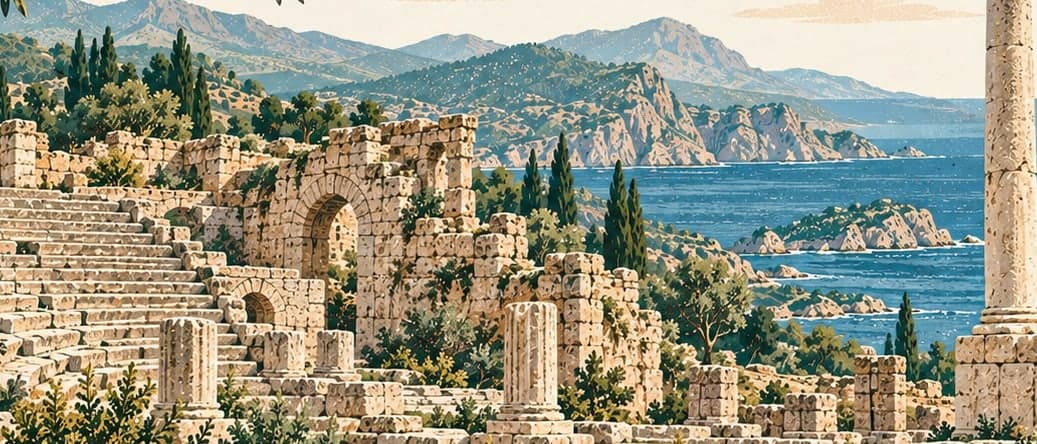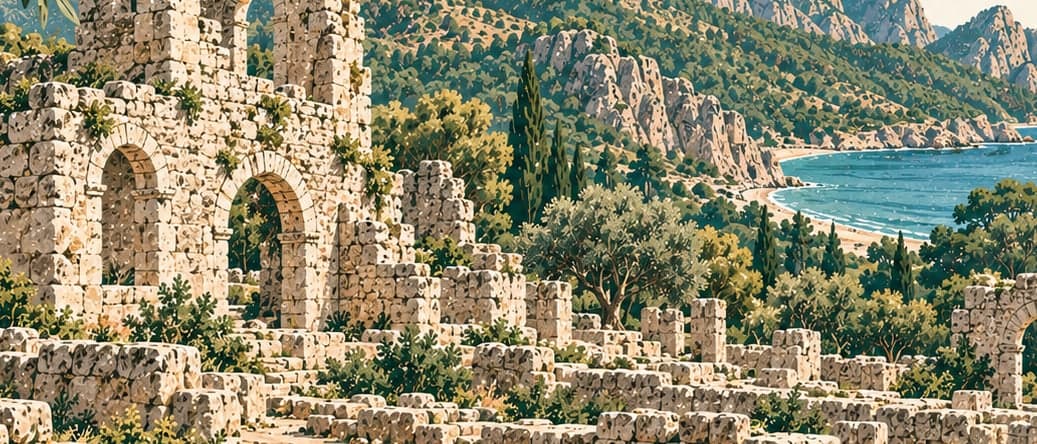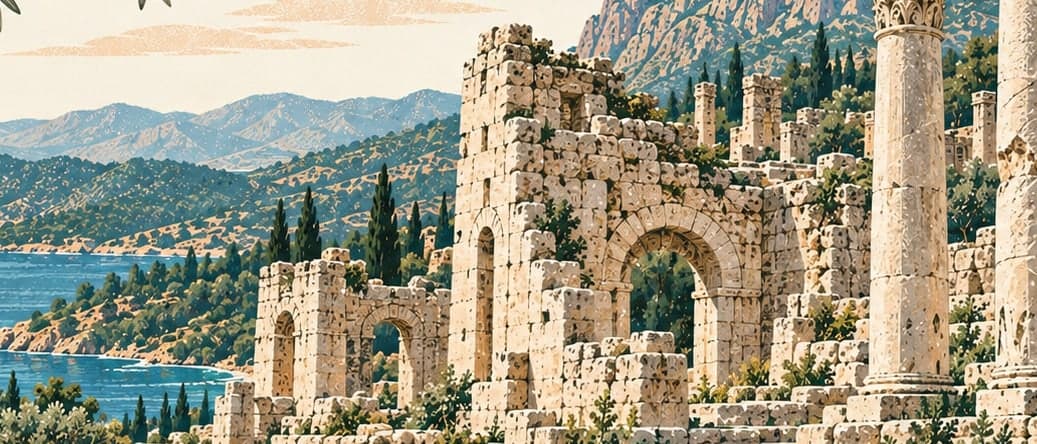
Guide
Phaselis was founded as a colony by Rhodians in 690 BC, on a shore under pine forest, and what marks it out is that it had three separate harbours. Sea trade was its main income and it grew wealthy and privileged on it. The city met Alexander with a golden crown; after him it changed hands many times, joined the Lycian League in 167 BC and struck coins. For a period it suffered the raids of pirates along with its neighbour Olympos, and in 43 BC it passed under Roman rule — the start of a rebuilding and of prosperity that lasted at least three centuries. The emperor Hadrian visited in 129.
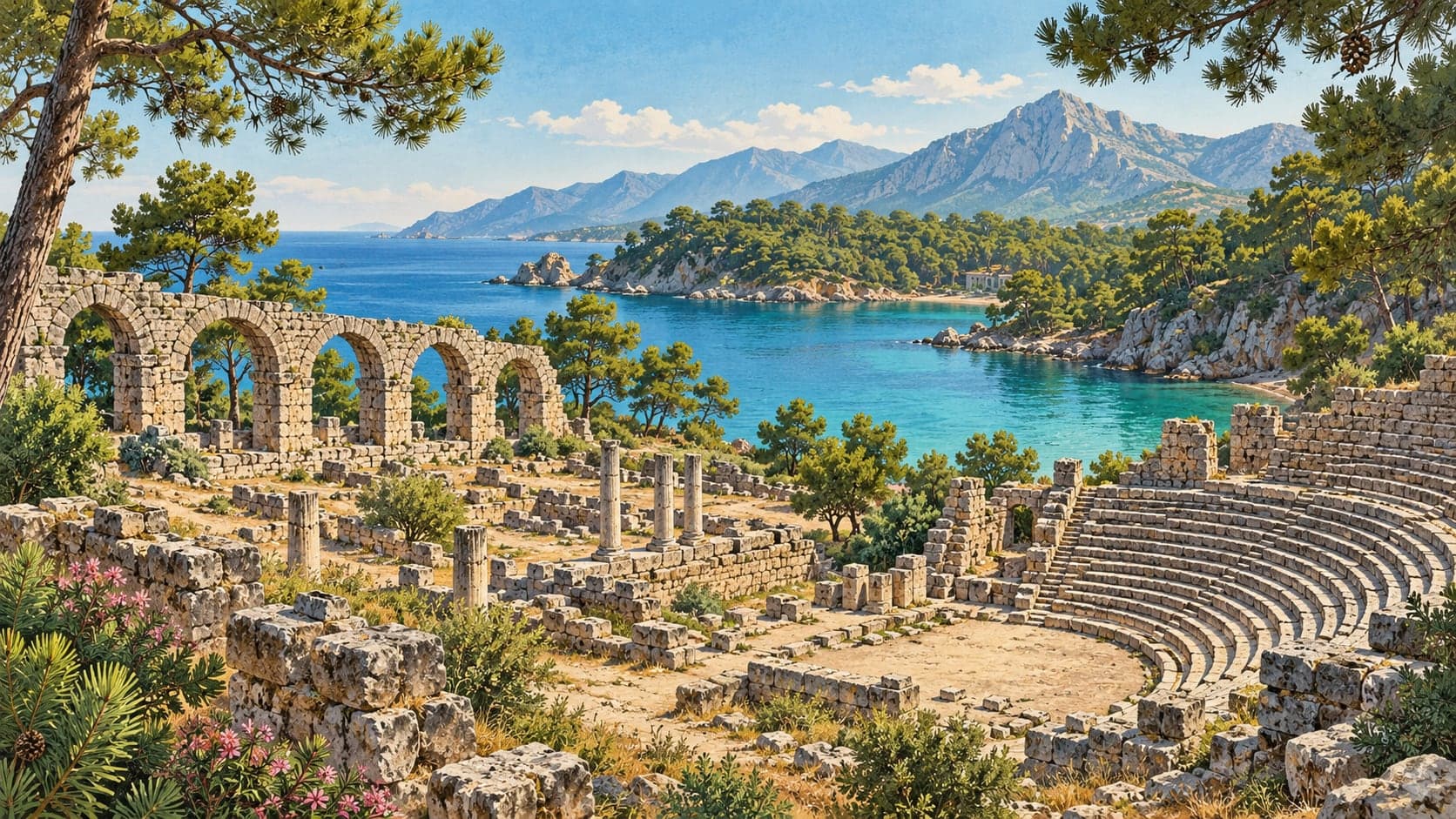
Its water system is what the ministry calls an example of advanced engineering. Wells and cisterns supplied the early city; under Rome water was brought by aqueduct from a spring to the north and distributed through pipes and channels.
The main remains lie along the pavements of the street joining the military harbour to the southern one. The street is 125 metres long and 20 metres wide, paved in regular stone, forming a square at its centre, with the pavements reached by three steps on each side. Beneath it runs a sewer and drainage system.
The city has a theatre and three agoras, one of which holds the remains of a small Byzantine basilica. Of the two baths, the smaller tells you how a Roman bath was heated.