Guide
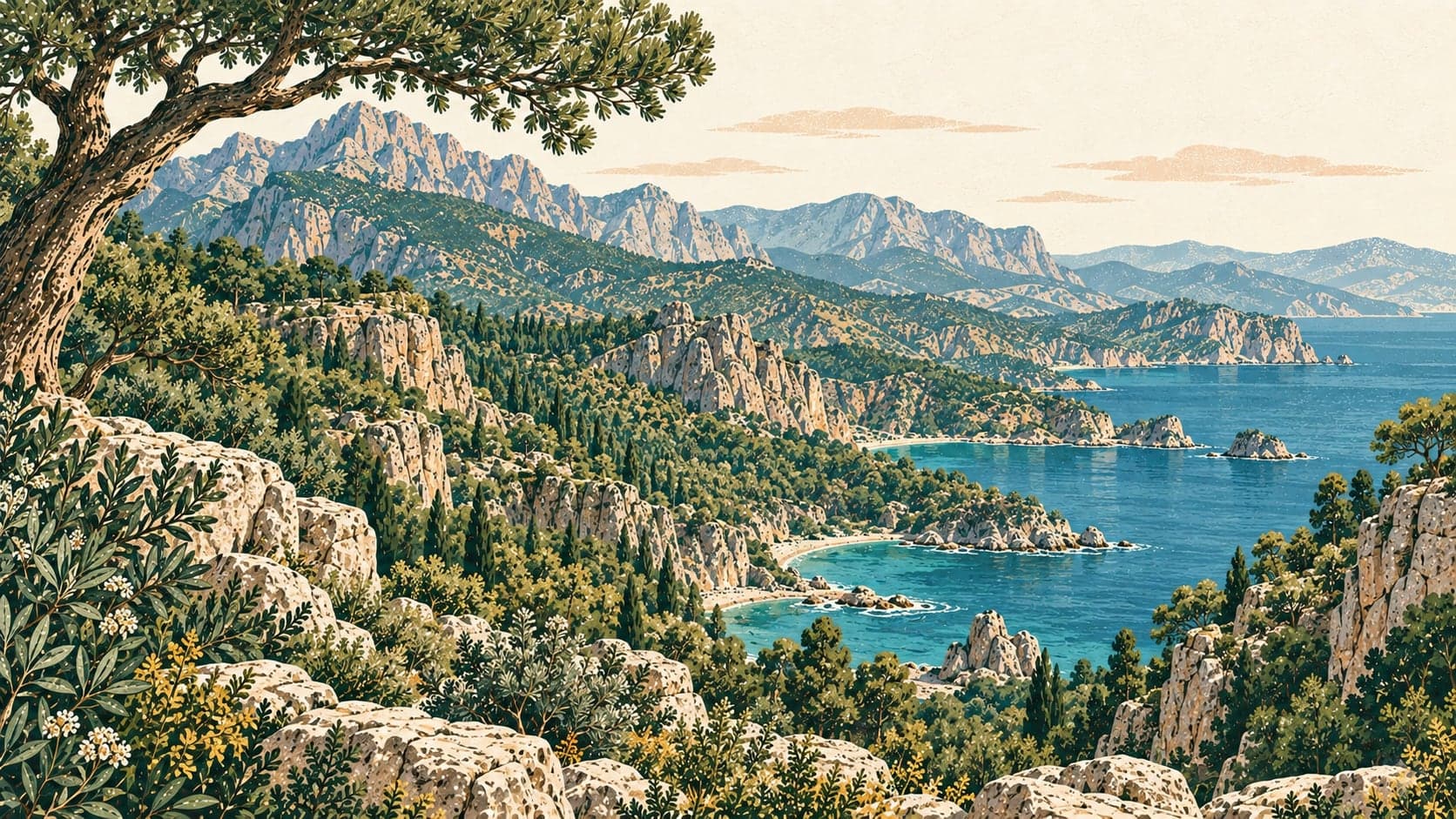
The Olympos Beydağları Coastal National Park was taken under protection in 1972 to safeguard the natural and historic ground within the Kemer district of Antalya. It runs from Sarısu along the Antalya–Kumluca road, parallel to the Mediterranean, as far as Cape Gelidonya.
Along this western shore of the gulf lie natural beaches and ancient cities. Çıralı and Adrasan are the longest of the beaches. From the park entrance onwards, Topçam, Küçük Çaltıcak, Büyük Çaltıcak and the two Kargıcak grounds are day-visit areas with long beaches where forest meets the sea.
There are two camping grounds inside the park: Göynük, with room for a hundred tents, and Kındılçeşme, three kilometres from Kemer, with room for 225.
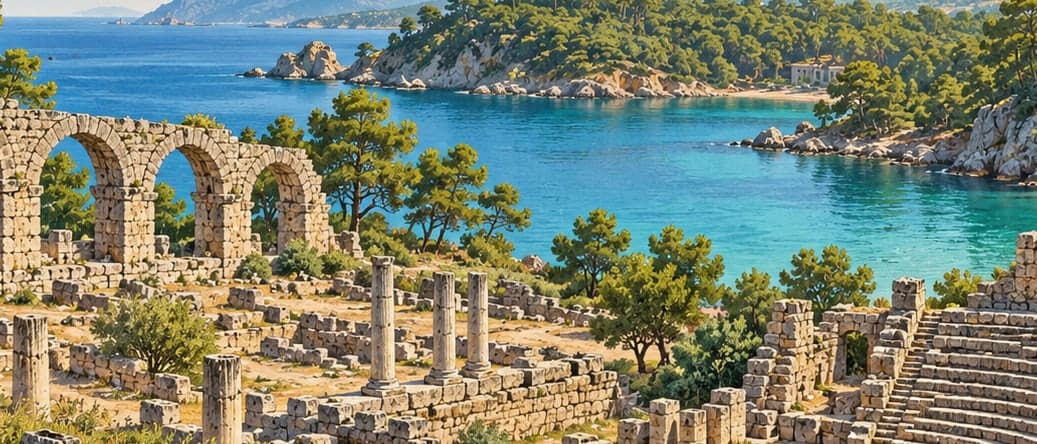
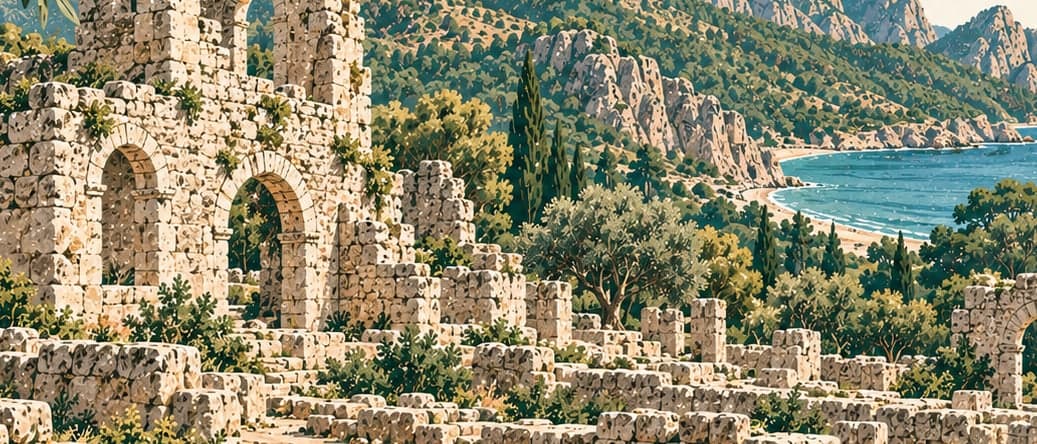
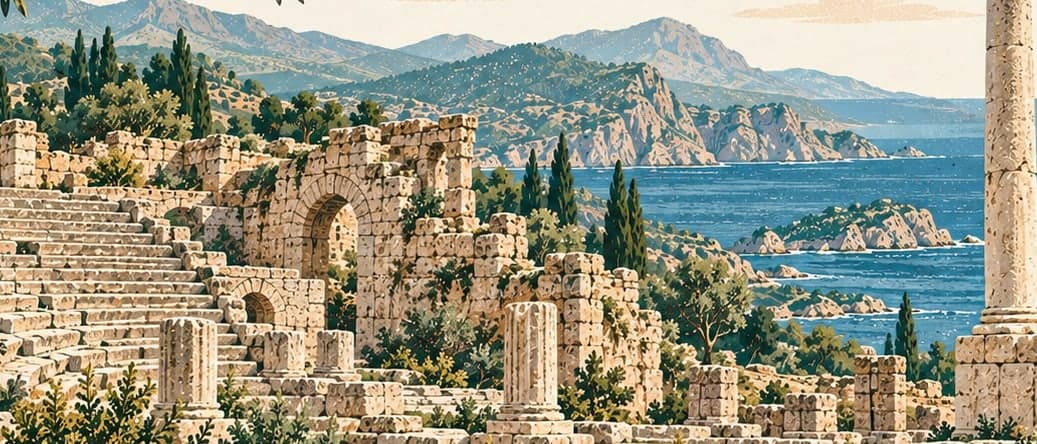
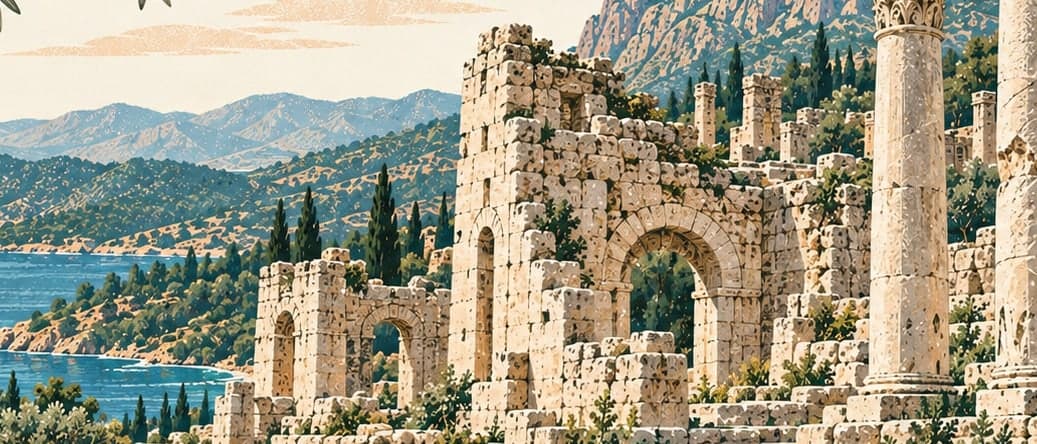
The ancient city of Phaselis sits at a crossing point where geology, history, plant life and wildlife come together. The shore at Çıralı, the ancient city of Olympos and the Yanartaş flames are among the things the park is known for.
Olympos lies eighty kilometres south of Antalya, within ancient Lycia. Open to the Mediterranean on its eastern side, the city is cut in two by the Akçay, the Olympos stream, running through the middle of it, and this position made it a harbour city throughout its history. The name is thought not to be Greek; its origin and meaning have never been fully settled, but it appears to come from one of the old languages of Anatolia and to have meant a high or great mountain.
When the city was founded is not known. Olympos first appears in the historical record through the coins it struck within the Lycian League between 168 and 78 BC. It was one of six privileged cities in the league holding three votes, and the head of the league is at times found to have come from here.
In 80 BC the city fell into the hands of pirates; the well-known pirate Zeniketes is known to have lived in a fort near Olympos. Amid the disorder along the coasts and in the mountains, a Roman fleet under the commander and senator Publius Servilius Vatia came to clear the region of pirates, won three sea battles off Cape Gelidonya in 78 BC and razed Zeniketes's fort. After his death Olympos passed to Rome along with the neighbouring cities. The cults of Hephaistos, Zeus and Apollo are known to have been observed at Olympos in this period, and under the Roman empire the city remained one of the leading members of the Lycian League.
- Designated
- 16.03.1972