Guide
Kitanaura stands on the hill and slopes north of Saraycık, inside the boundaries of the Gölcük neighbourhood in Kumluca. Coins bearing the legend Kita show that it was minting in the Hellenistic period. Little is known of its Roman centuries, but the city was walled and remained in use into the Middle Ages, and bishop lists together with the Byzantine remains on site show it was an important see under the metropolitan of Perge.
The identification took a while to settle. The travellers Spratt and Forbes, who came here in 1842, took the ruins for Apollonia; A. J. Schönborn later read them as Mnara. The question was closed by the road monument found at Patara, the Stadiasmus Patarensis, whose itinerary places Kitanaura 17 to 18 kilometres from Idebessos and inside the territory of Termessos.
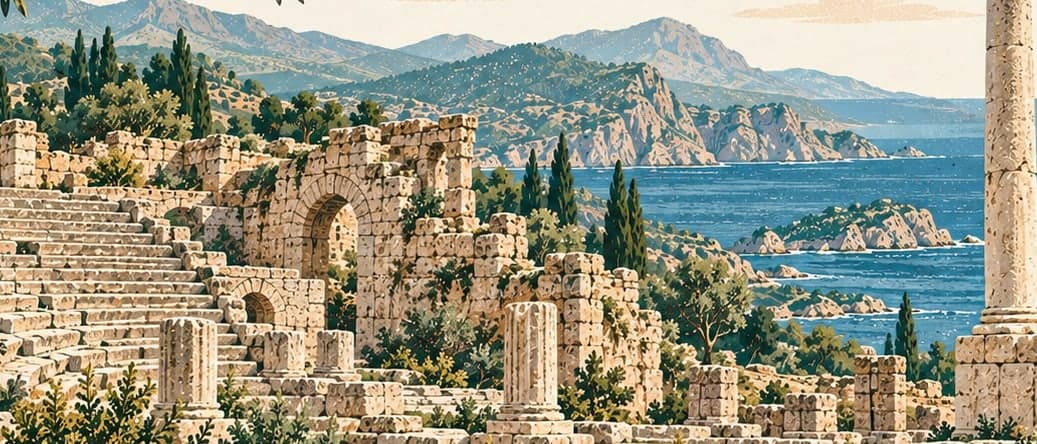
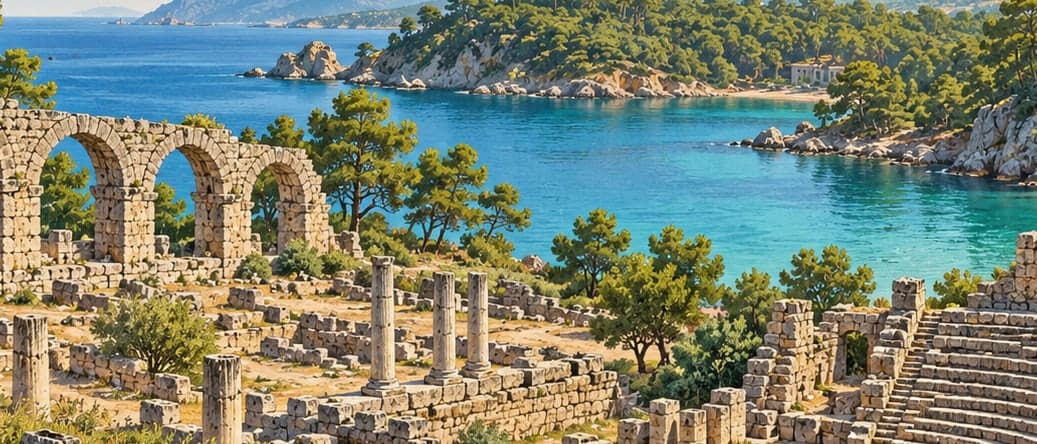
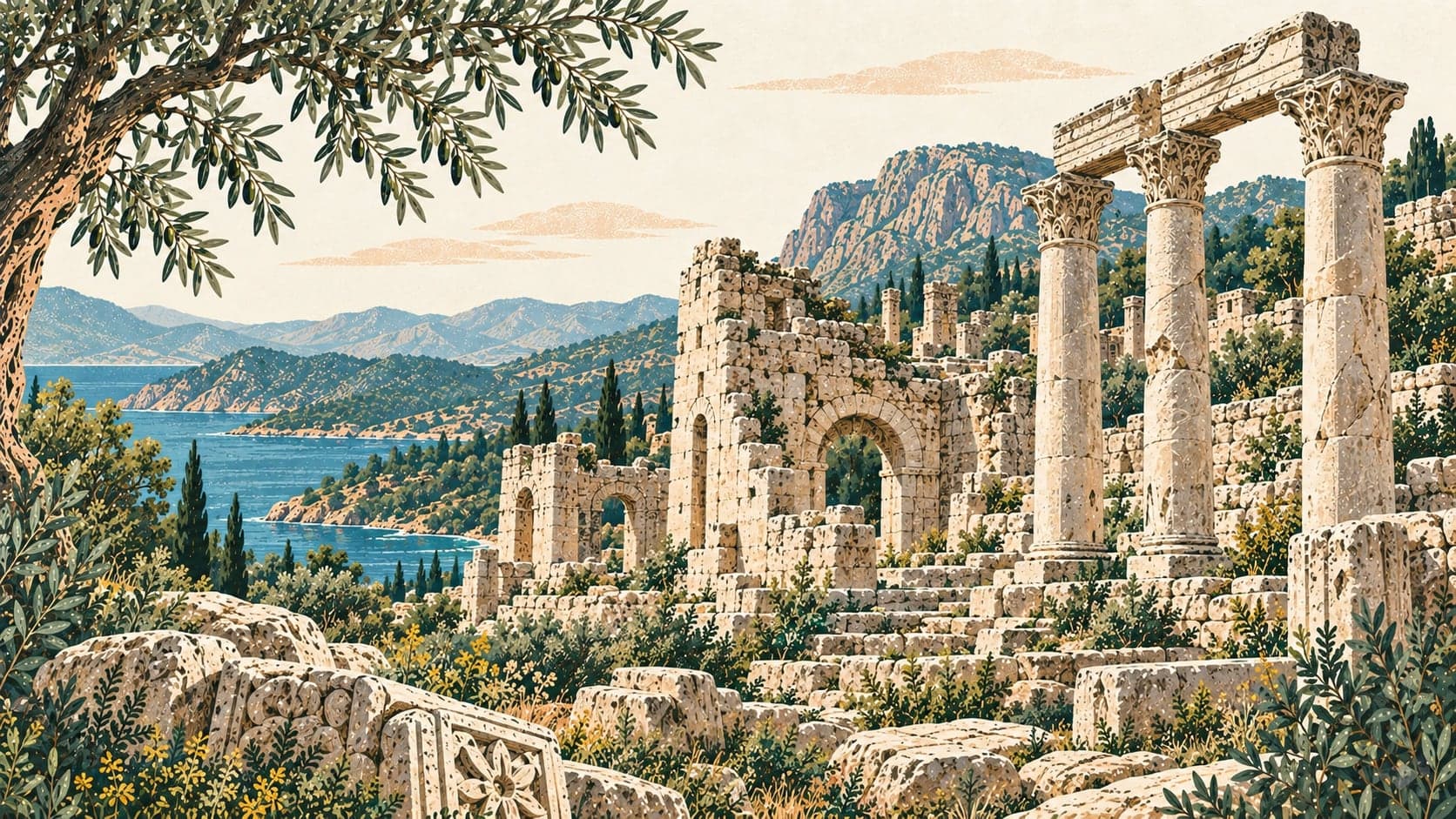
The acropolis runs east to west at 1,300 metres above the sea, walled, with three gates; the main entrance is on the south-west. A basilica of the early Byzantine period stands at its south-western end, and the public buildings begin along the eastern edge of the acropolis square. In the large basilica the three doorways, the narthex, the three aisles, the two rows of columns and the apse can all still be read, and a large rectangular cistern — the biggest in the city — runs along its north side.
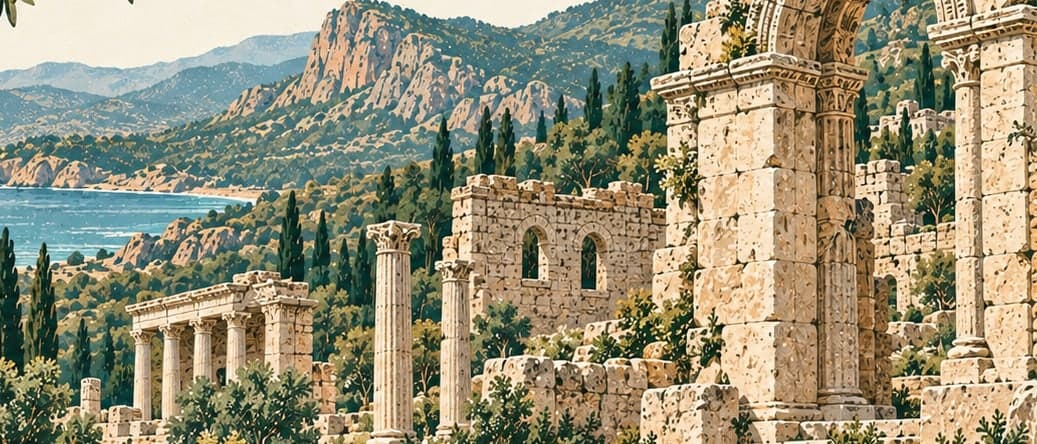
The bath is the most substantial public building. It lies south-west of the acropolis beside the forest track, runs north to south and has seven rooms, some standing to roof level; the changing room with its arched niches is the part worth the walk. The wall climbing the slope opposite it belonged to the aqueduct that supplied the bath.
Both sides of the forest track north of the acropolis are lined with tombs — aedicula tombs, sarcophagi, rock-cut chamosoria and ostothekes. The best known is the Saraycık heroon, which has come down in good condition; its orthostats and the faces of its ante walls carry a long series of reliefs of military dress and weapons. Kitanaura is among the sites proposed to the UNESCO World Heritage List in 2009 under the heading of the ancient cities of Lycia.