Guide
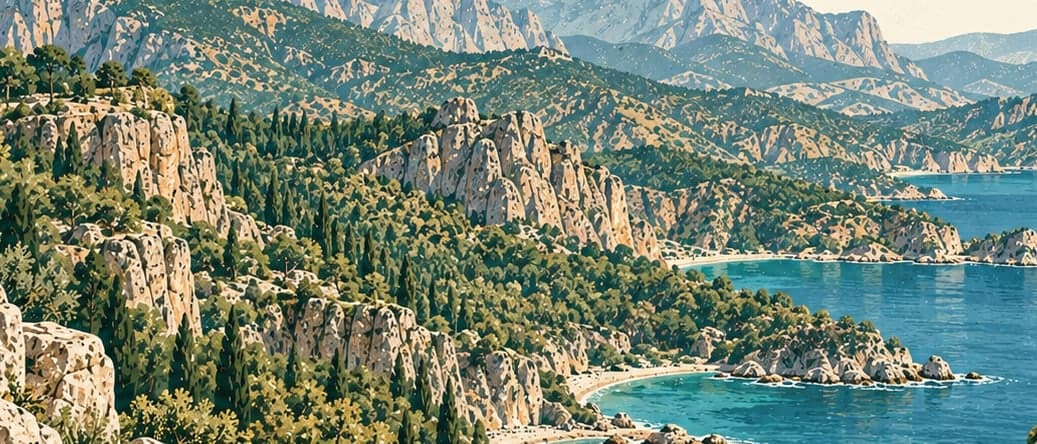
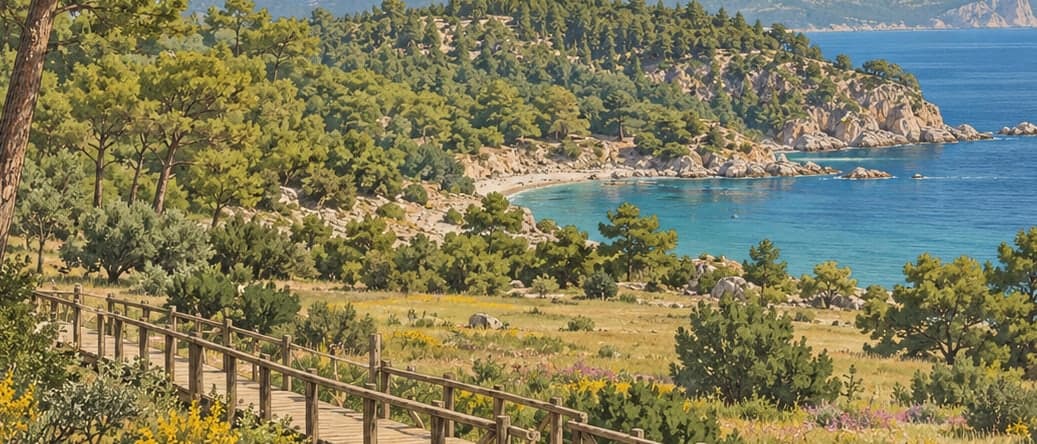
Olympos is a Lycian settlement in the Kumluca district west of Antalya, ten kilometres north of Tahtalı mountain and 85.7 kilometres from the city. It lies within the Olympos Beydağları National Park, and because the beach is a nesting ground for loggerhead turtles the area is protected as a conservation site. The village here is a holiday place chosen mostly by students and backpackers, known for its tree houses, its open ground where tents can be pitched, and its position on the Lycian Way.
The ancient city was built on the north and south banks of the Olympos stream, and stone paving runs down to the harbour from both sides. There is not enough evidence to fix the date of its founding; the fullest picture comes from archaeological surface survey, in whose light the earliest foundations of the settlement are thought to date to the Hellenistic period, around 300 BC. Alexander the Great is known to have spent the winter months at Phaselis, a harbour city neighbouring Olympos, in the first years of his conquests, and some historians hold that he visited Olympos as well.
The oldest surviving written reference to the Lycian city is in Strabo's Geographica. Quoting Artemidorus of Ephesus, Strabo describes Olympos as one of the leading members of the Lycian League, with three votes in the federal assembly; that standing seems to have lasted until the second half of the second century BC. In the first century BC, however, the city came to be spoken of chiefly in connection with piracy. The most important episode recorded from that period is the conflict between Zeniketes and Rome. Faced with the weakness of the League's fleet and the threat to the commercial interests of Roman traders in the region, the legions under Publius Servilius Vatia opened a campaign against the cities of eastern Lycia and Pamphylia, and Servilius then besieged Zeniketes' stronghold near Olympos. Seeing resistance was useless, Zeniketes chose to set himself and his family on fire rather than be taken alive. After the fall of Olympos, Servilius Vatia moved on to subdue the settlements that had belonged to Zeniketes or joined the rising; those that had supported him were punished and their land confiscated and turned into ager publicus. Olympos was one of them: it was expelled from the Lycian League and not readmitted until the first century AD.
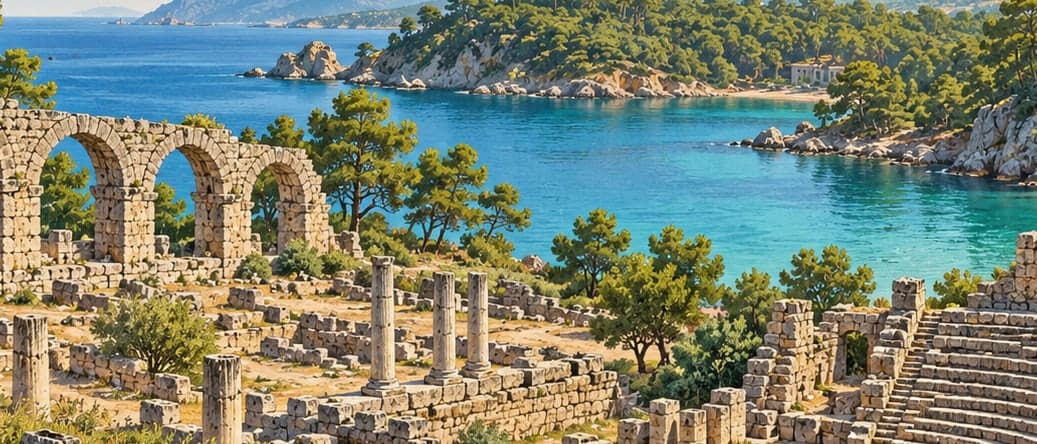
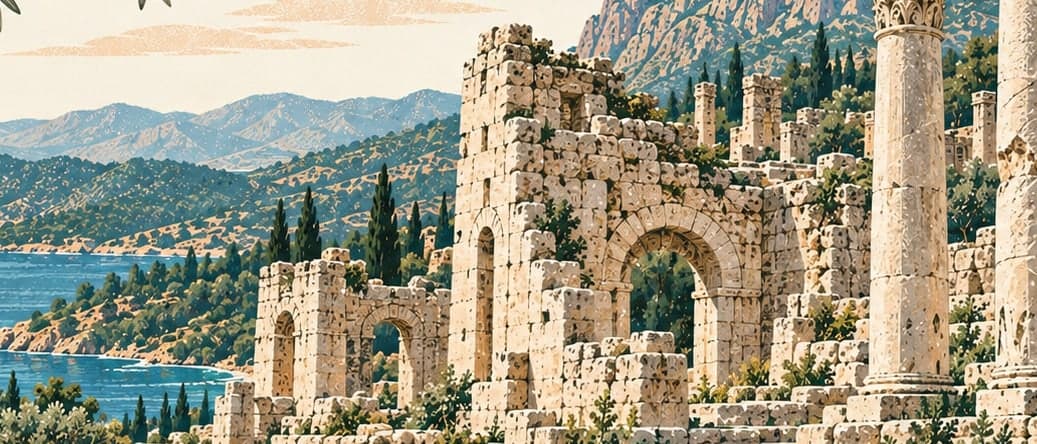
By the second century AD Olympos was again a distinguished member of the League, as is clear from the funerary inscriptions of Marcus Aurelius Archepolis, who held the Lyciarchy, the highest office in it. Under Roman rule the city was reorganised on a more regular and planned pattern, and recent research has produced substantial new evidence on the principal public buildings — the baths, the temple, Bridge Street and the bridge.
The earliest architectural remains at Olympos are the fortification walls enclosing the area traditionally called the South City, built in polygonal masonry. Excavation was carried out where the walls meet the Roman bridge, and systematic work has been done along Bridge Street, the main axis of movement, which appears to have been laid out in the Roman imperial period. That work showed the wall gate in this sector was partly destroyed while Bridge Street was being built, which places the city walls earlier than the imperial period; read together with the restrictions imposed on the city after Zeniketes was put down, the earliest possible date for the fortifications is 76 BC.
In the north of the site, among the ruins where the Olympos stream meets the sea, two burial chambers have been identified. Inscriptions written in the tabula ansata on the front of the sarcophagi, made in the late second century AD, show them to belong to Zosimos and his uncle Eudemos. In the south, near the harbour, stand the remains of Roman baths whose position speaks of the sea traffic the port carried and its command of the harbours around it. On the southern slopes are a Byzantine church complex and a cistern, on whose wall a graffito of a ship drawn in madder depicts what the harbour saw in the Byzantine centuries.
Epigraphers working with the excavation team have brought to light more than fifty inscriptions, some of them addenda and corrigenda to earlier readings. Almost all of the inscriptions found at Olympos and in its territory carry the ethnic names Olympenos, Olympene and Olympenoi; only one names Korykos.