Guide
Ahi Evran's lodge stands in the centre of Kırşehir. His full name was Şeyh Nasirüddin Mahmûd Ahi Evran b. Abbas, and although he is a historical figure his actual life has largely disappeared into legend. He came to Anatolia from inner Asia, lived for periods in Denizli, Konya and Kayseri, and then settled in Kırşehir, where he stayed until his death. The dates given for him are 1171 to 1261.
He was a tanner by trade and the founder of the Ahi organisation — the guild network of craftsmen and tradesmen — travelling between towns to establish and spread it. He is remembered as the leader of thirty-two trades and as one of the community leaders of the thirteenth century.
The organisation he built had a practical purpose. It was set up to find work in Anatolia for the Turkish craftsmen and tradesmen who had migrated from Asia, to make them able to compete with Byzantine craftsmen, to hold the quality of their goods, to match production to need and to support those without means. Its moral code and its structure became the basis for later guild, craft and trade bodies.
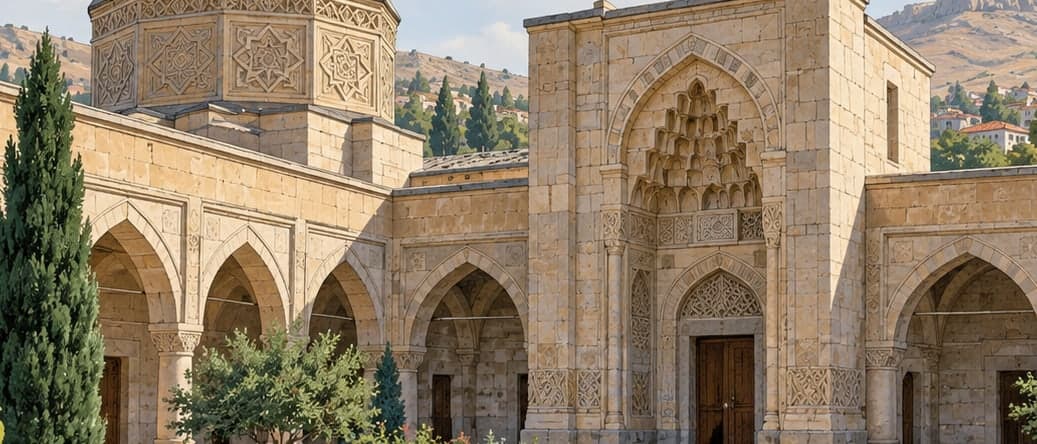
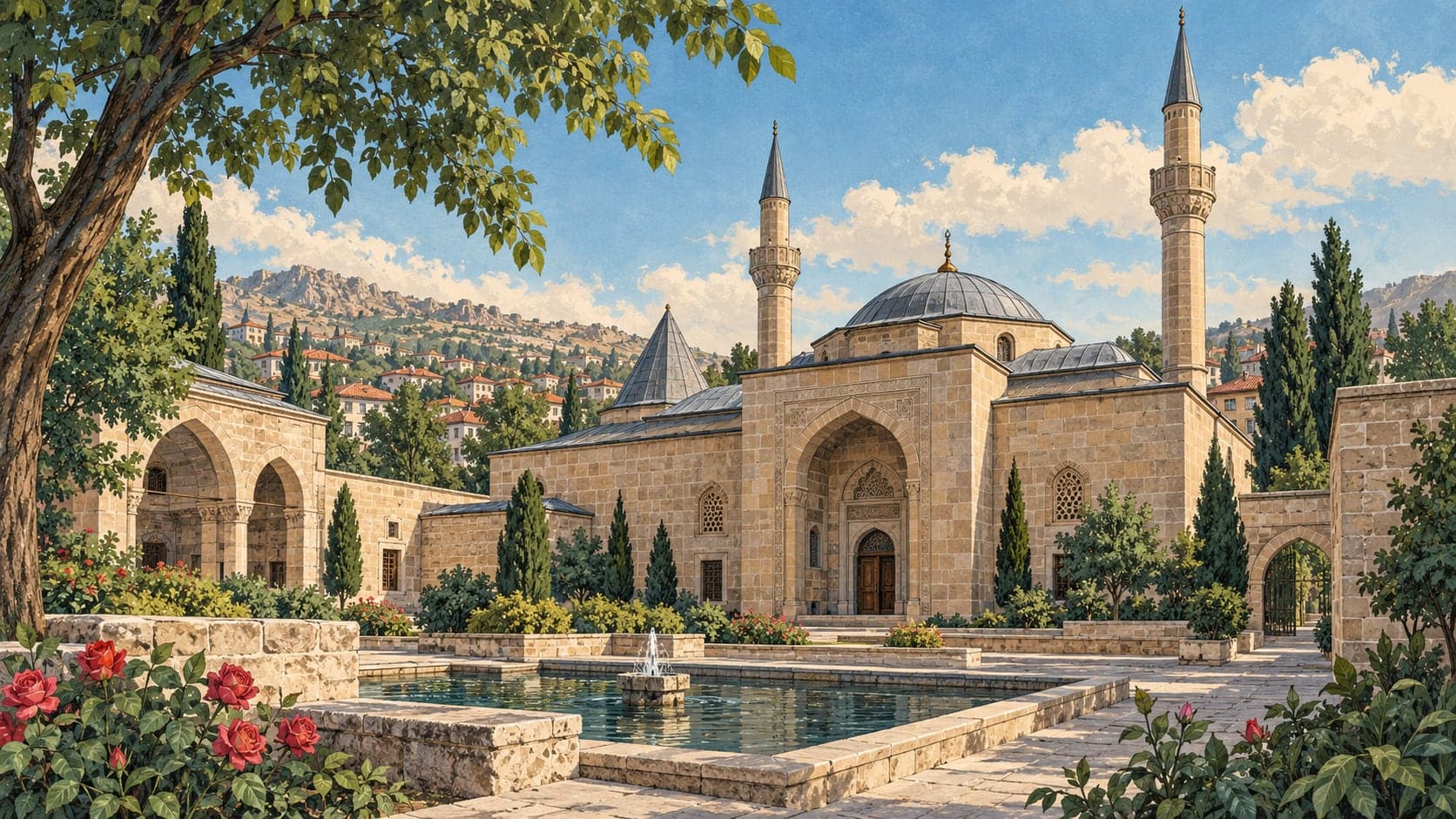
The building itself grew in stages and its first construction date is not known; the estimate is that it began in the fourteenth century as a simple lodge. A building was raised over the tomb in 1450, enlarged in 1481, and a masjid was added in 1561; the minaret dates from the early twentieth century. What stands now is a single symmetrical structure of seven spaces, following the plan of the lodge-and-hostel type of mosque common in Anatolia, and built in good part from material taken from the ancient ruins nearby.