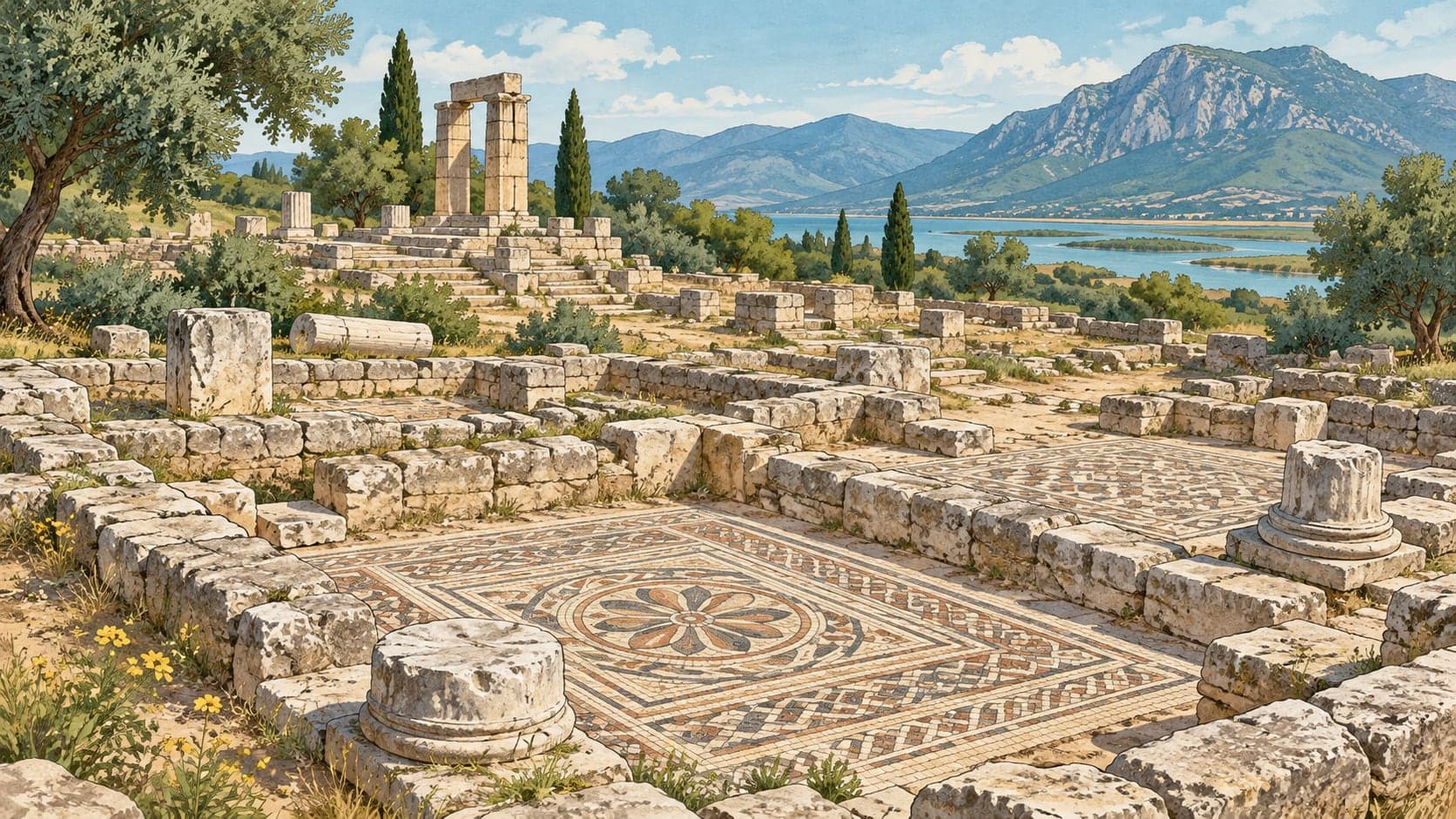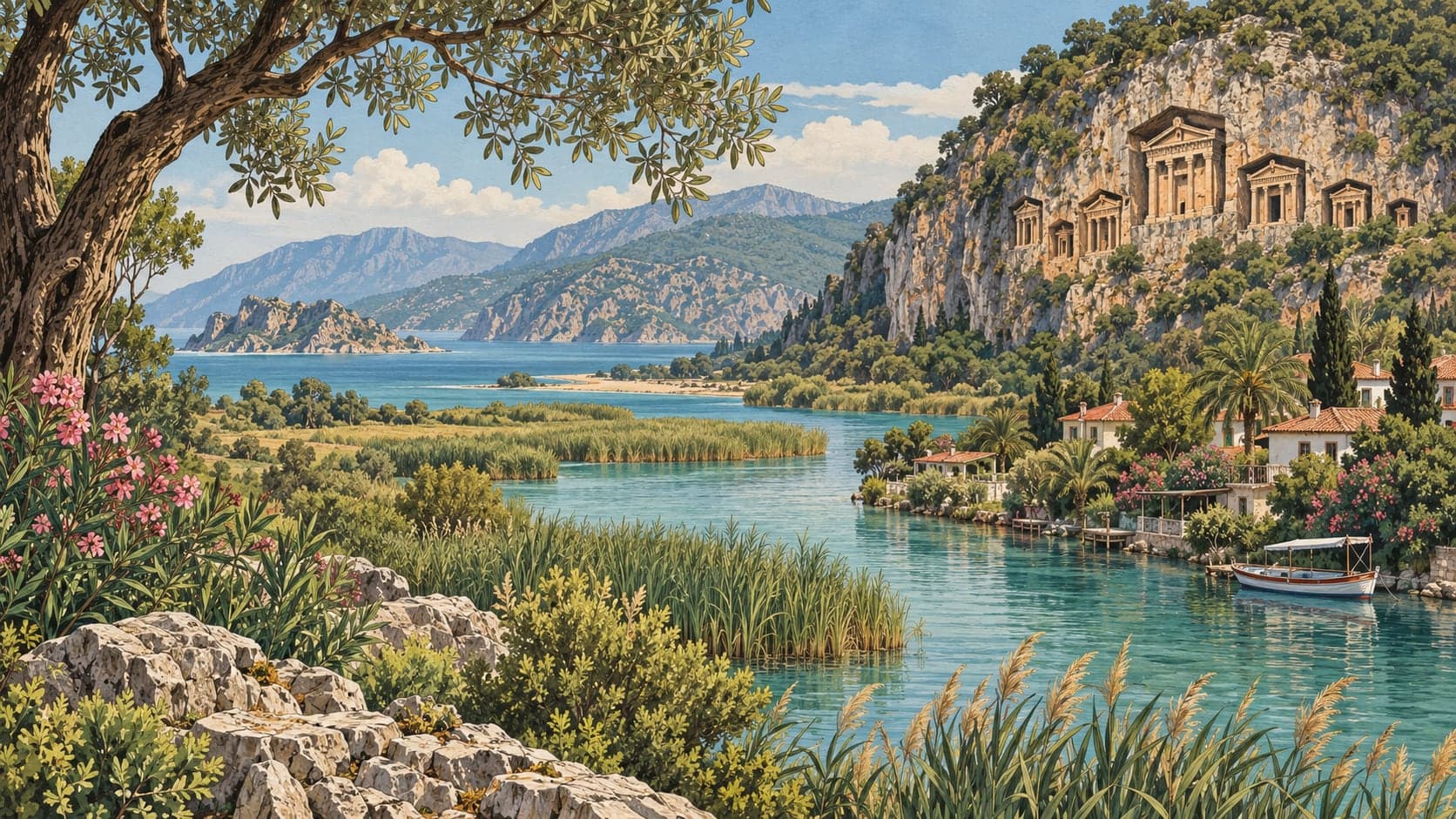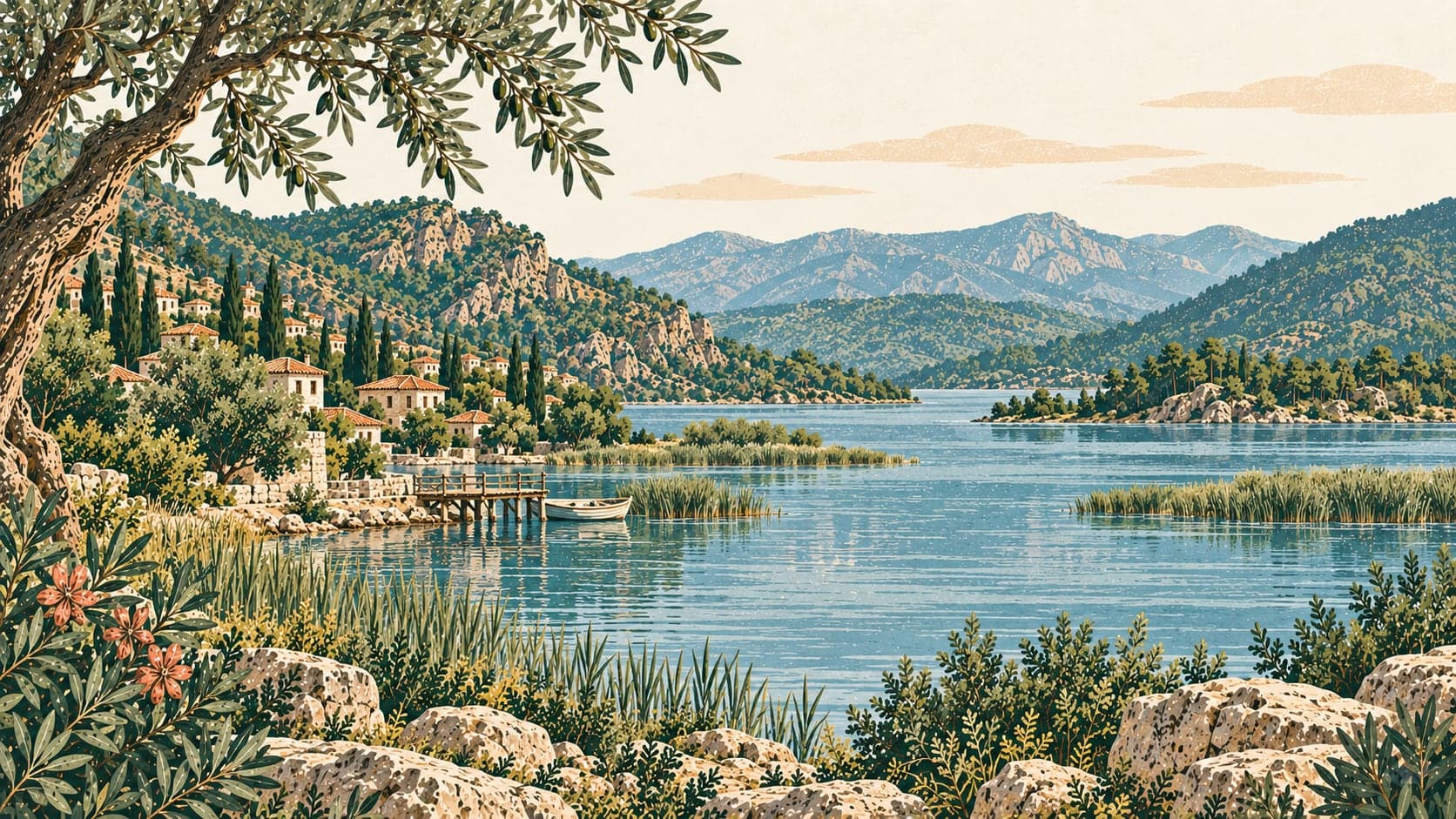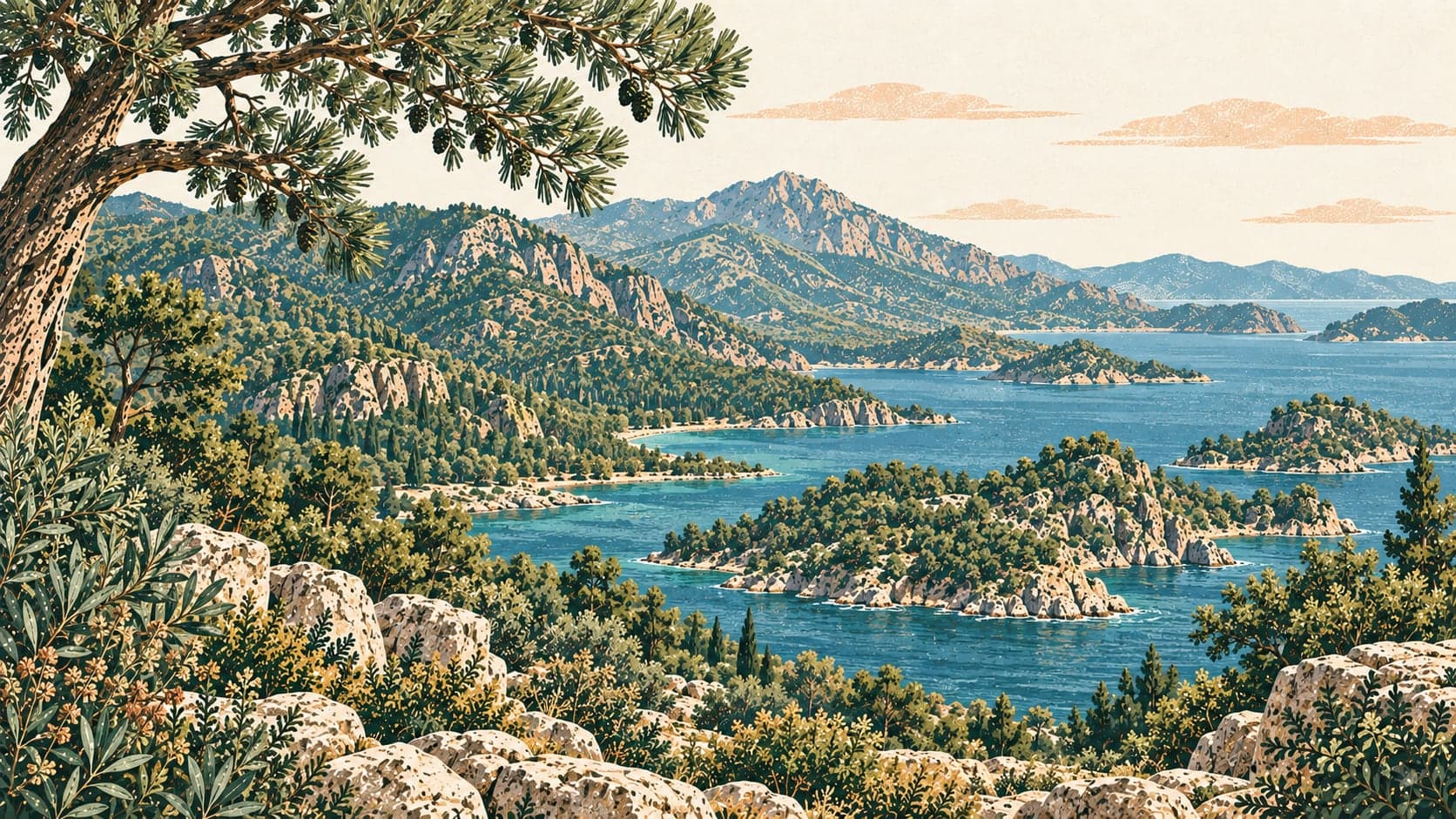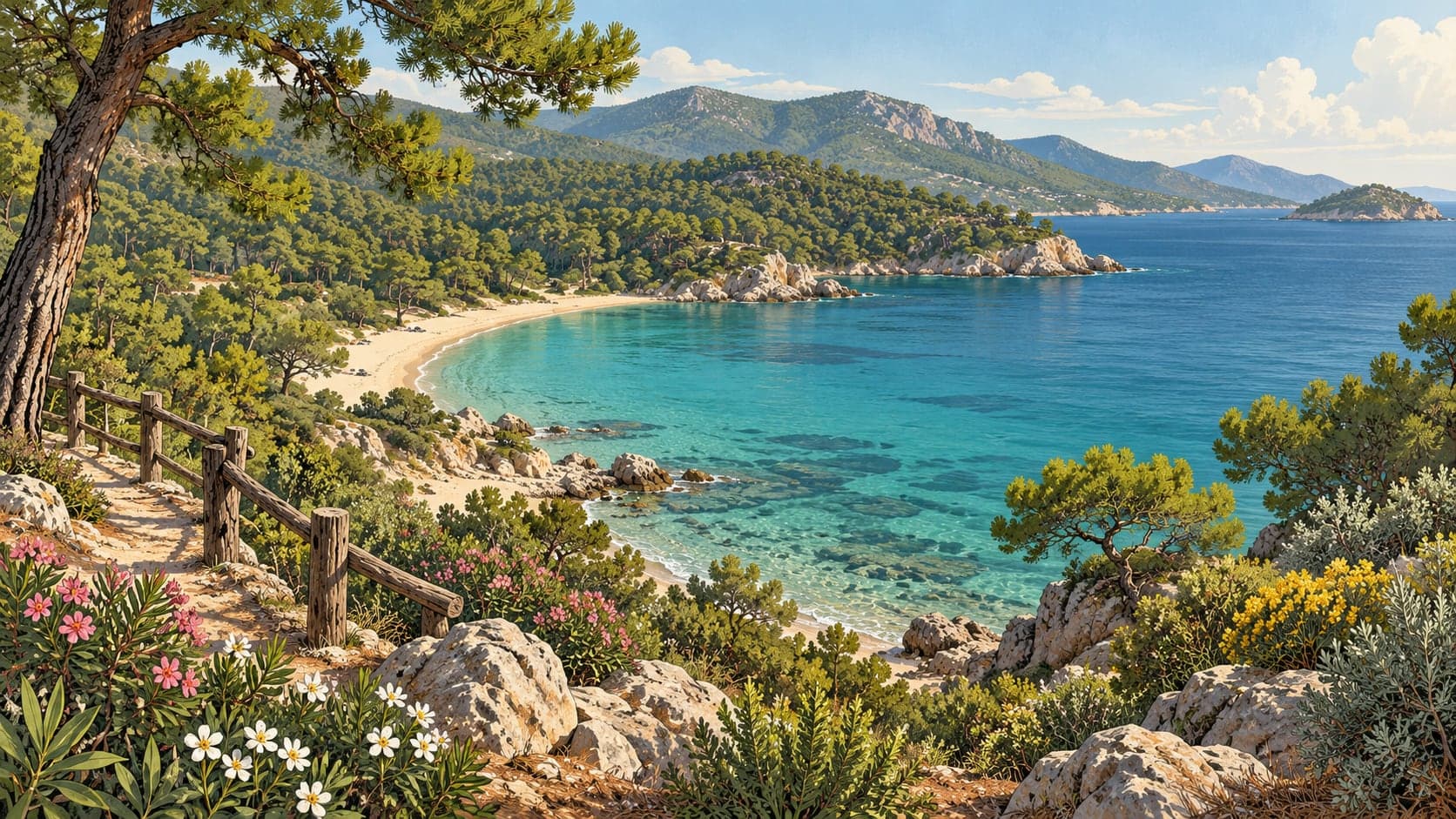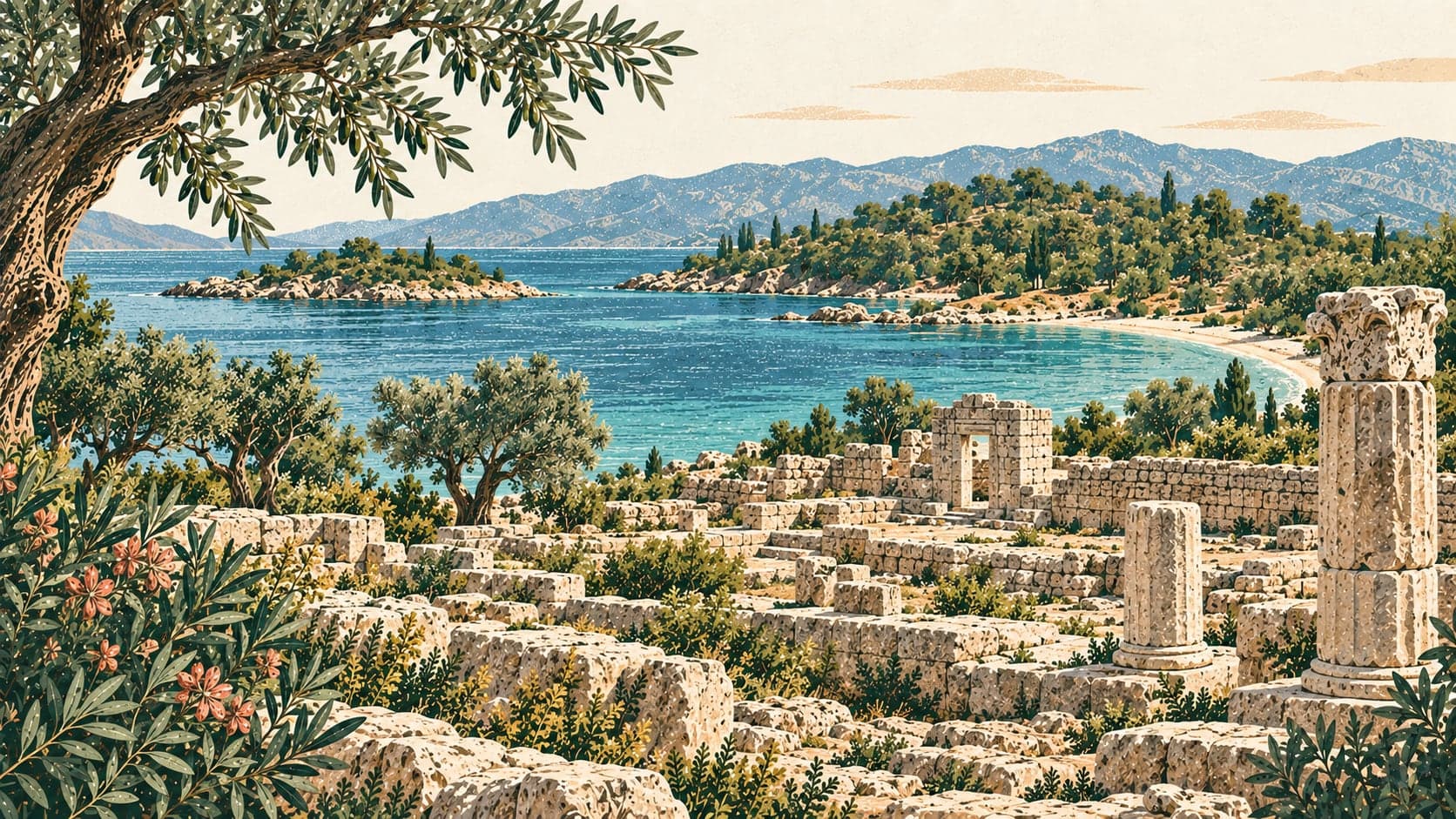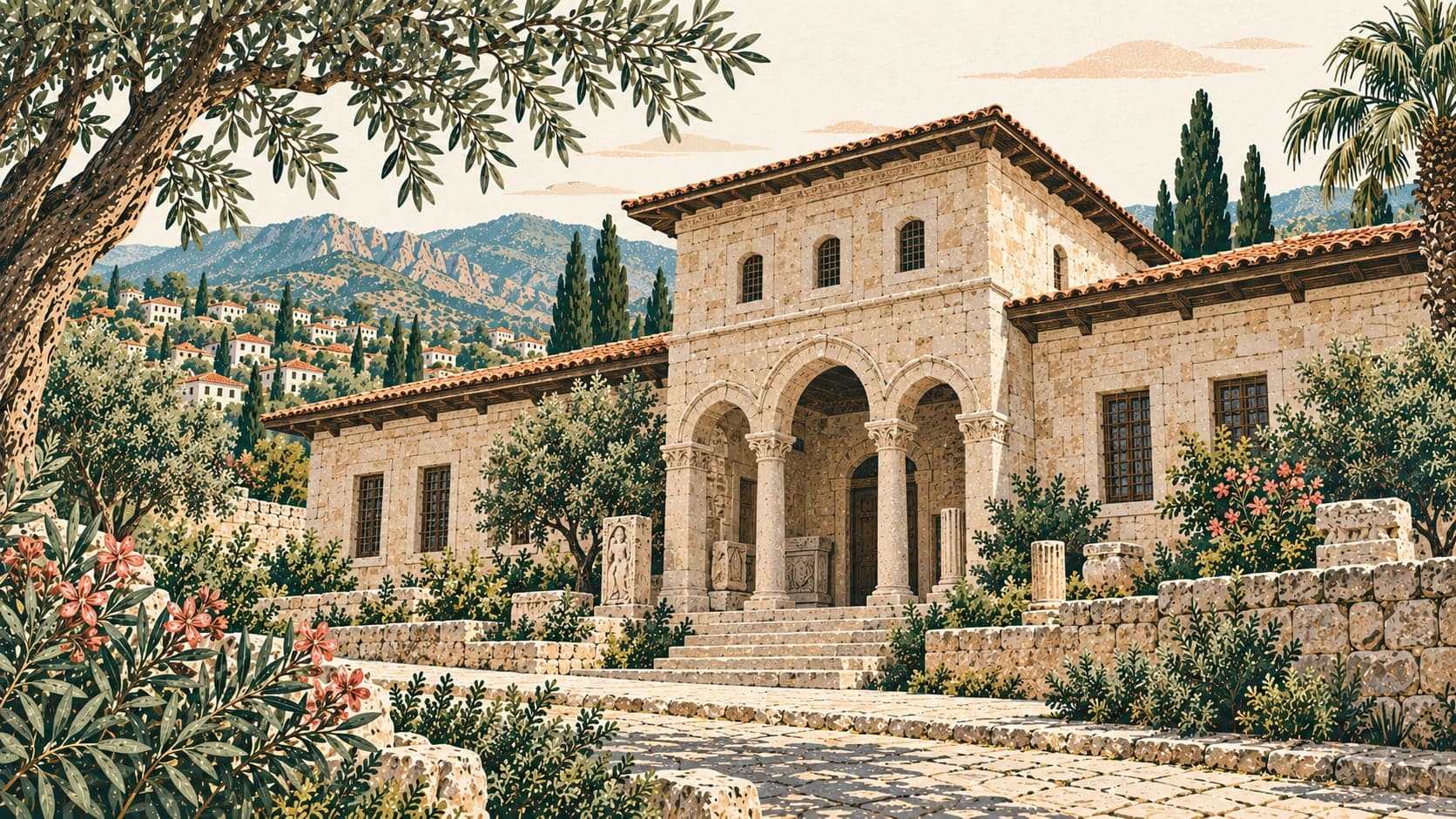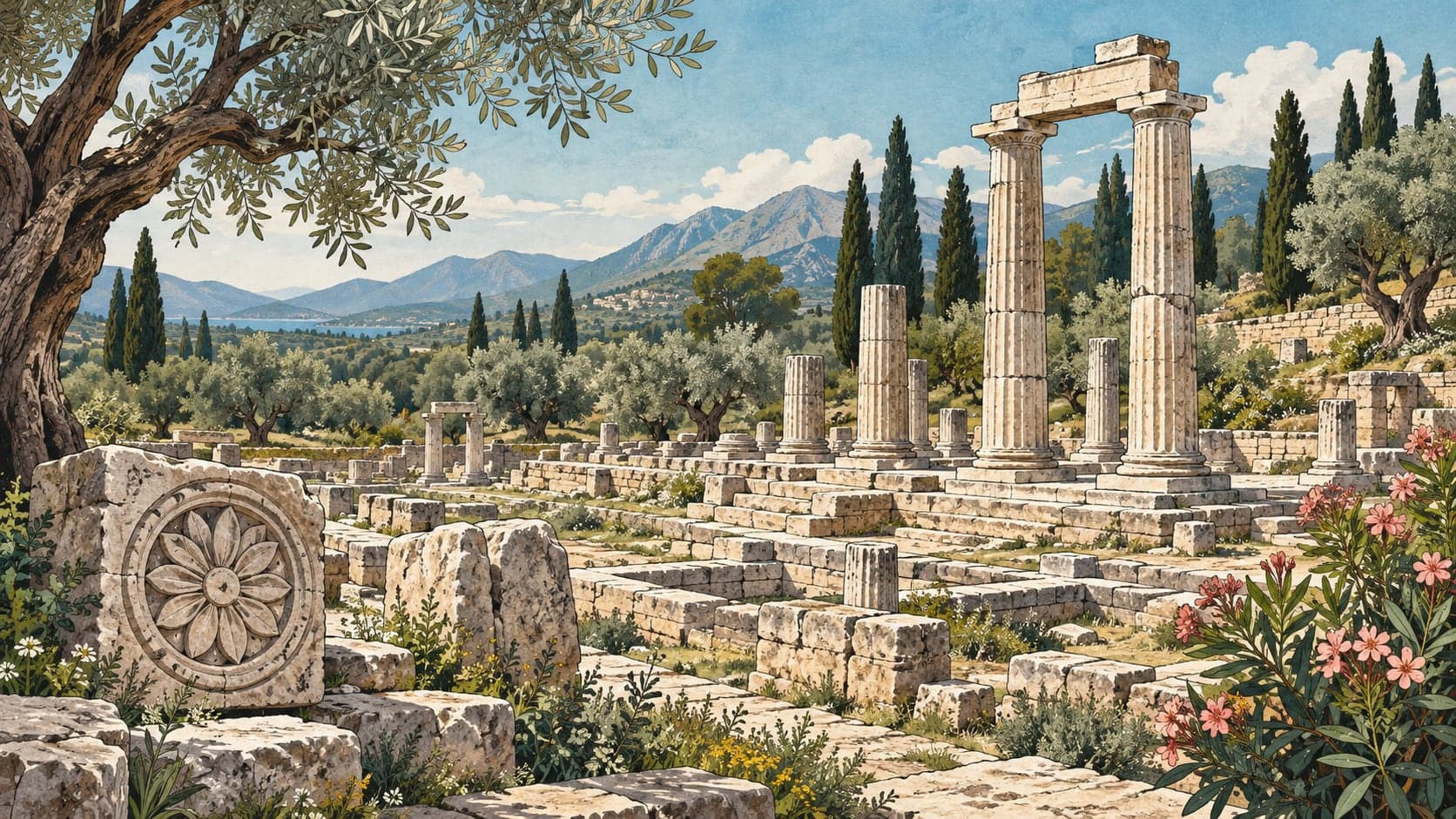
Our compilation for Muğla, not an official route. Its ancient cities are strung along a coast that folds in and out, so the order matters more here than usual.
The east begins in Lycia. Tlos, at Yakaköy, is one of the oldest settlements in the region and was named three different things in three languages; the Saklıkent national park lies a little south of it at Seydikemer.
Then the lakes and the gulf. Dalyan and Köyceğiz lie a few kilometres apart: Köyceğiz is a barrier lake, a tectonic hollow closed off by alluvium so that a gulf became a lake, fed in part by warm springs. Marmaris National Park rings the town on the Reşadiye peninsula, red pine throughout, with oriental sweetgum in the deeper, damper valleys. İnbükü, on the Datça road, is a camping park. Sedir Island, out in the Gulf of Gökova, carries the remains of ancient Kedrai and is reached by boat.
Muğla town holds the museum, in a restored prison building, with the country's first natural history section — fossils from beds found near Özlüce at the end of 1992.
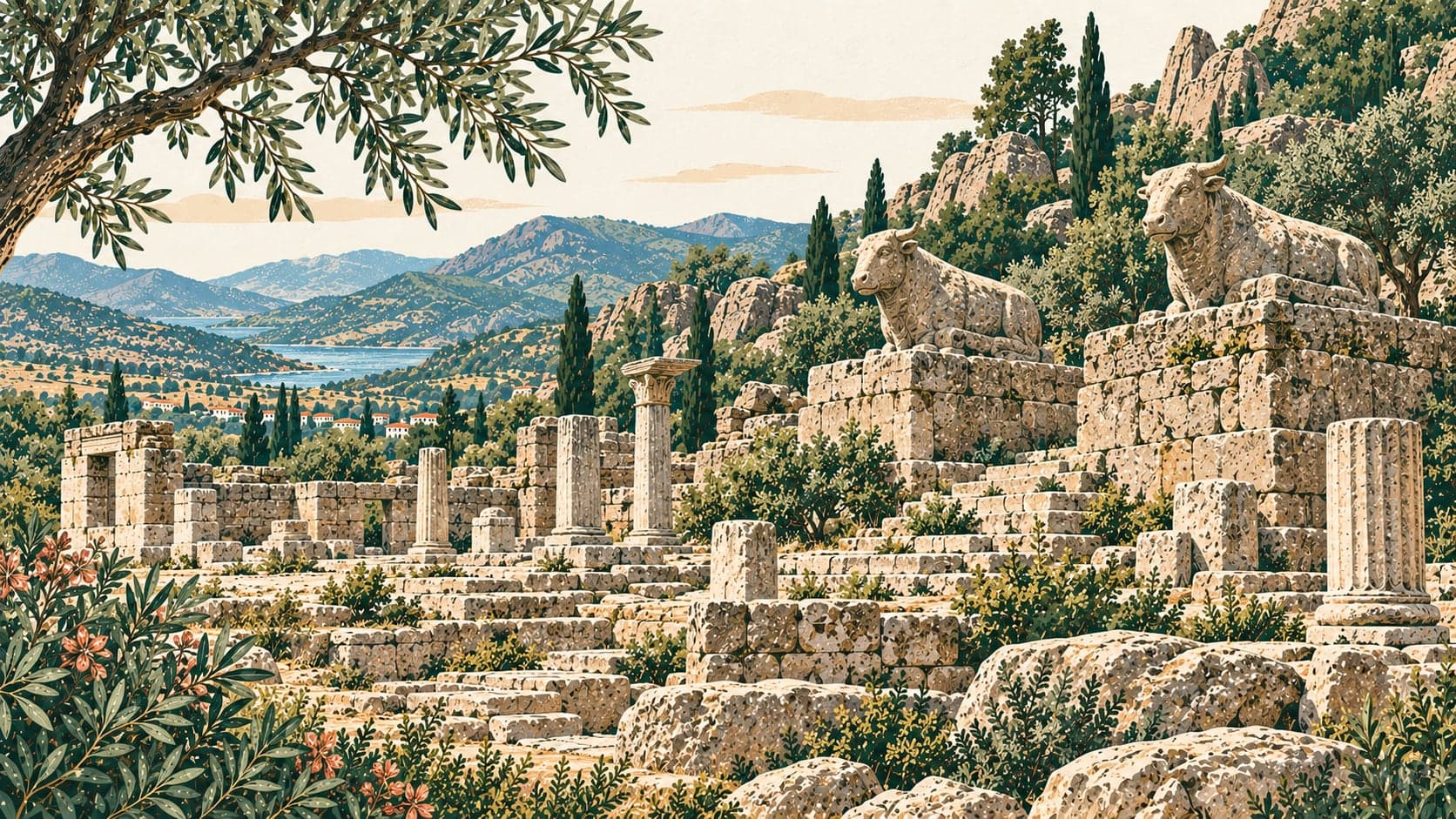
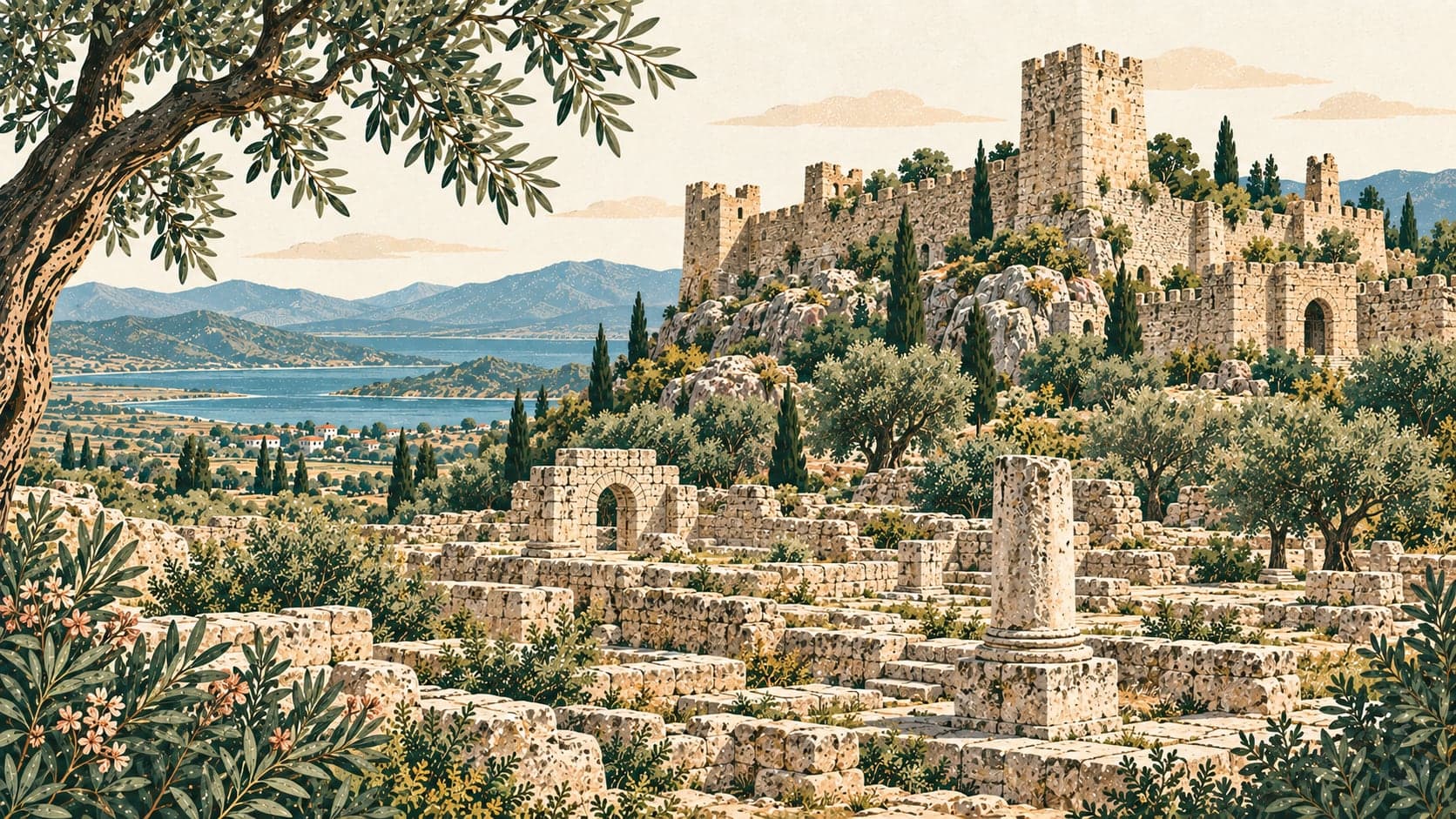
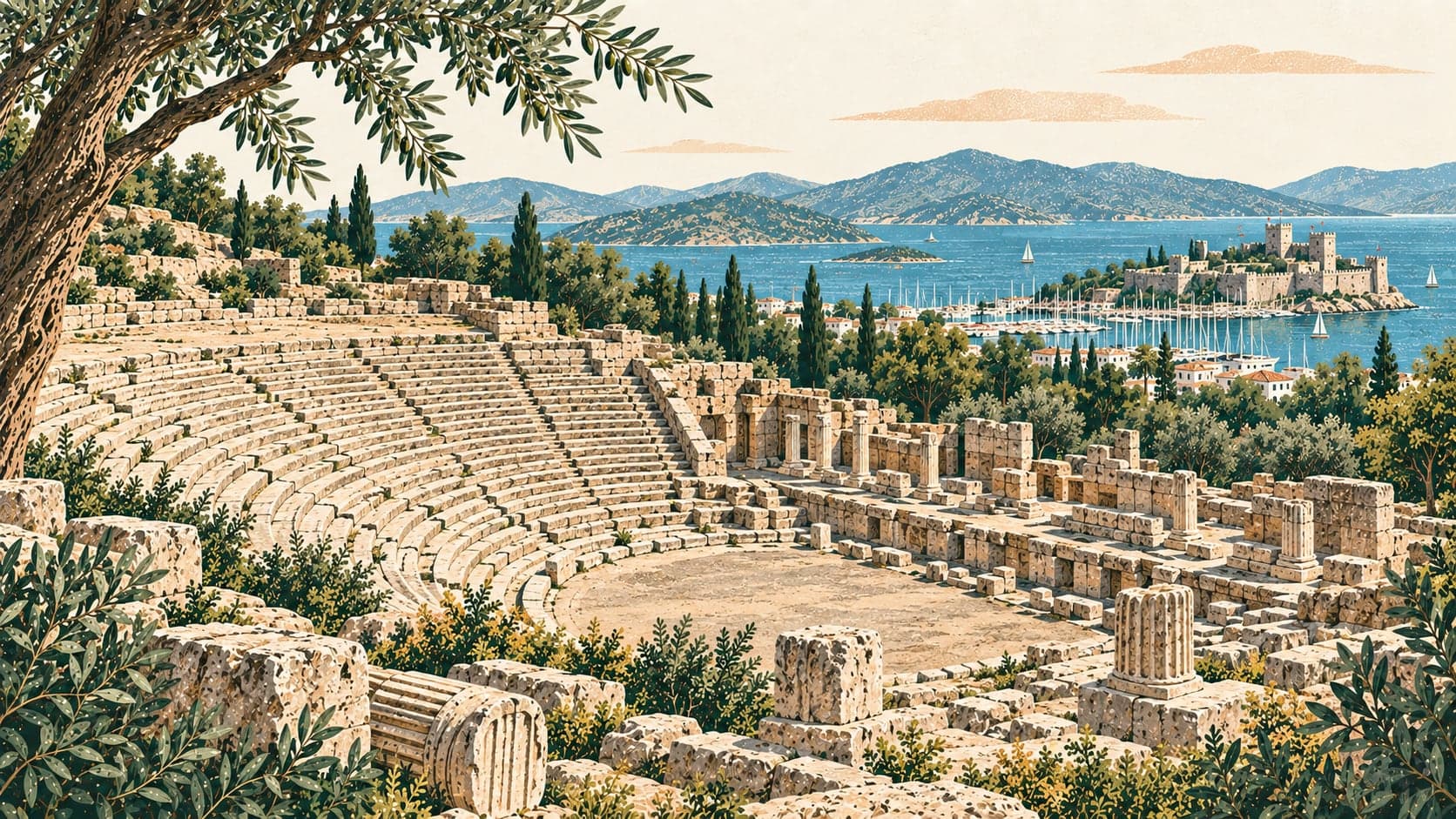
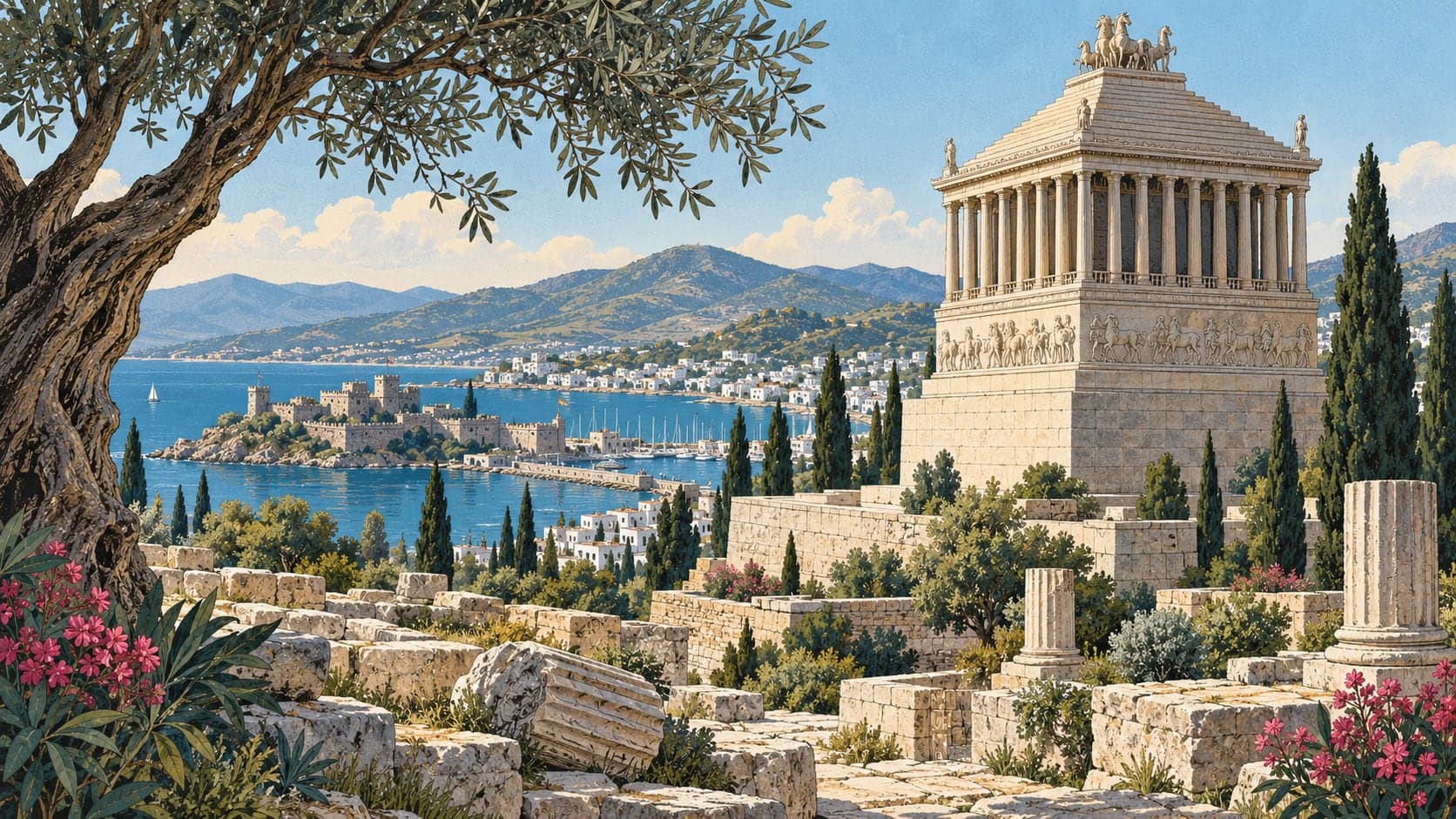
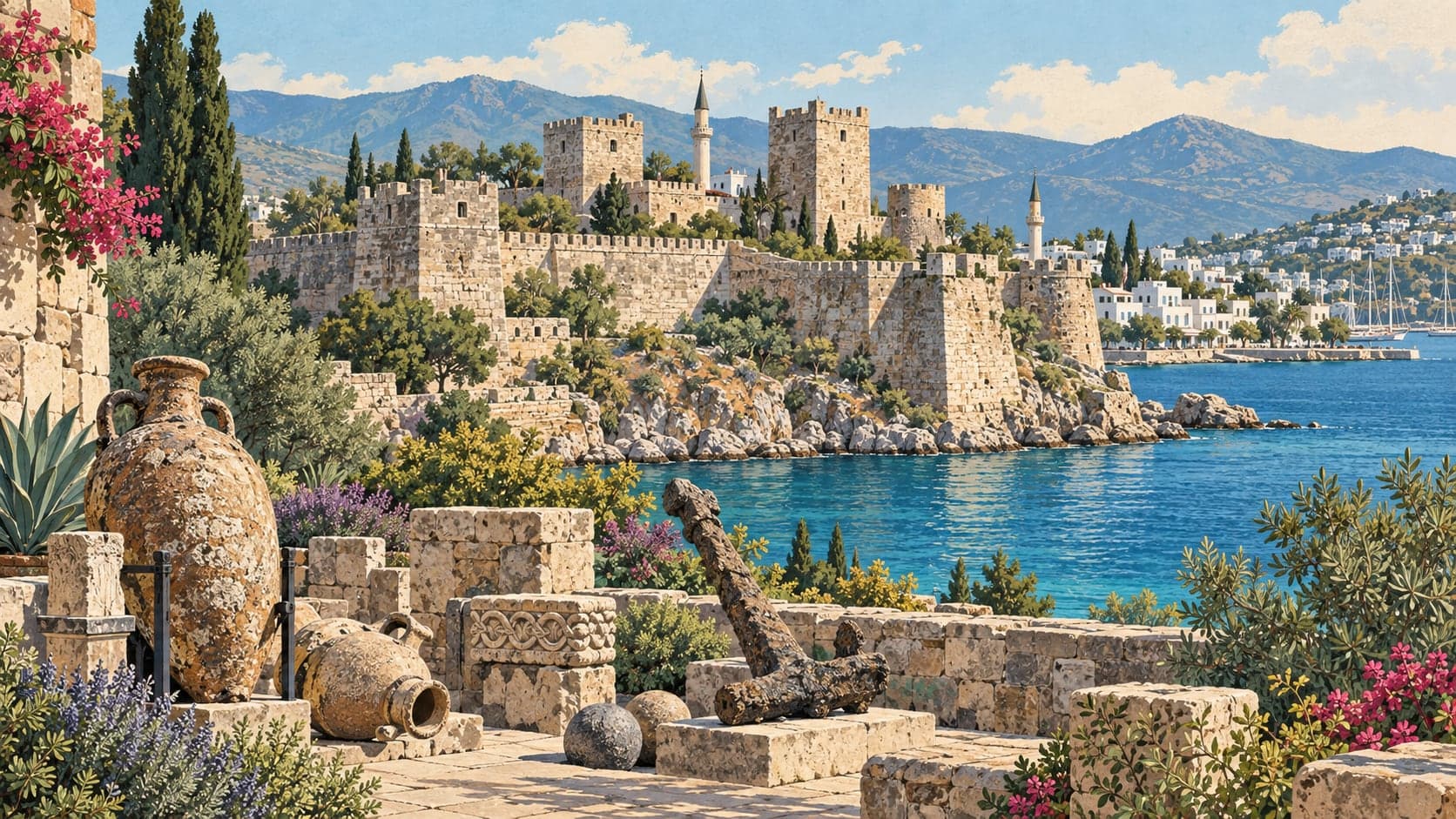
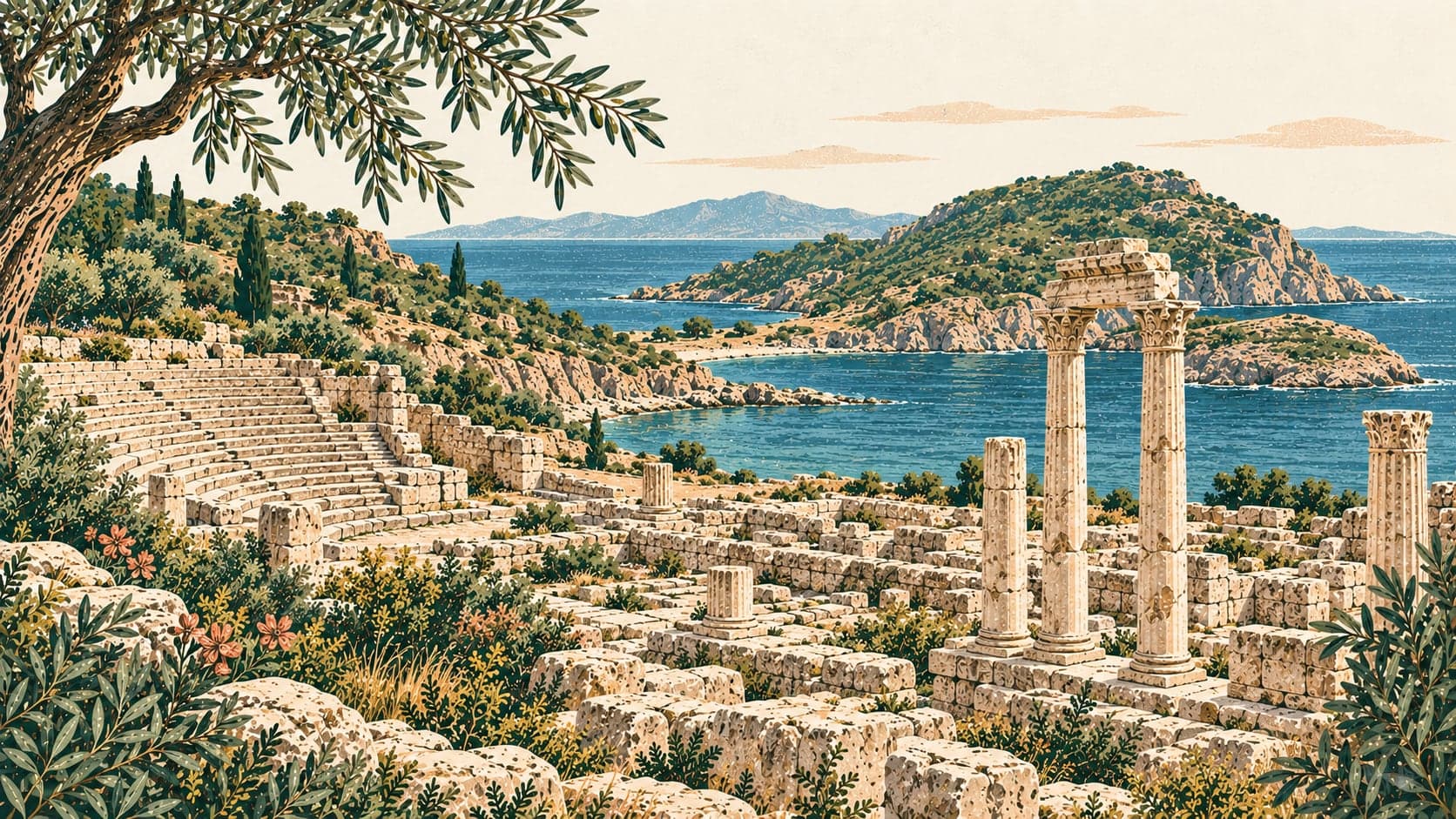
The west end is dense and can be worked as a run of its own: Lagina and Labraunda, both major Carian cult centres, Beçin Castle on its hill above the Milas plain, and then Bodrum, which sits on top of Halikarnassos — the ancient theatre north of the town centre is among the oldest in Anatolia, and the underwater archaeology museum is in the castle below it. Knidos, at the far tip of the Datça peninsula, is the last and the furthest; Strabo wrote that the city rose from the shore like a theatre. What each place is, and who says so, is on its own page.