Guide
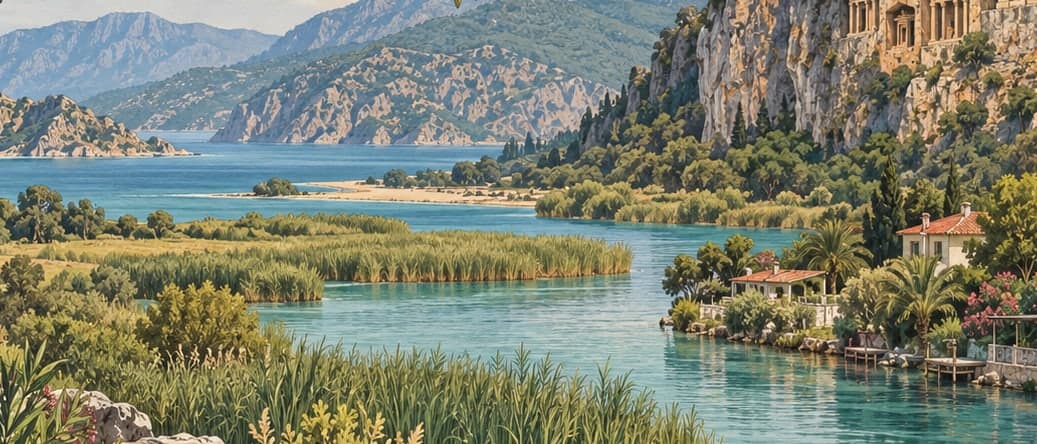
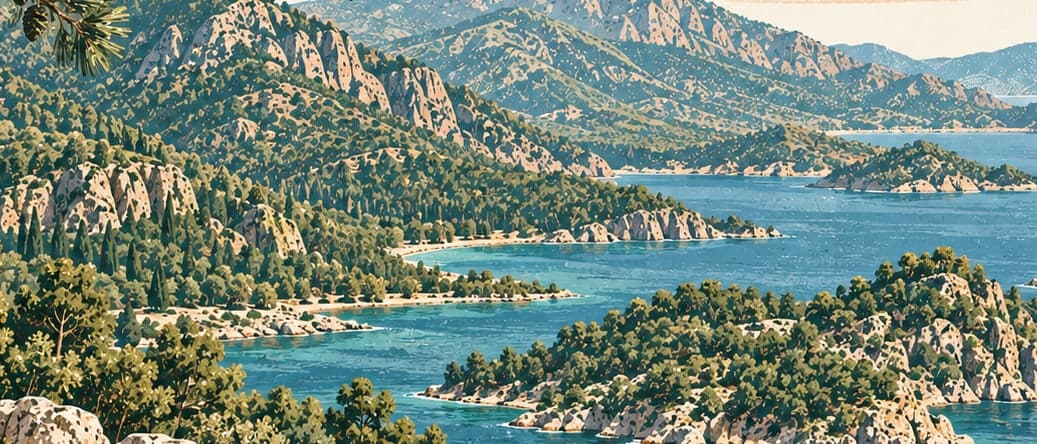
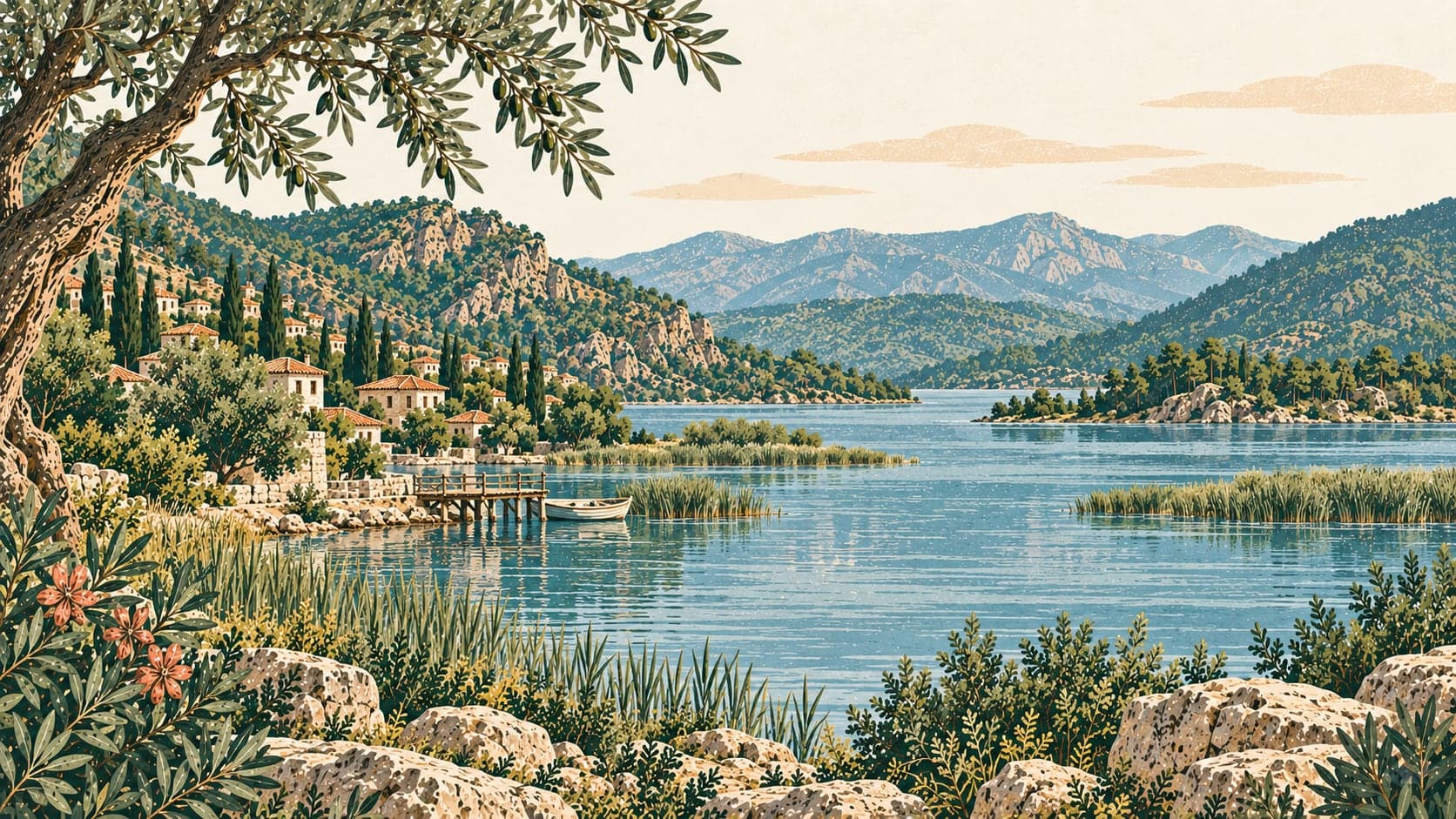
Lake Köyceğiz lies in the Menteşe area in the south-east of Muğla province and, at 52 square kilometres, is the sixteenth largest lake in Türkiye. It is a barrier lake: a tectonic hollow filled with water, its mouth closed off by alluvium carried down by the Dalaman stream, so that what was once a gulf became a lake. Its surface stands about eight metres above sea level.
A good many waters feed it. The Namnam, the Kargıcak and the Yuvarlakçay are the main ones, and springs feed the lake as well, three warm and two cold rising from the bed. The Yuvarlakçay matters both economically and ecologically, and besides the tourism along it, it holds the largest trout farm in Türkiye.
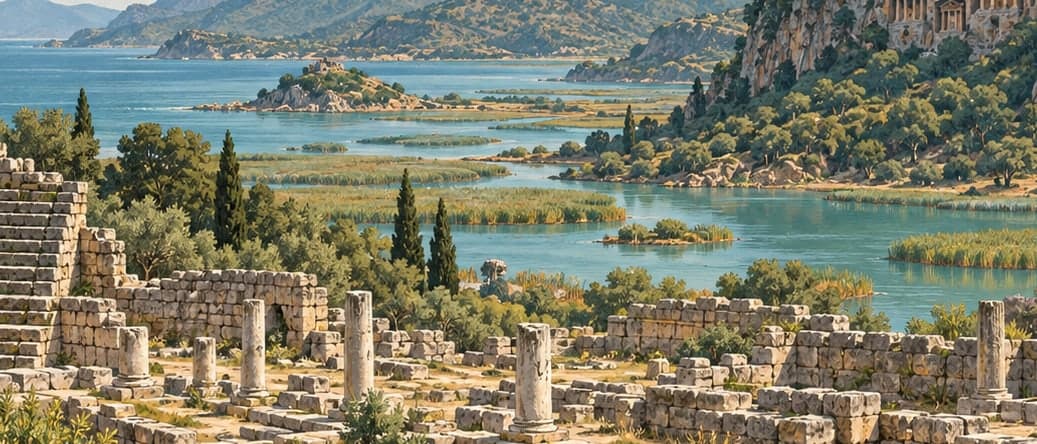
The lake drains through the Dalyan channel, a natural waterway about a metre and a half deep and ten kilometres long that winds in meanders down to the Mediterranean. The streams entering the lake have built deltas large and small; being shallow, these are marshy ground where reeds and rushes grow.
The lake is made up of two basins, north and south, divided by a ridge running east to west where the depth drops to two metres. The southern basin reaches thirty-two metres deep, the northern twenty-five.
There are two distinct layers of water. The upper layer is about eight metres thick in both basins, with a transition layer of seven metres between the two in the south; the lower layer is seventeen metres thick in both. In the northern basin the upper layer runs between 15.6 and 20.2 degrees and the lower between 11.3 and 13.5; in the south the upper layer runs between 18.4 and 21.7 and the lower sits at 15.3. The south is warmer because of the underwater geothermal springs in the bed, a continuation of the thermal fields around the lake. The two layers do not mix, which makes this a meromictic lake.
Water carrying sulphur from the hot springs around the lake mixes into it. The shores matter a good deal for health tourism, and the source says a number of complaints are treated at the thermal springs here. The lake is calm almost all the time, and water skiing is possible for eight months of the year.
The water is rich in plankton and holds a wide range of fish — grey mullet, sea bass, gilt-head bream and flounder among them. Fishing carries real economic weight, and the name Dalyan comes from the fish weir set up here.