Guide
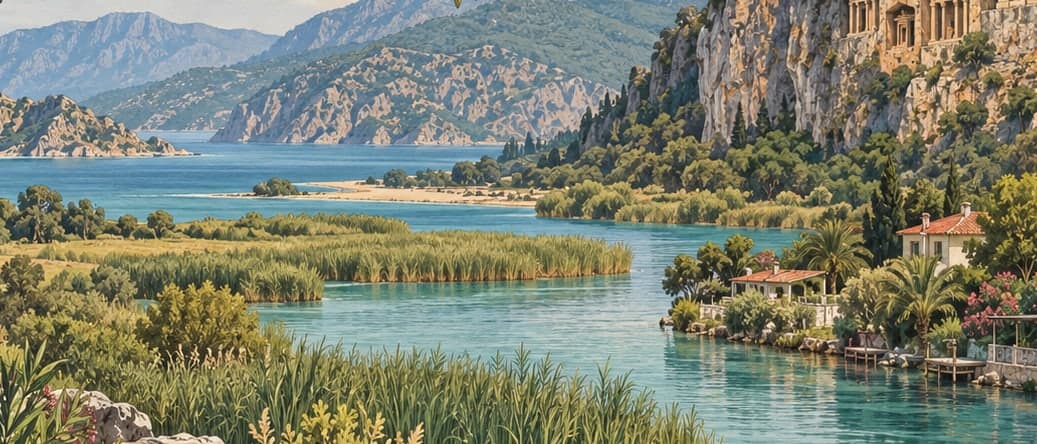
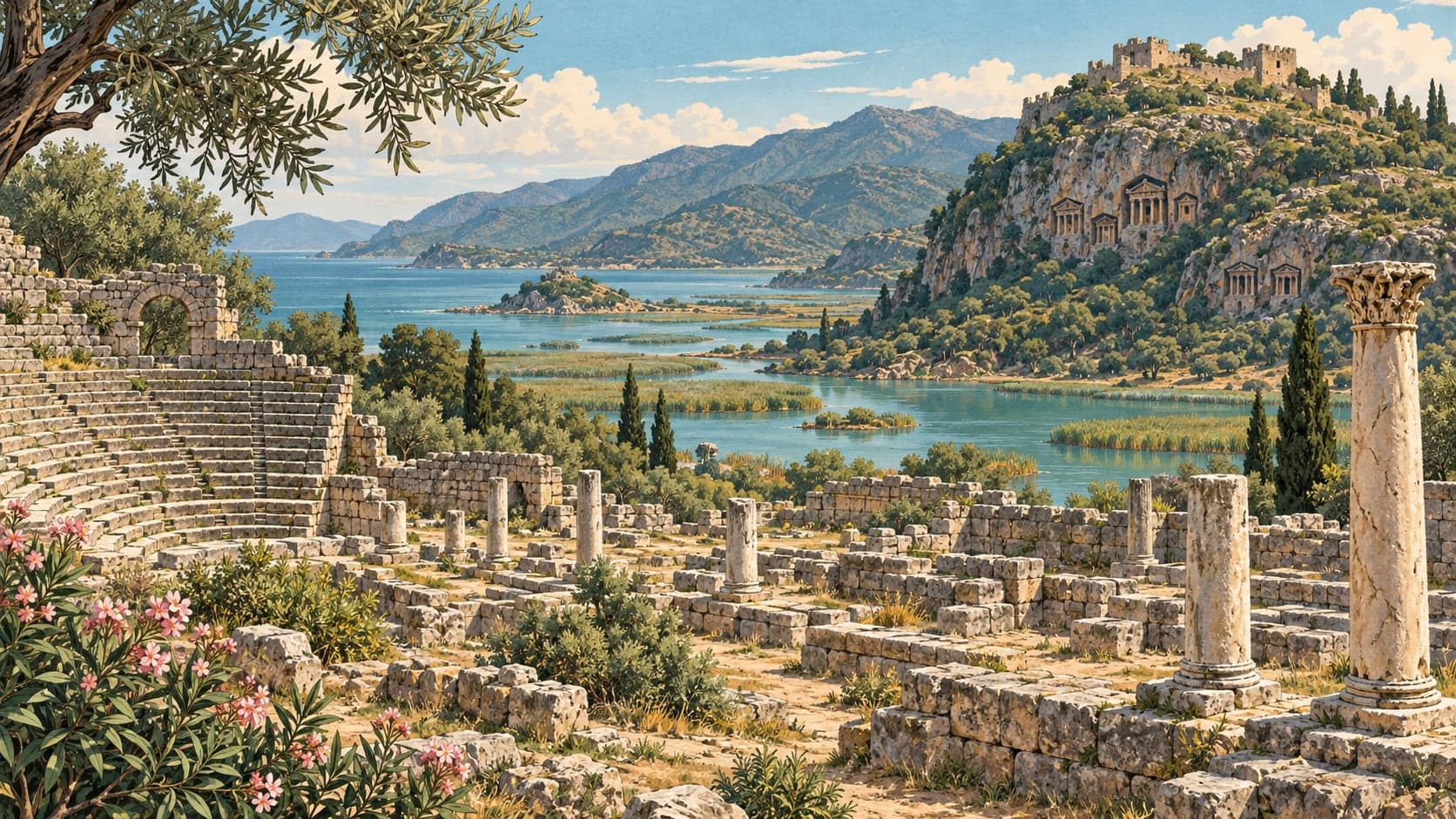
Kaunos stands on the western bank of the Dalyan stream, which links Köyceğiz lake to the Mediterranean, within Çandır village in Köyceğiz district. Strabo wrote that the city had a harbour that could be closed and shipyards — but like many harbour cities on the Anatolian coast it now lies well inland, and it was the silting of that harbour that gradually cost Kaunos its importance.
The ministry passes on the myth Ovid tells of its founding. Kaunos and Byblis were the twin children of Miletos; Byblis loved her brother so much that she wanted to be with him always, and knowing the love was against nature she declared it in a letter. The legendary king met it with anger and disgust, fled Miletus so as never to see his sister again, came to the border of Caria and Lycia and founded the city.
After the Persians took Anatolia the city passed first to Maussollos; after Alexander defeated the Persians in 334 BC to princess Ada, then to Antigonos, then to Ptolemy. It came under the kingdom of Rhodes, the kingdom of Pergamon and the Roman empire in turn.
The acropolis sits on a high hill. The walls belong to different ages and can be read that way: the long wall runs from the north side of the harbour to the cliff beyond Dalyan village, its northern part built in Maussollos's time, the stretches to the northwest Hellenistic, and those towards the harbour Archaic. The wall on the northern side of the acropolis is medieval.