Guide
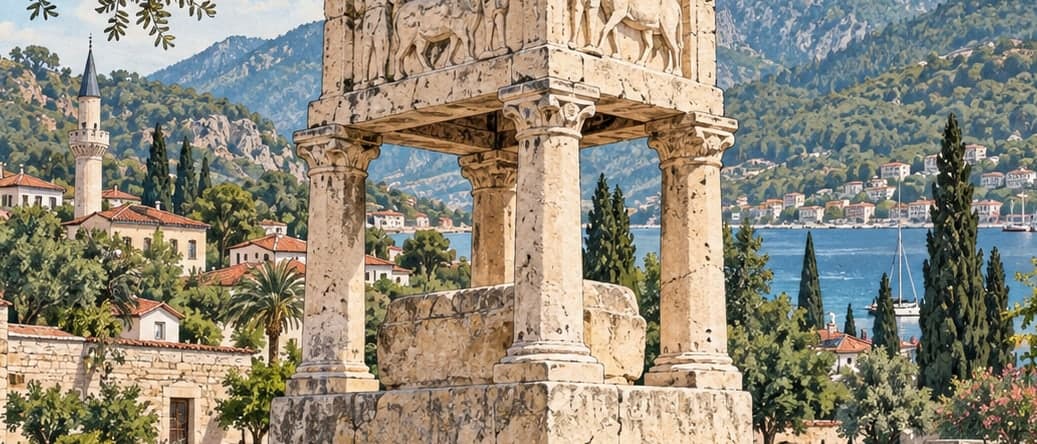
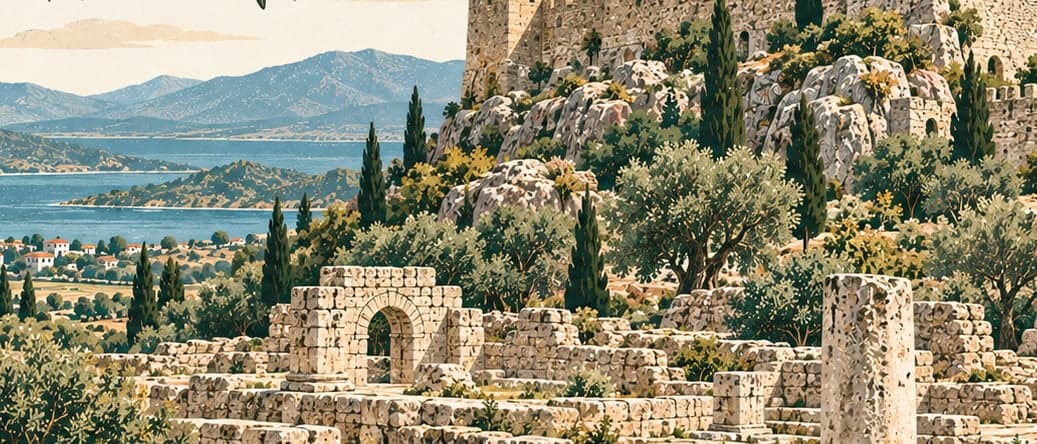
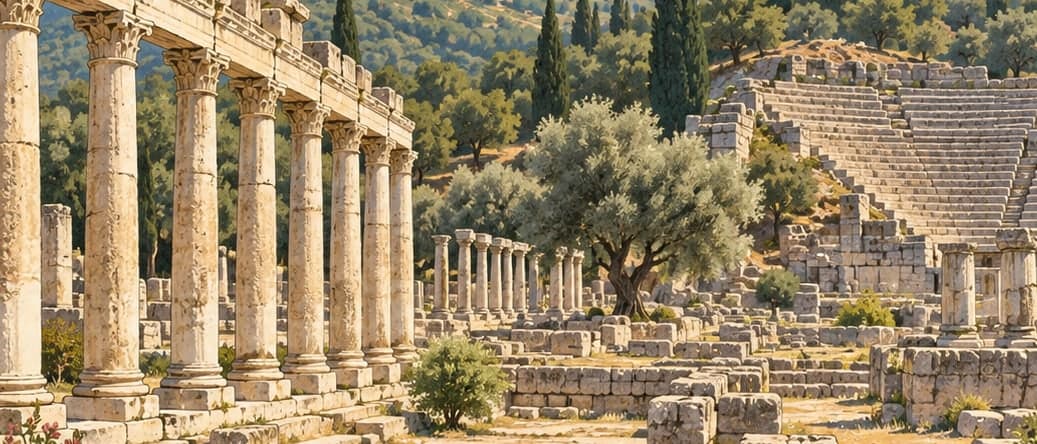
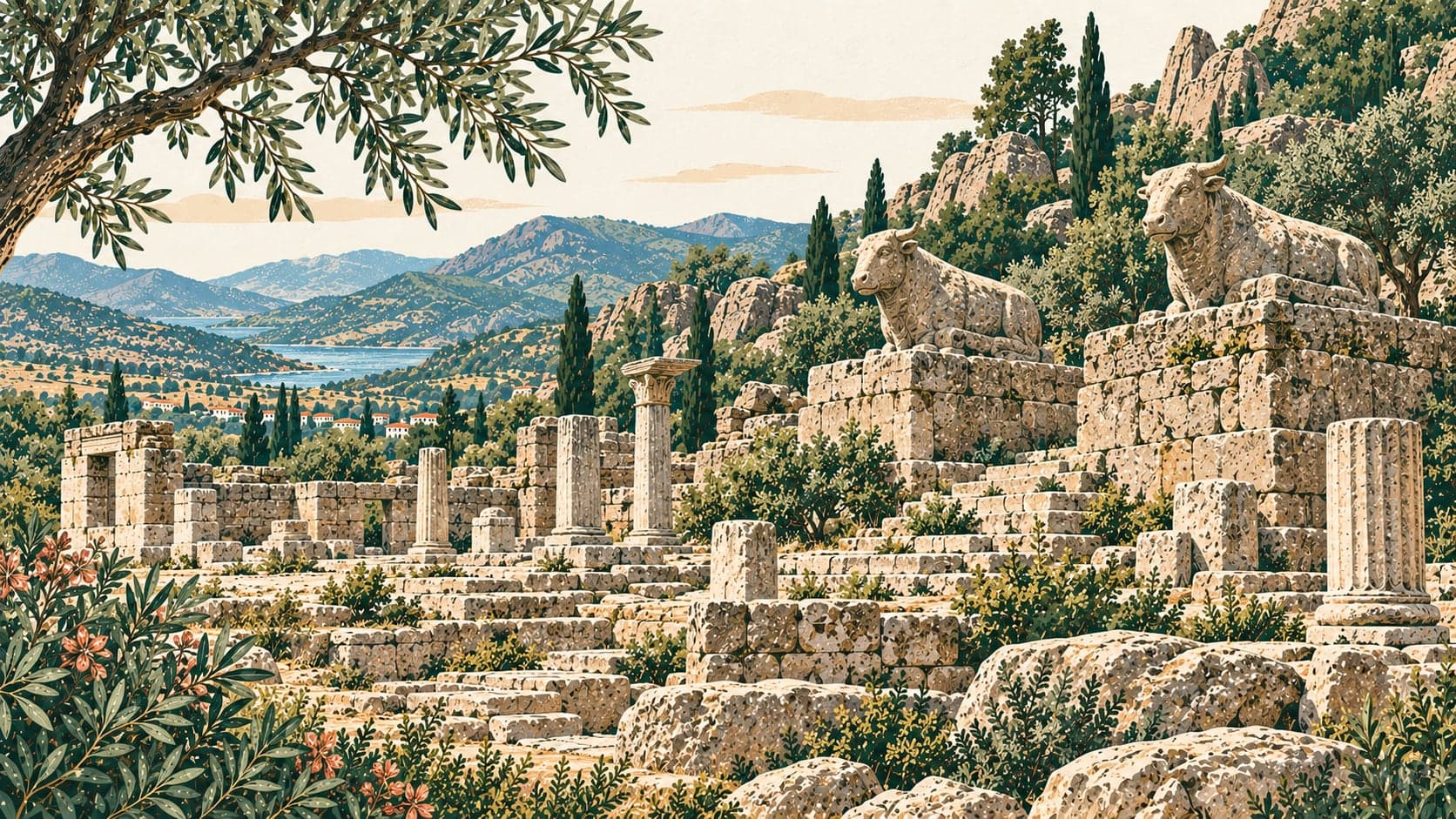
Labraunda was a cult centre of real importance to the Carians of southwestern Anatolia, and the ministry suggests the cult of Zeus Labraundos — the Zeus of the double axe — probably grew from the spring here and the great rock immediately above the temple terrace.
The earliest finds are Early Bronze Age, but the first temple is sixth century BC. At that stage the sanctuary was a terrace with a small temple and a grove of plane trees. The Carians who joined the Milesians in revolt against Persia fought a battle here in 497 BC and were badly beaten.
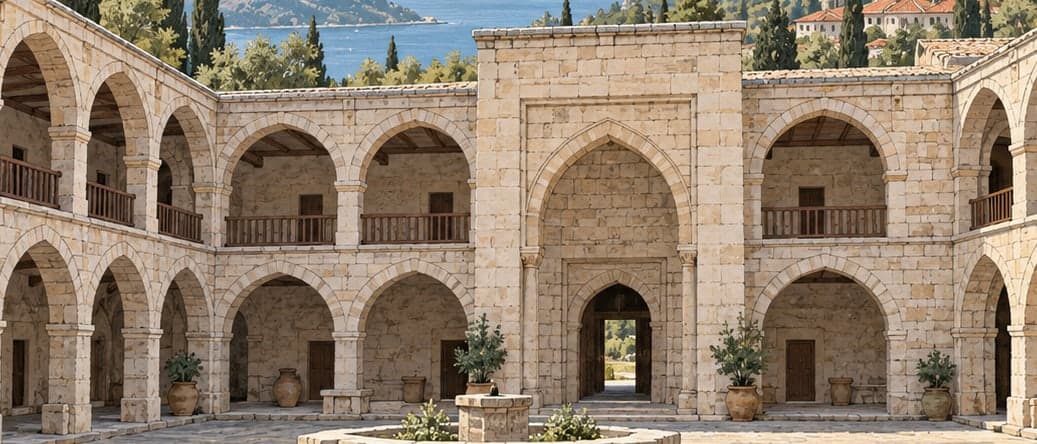
It was Maussollos, satrap of Caria from 377 to 352 BC, who turned Labraunda into a family sanctuary in the middle of the fourth century. He and his brother Idrieus, who ruled from 351 to 344, built the temple of Zeus, two large andrones — halls for religious dining — the North Stoa, the Oikoi building, the South Propylon and the Doric building. A paved road eight metres wide, called the Sacred Way, ran up to the sanctuary from Mylasa, today Milas. Religious festivals lasting five days were held here each year, and at one of them, in 355 BC, Maussollos narrowly escaped an assassination attempt.
The dynasty that built all this was local. Caria had belonged to the Persian empire since 546 BC and was governed by satraps appointed by the Great King at Persepolis; in the fourth century those satraps came from a Carian house, the Hekatomnids. Hekatomnos ruled from 392 to 377 BC and was followed by five of his children in turn — Maussollos, then Artemisia, who was both his wife and his sister, then Idrieus, then Ada, his wife and sister in turn, and last the youngest, Pixodaros. Alexander restored Ada to power in 334. The Carians spoke their own Indo-European language, related to that of their Lycian neighbours, in a country bounded by the Büyük Menderes to the north and the Dalaman stream, the ancient Indos, to the east.