Guide
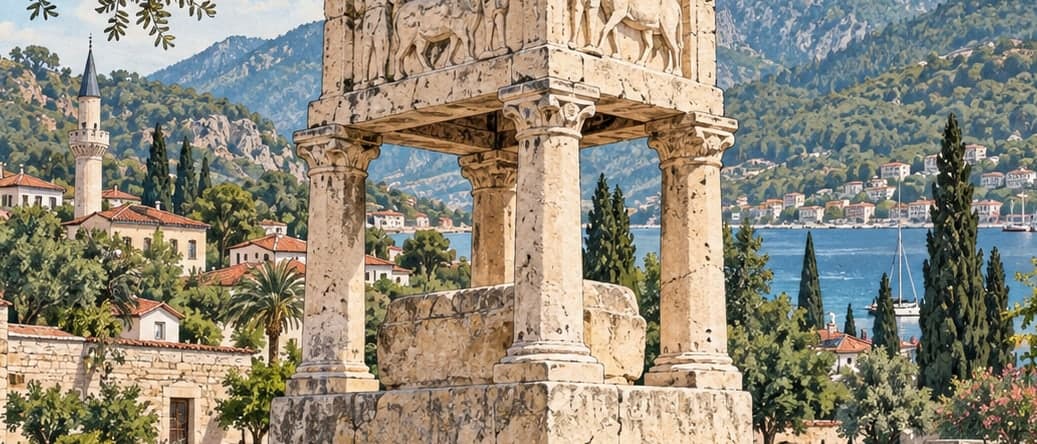
The temple of Zeus at Euromos is what survives best here, and the ministry counts it among the half-dozen best-preserved temples in Asia. It is a second-century AD Corinthian building with six columns across the front and nine along the sides.
Look at the columns and you can see the work was never finished: three on the north side and one at the southwest corner were left unfluted. On the north and west faces every column carries a panel with a votive inscription — five of them given by Menekrates, a physician and public official, together with his daughter Tryphania, and seven by another official named Leo Quintos.
Euromos was the most important city in the region after Mylasa. Its name appears in the fifth century BC as Kyramos or Hyramos; Euromos means strong in Greek, and the ministry suggests the form came into use through Maussollos's policy of Hellenisation. An inscription records a quarrel with its northern neighbour Herakleia, whose people plundered Euromos territory and carried off sacred and private property; a Euromian affected by the raid applied to the authorities at Mylasa, who settled the matter by sending an envoy to Herakleia.
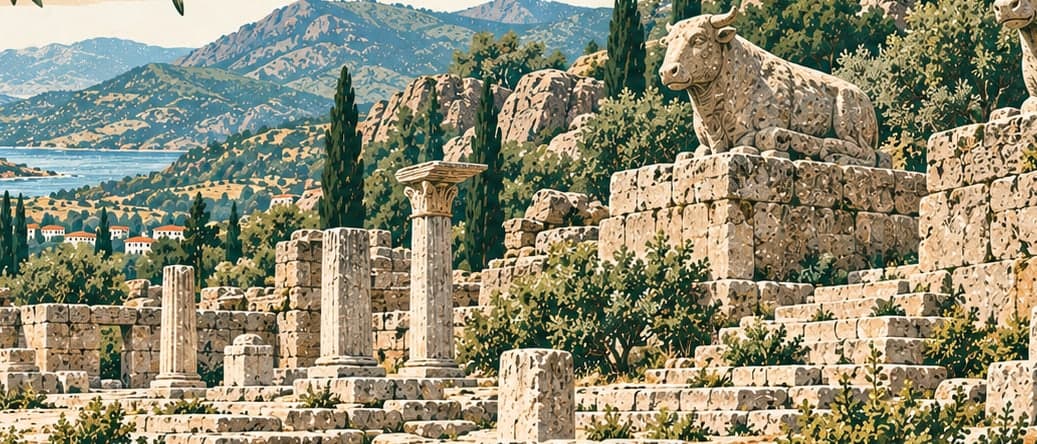
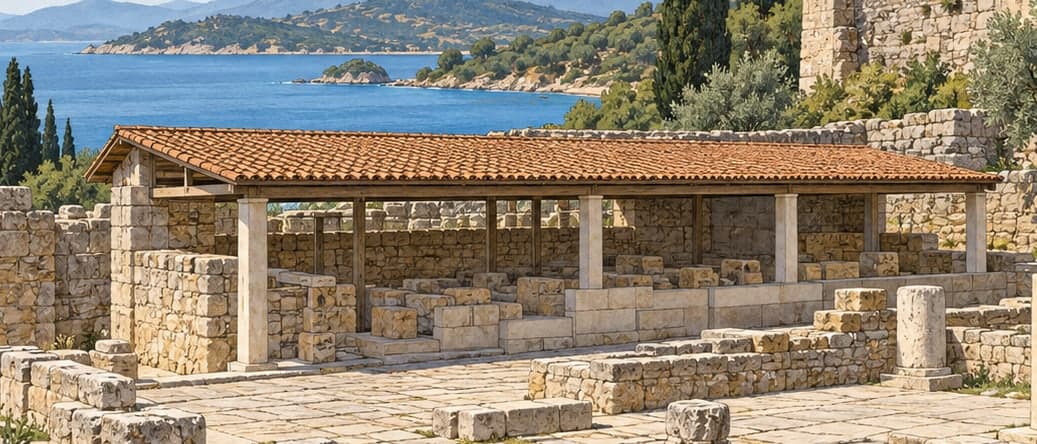
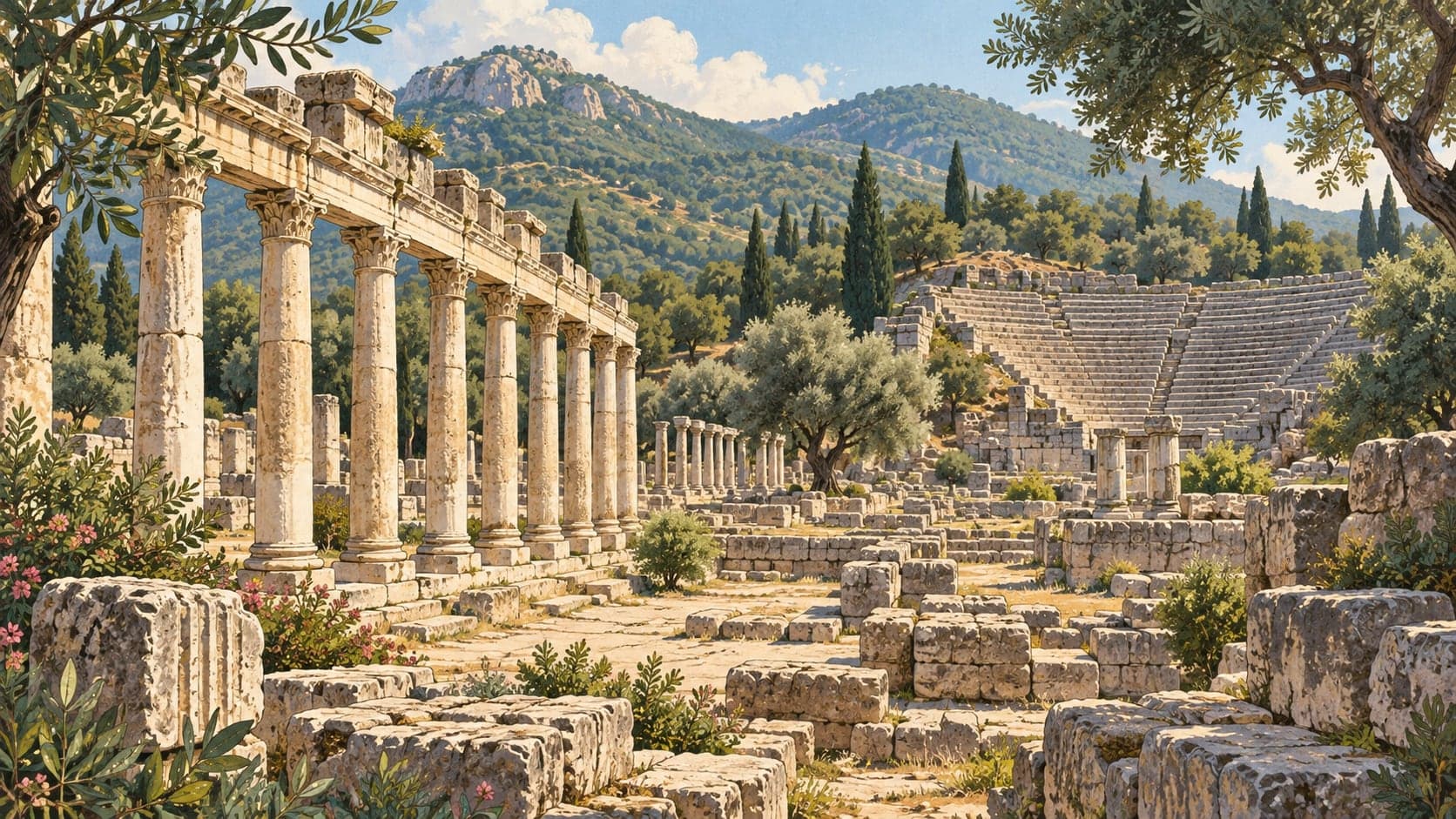
The rest of the site is worn. The theatre, large but in poor condition, sits in a fold of the slope just above the plain, with the northern parts of its five visible rows of seating well preserved. A few columns of the stoa enclosing the agora can still be made out on flat ground, with another stoa further west.