Guide
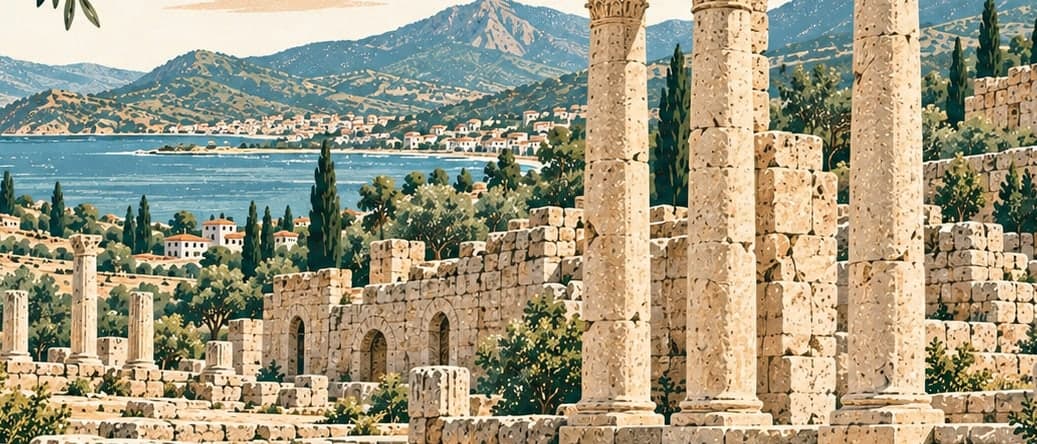
Bodrum sits on top of Halikarnassos, one of the better-known cities of antiquity. The region around it was called Caria, covering what is now the whole of Muğla province and part of Aydın; ancient writers put its western boundary at the Menderes and its eastern one at the Dalaman stream. Its old inhabitants were the Carians and the Leleges, and Homer counts the Carians among the native peoples of Anatolia, defending it alongside the Trojans.
Where the name Halikarnassos came from is not settled. Herodotos, who was born in the city, and the geographer Strabon both credit Dorian Greek settlers with founding it — incomers from Troizen in the western Peloponnese, arriving among a population of Carians and Leleges. The first settlement was on the rise where the castle now stands, and the palace of the satrap Maussollos was later built on the same ground. The city belonged to the league of six Dorian cities.
At the beginning of the sixth century BC Caria was under Lydian rule; when Cyrus of Persia took Sardis, the cities of western Anatolia passed to the Persians, Halikarnassos among them. The Persians governed through local dynasties, and Caria went to the Hekatomnids of Mylasa. On Hekatomnos's death his son Maussollos became satrap and moved the capital from Mylasa to Halikarnassos around 367 BC.
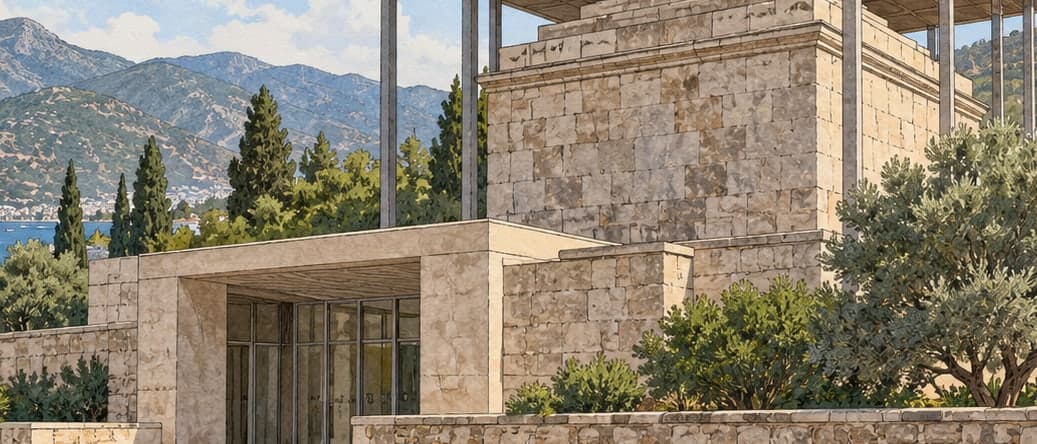
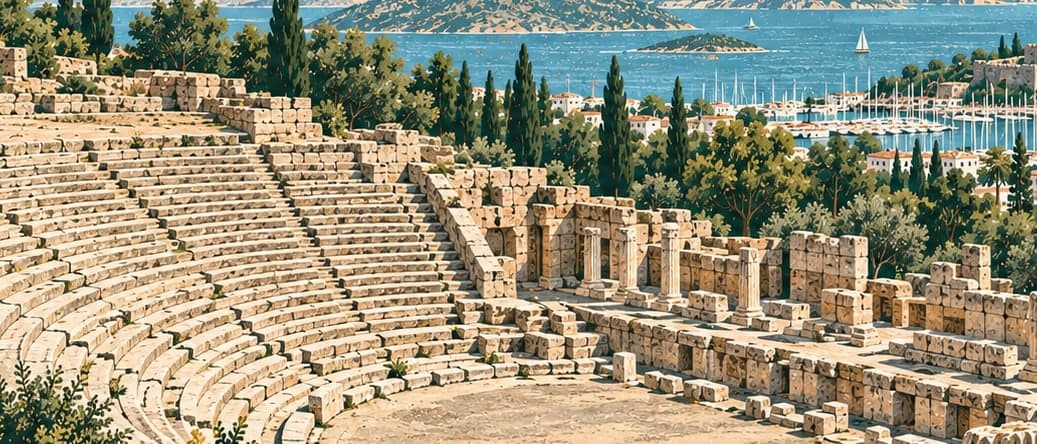
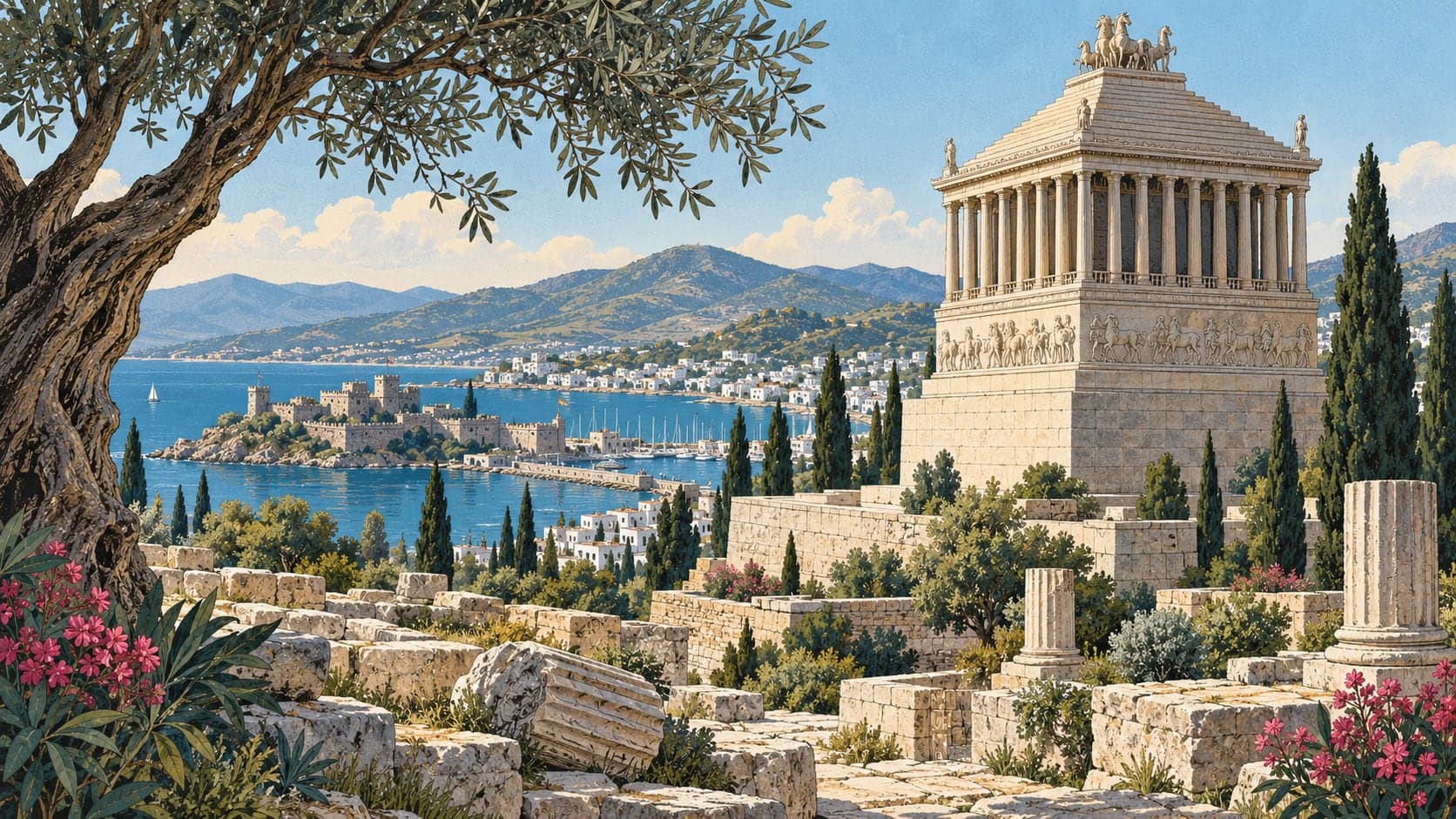
The city was easy to defend and well placed for trade and shipping, and it grew quickly. Maussollos forced the people of six of the eight Lelegian towns nearby to move into it, and brought in the sculptors and architects of his day to rebuild it. The Maussolleion, counted among the seven wonders of the ancient world, the theatre — one of the earliest in Anatolia — and the walls all belong to this period. He ruled Caria for twenty-four years; when he died in 353 BC his wife Artemisia II held power for two more.
Alexander took the city in the spring of 334 BC, early in his eastern campaign. Afterwards it appears as a small town in the Roman province of Asia, attacked by the pirate Verres in 80 BC and described as poor by 60 BC. Building work resumed under Augustus, and the temple of Mars east of the theatre dates from then.