Guide
The Vazelon monastery, also called the monastery of Saint John Vazelon, stands in the Maçka district of Trabzon, forty kilometres south of the city. The source gives its building as 270 and its first use as 270 or 317. Justinian I ordered its repair in 565, and it was renewed many times until the twentieth century; the buildings that stand today date from 1410.
The monastery was the centre of Greek Orthodox life in the Maçka region and held authority over the villages around it until it was abandoned. On the outer north wall are frescoes depicting Paradise, Hell and the Last Judgement.
It was attacked repeatedly through its history. Sasanian and Persian invaders raided it in the sixth century, destroying parts of it and killing the monks who lived there. Byzantine emperors funded the monastery in the seventh and eighth centuries and allowed it to grow.
When invaders from Europe sacked Constantinople in the Fourth Crusade in 1204, the Byzantine empire broke apart, and the Pontus region to which Vazelon belonged became the Empire of Trebizond. The emperors of Trebizond funded the monastery steadily through the Middle Ages, and the region remained under their rule until the conquest of Trebizond in 1461. The monastery continued its religious functions under the Ottomans and during the First World War, when Turkish forces attacked it. It was abandoned in 1923 after the population exchange between Greece and Türkiye.
Only a few pieces of its archive remain. Some are displayed in the museum at Leningrad — St Petersburg — having been seized when the Russians occupied Trabzon in 1916, and others are kept by the Turkish Historical Society. Historians have used these documents to learn about life in the Byzantine empire and the Empire of Trebizond.
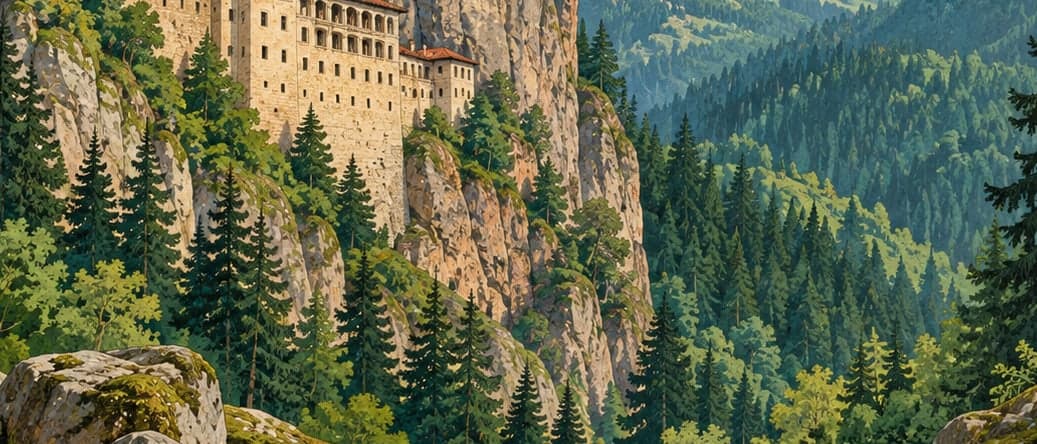
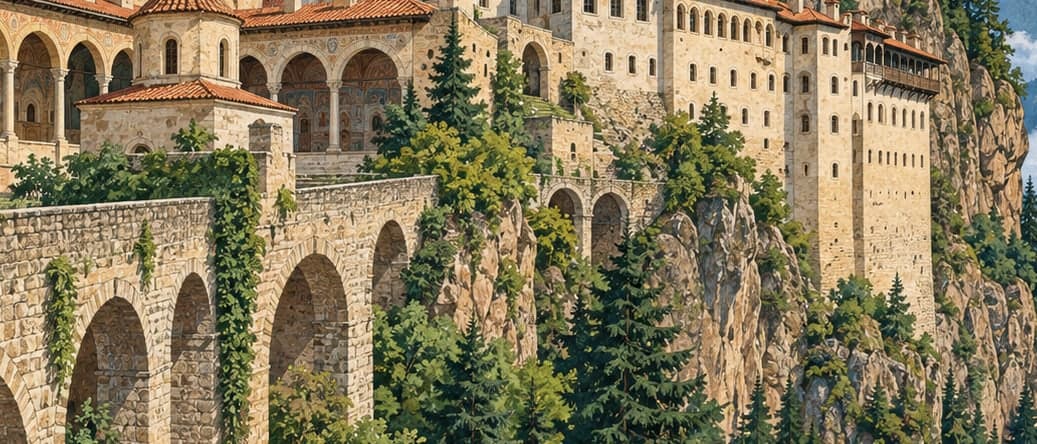
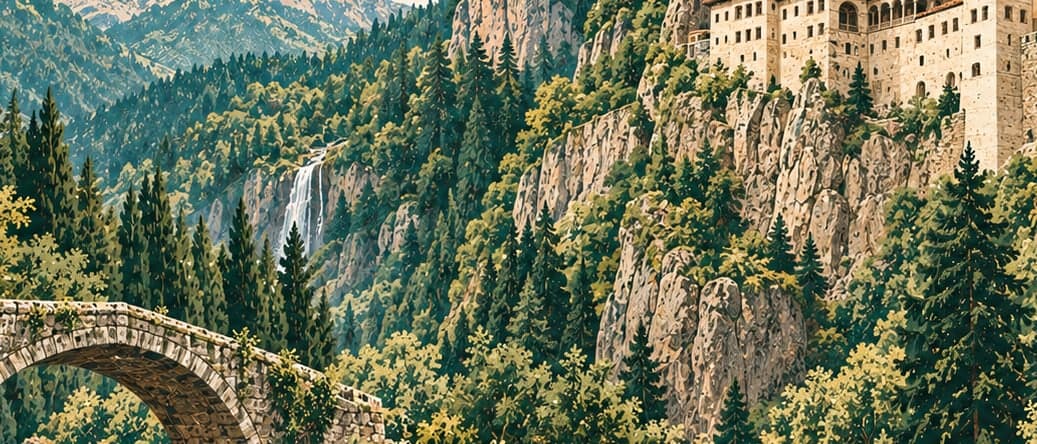
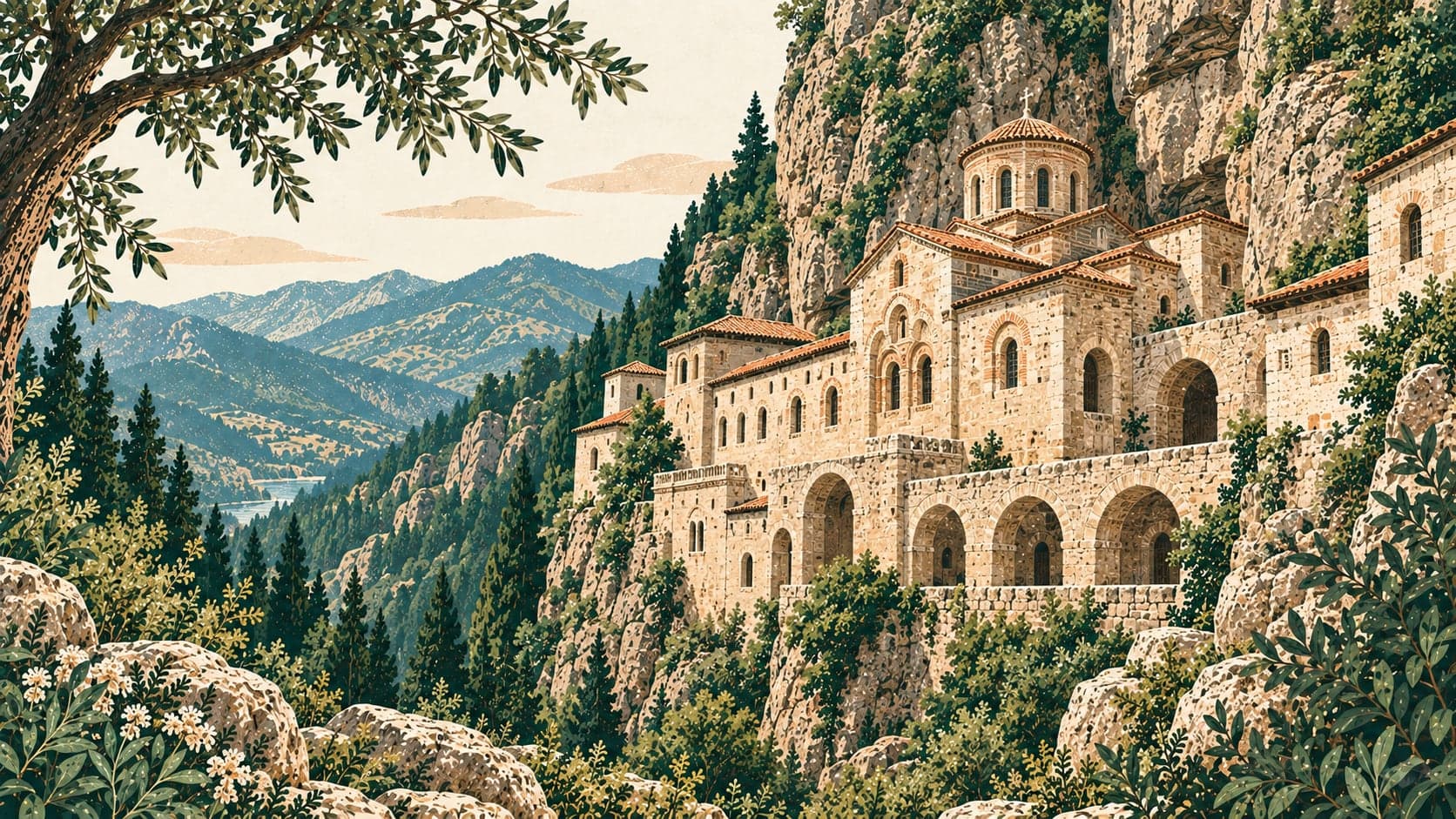
The monastery is a many-storeyed stone building, standing ruined in the Pontic mountains near the Black Sea among mixed forest, with rivers winding through the valleys of the region.