Guide
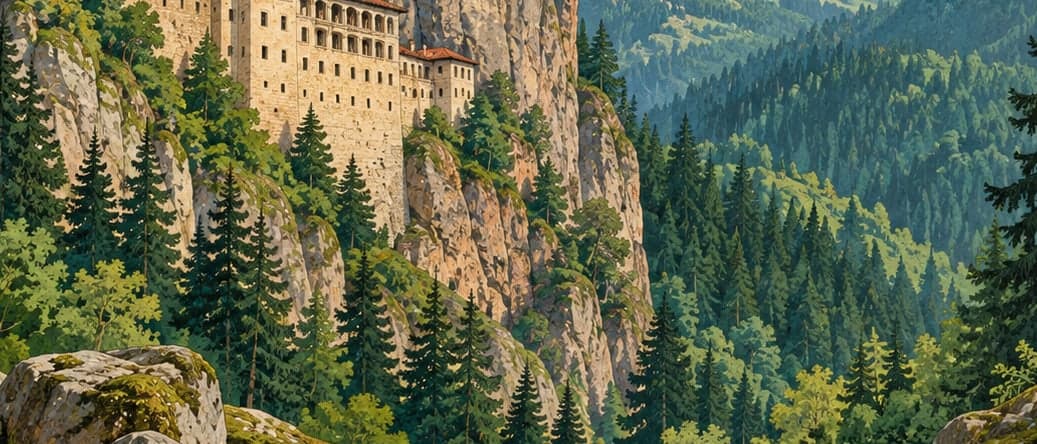
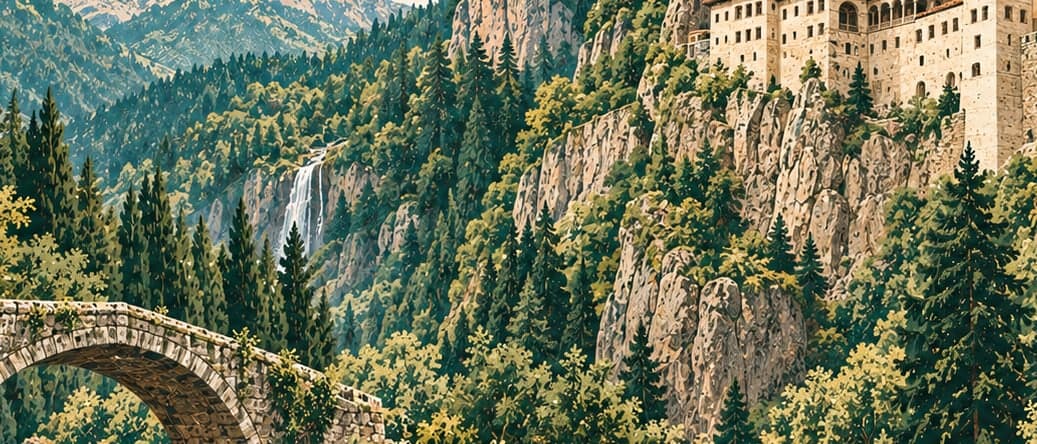
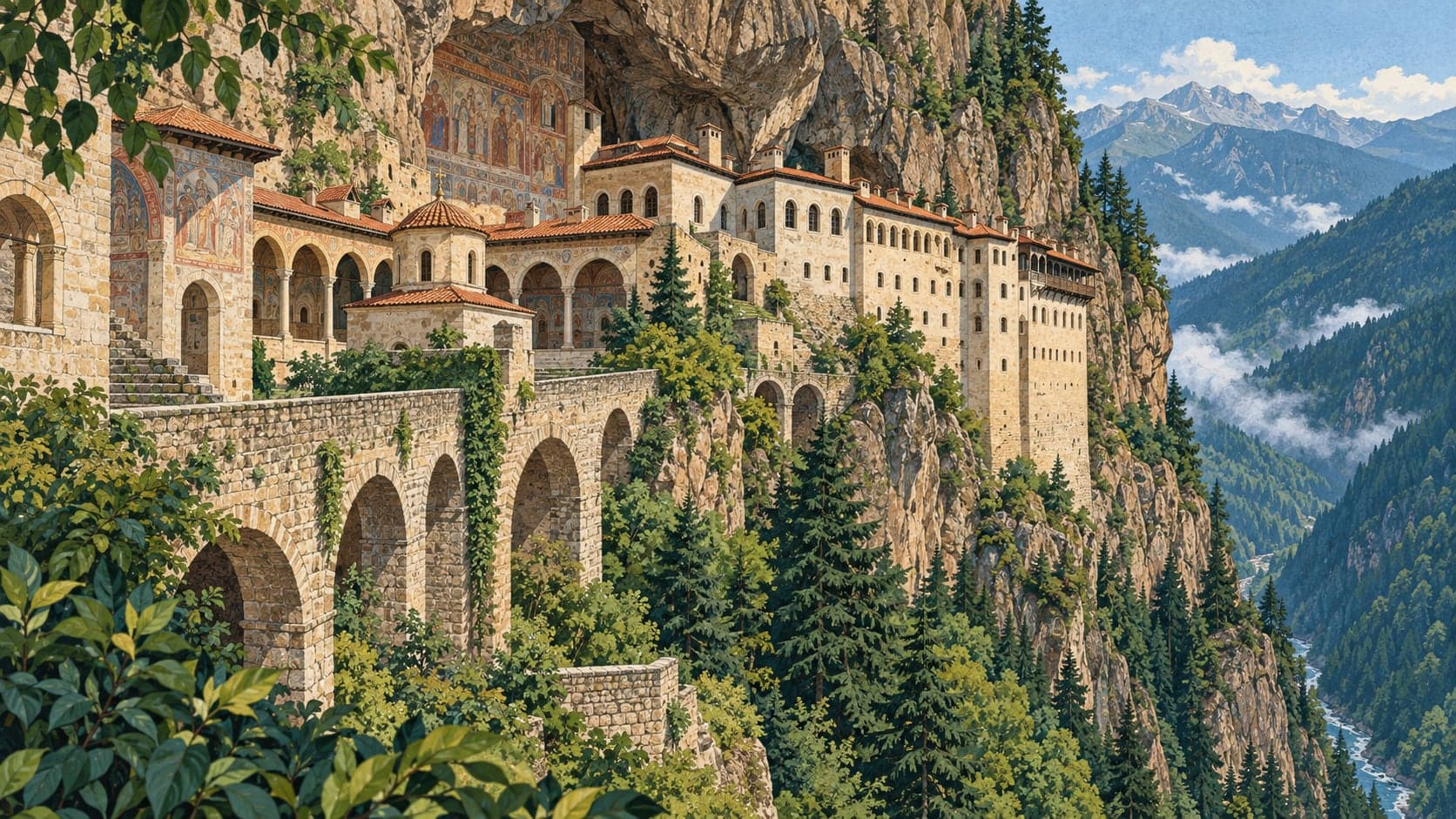
Sümela Monastery stands on a sheer cliff on the slopes of Karadağ, above the Altındere valley, within the village of Altındere in the Maçka district of Trabzon. It is also known locally as the Monastery of the Virgin Mary. Set roughly three hundred metres above the valley floor, it continues the tradition of founding monasteries away from the city, among forests and beside caves and water.
The origin of the name is not settled. The source offers two explanations: it is said to derive from melas, meaning black, which is thought to point to the dark mountains where the monastery was founded; the black colour of the image of the Virgin inside may also have inspired the name. Its foundation likewise rests on tradition, which holds that it was established in the fourth century AD by two monks from Athens, Barnabas and Sophronios, in the reign of the Byzantine emperor Theodosius I (375-395).
The documented history begins later. In the sixth century the general Belisarius repaired and enlarged it on the orders of the emperor Justinian; in the seventh it was plundered many times. In its present form the monastery is known to have existed from the thirteenth century onward. Its standing rose under the principality of the Trebizond Komnenoi, founded in 1204: Alexios III (1349-1390) endowed it with revenues by decree, and his son Manuel III and later rulers enriched it with further decrees. After the eastern Black Sea coast came under Turkish rule, the Ottoman sultans protected Sümela's rights as they did those of other monasteries, and granted it certain privileges.
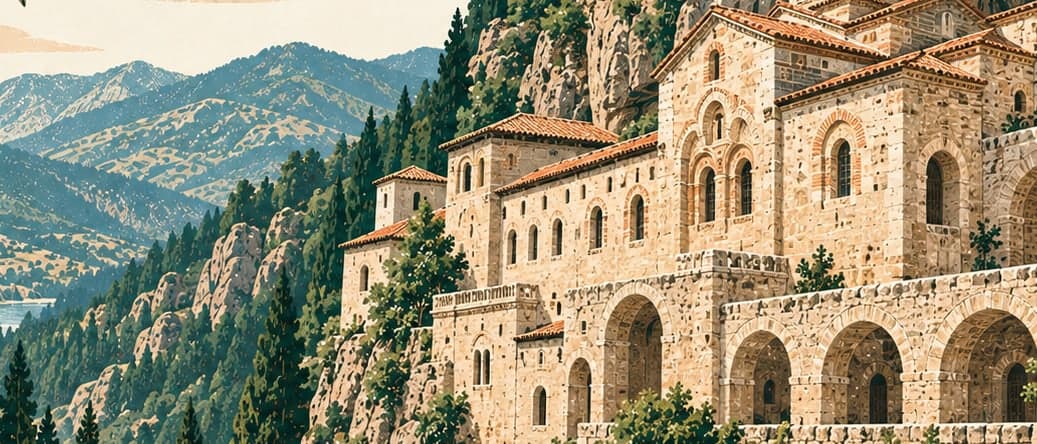
In the eighteenth century many parts were renewed and some walls decorated with frescoes. In the nineteenth, large buildings were added and the monastery reached its most flourishing period, taking the appearance it has today; in those years many foreign travellers visited and wrote about it. During the Russian occupation of Trabzon between 1916 and 1918 the monastery was seized, and after 1923 the buildings were emptied altogether.
The complex spreads over a wide area. Its principal parts are the rock church, several chapels, a kitchen, student rooms, a guest house, a library and the sacred spring. At the entrance a large multi-arched aqueduct leans against the slope, most of it now collapsed. A long narrow stair leads to the main gate, beside which are the guard rooms; from there another stair descends to the inner courtyard.