Guide
İasos lies at Kıyıkışlacık, about 26 kilometres west of Milas. The earliest finds go back to the third millennium BC and the earliest architecture to Bronze Age wall remains of the second millennium.
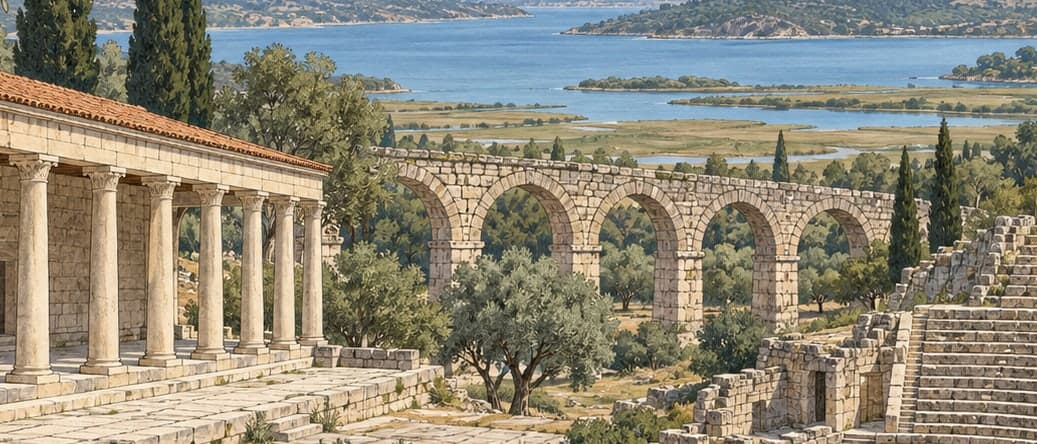
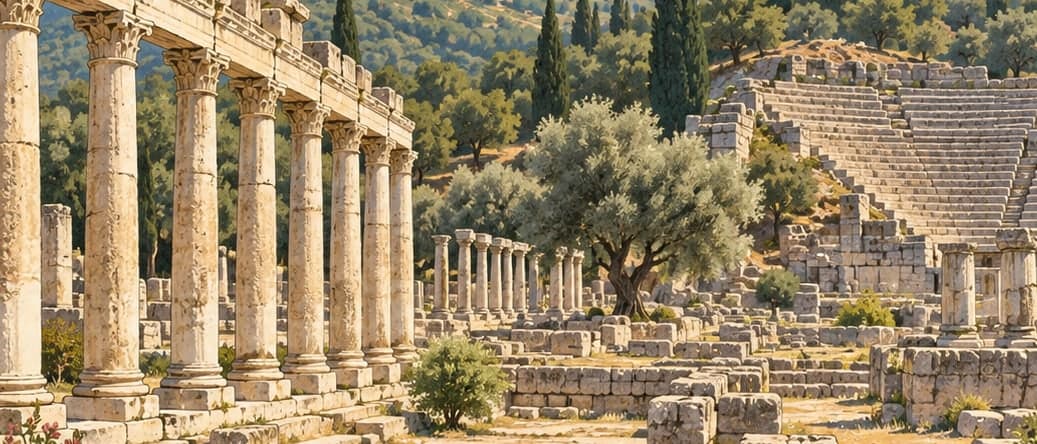
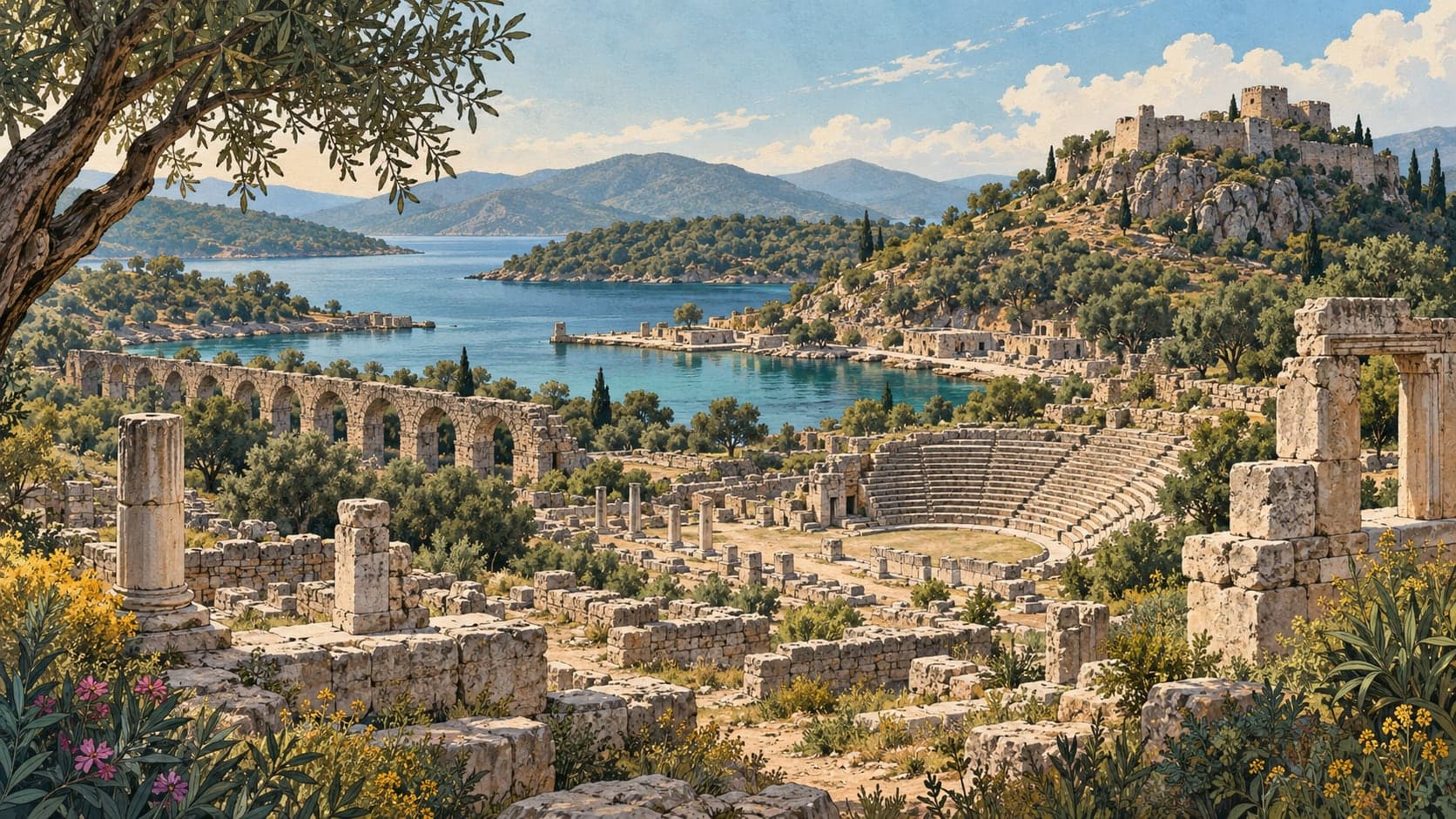
It was a harbour city, and important religious buildings were put up both inside and outside the walls. Within the city stand the theatre, the agora and the council house; outside it the great wall, the aqueducts, the tombs, and the building known as the fish market — which our inventory holds separately as a museum record.
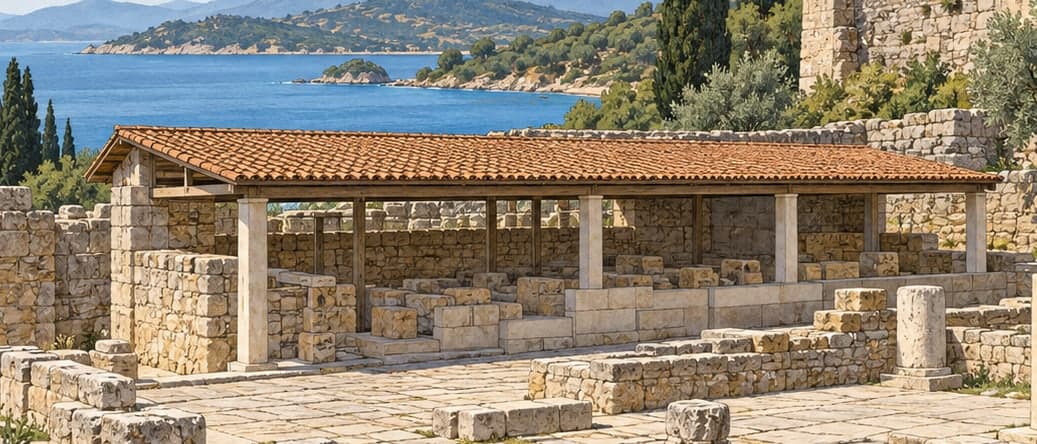
The best preserved building is the bouleuterion at the southwest corner of the agora, and it should be read in two layers: the original is fourth century BC, but the arrangement visible today belongs to the first century AD. It is rectangular, its floor laid in many-coloured marble, its seating running through three quarters of a circle, with the side edges of the finely profiled steps carved as lion's paws.
A medieval castle crowns the acropolis. Inside its walls lies a trapezoidal area holding a Byzantine cistern and a small temple; the walls themselves were built largely of reused material, and on their eastern side column drums and other pieces from older buildings are visible. There are two entrances, the main one on the north guarded by two square towers. In the harbour, two piers of the early imperial period now stand under water.