Guide
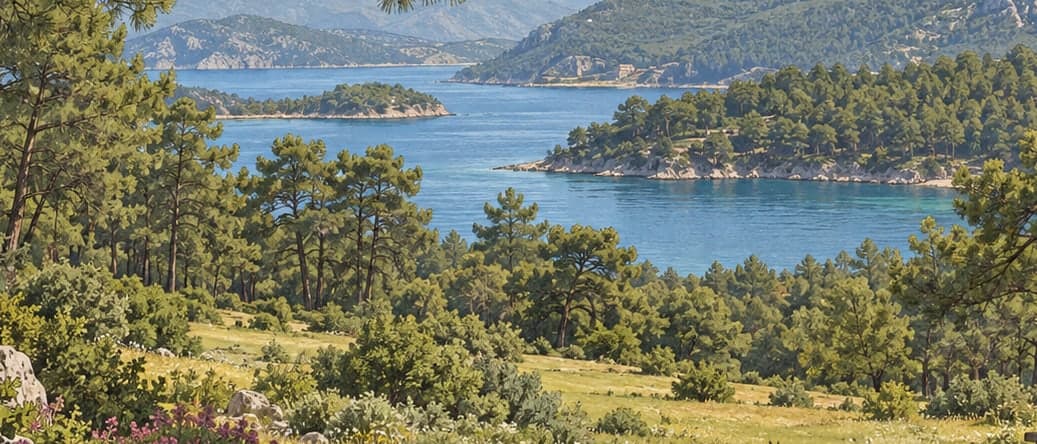
Boğaziçi is reached by turning right at the twenty-fifth kilometre of the Milas–Bodrum road and going two kilometres. The village's ancient name is Bargylia. It stands on a hillock on a small peninsula formed by a narrow, deep inlet — Varvil — which once opened into the gulf of Iasos and has since silted up, north of the Bodrum peninsula and south of the gulf of Güllük. Bilge Umar reads the name as coming from Luwian in the second millennium BC or from Carian in the first, meaning the high place.
The name appears for the first time in the fifth century BC, in the tribute lists of the Delian League. Alexander used the city as a base after taking Caria. It grew a great deal after the third century BC, and Strabo tells us that in this period it held the temple of Artemis Kindyas. It made a name for itself in the Hellenistic age as well, and the fleet of the kingdom of Pergamon used its harbour. After the Peace of Apameia it passed under Rhodian control but sided with Rome shortly afterwards, and struck coins in this period. In Christian times it was a bishopric.
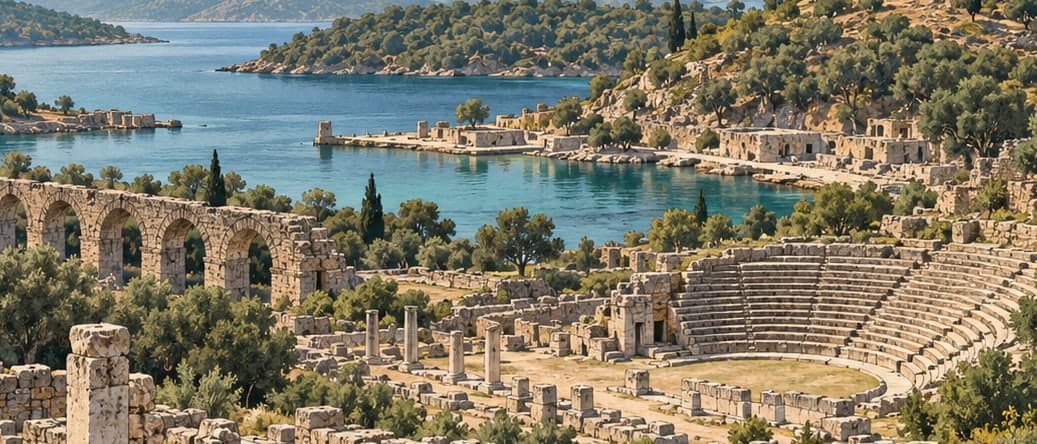
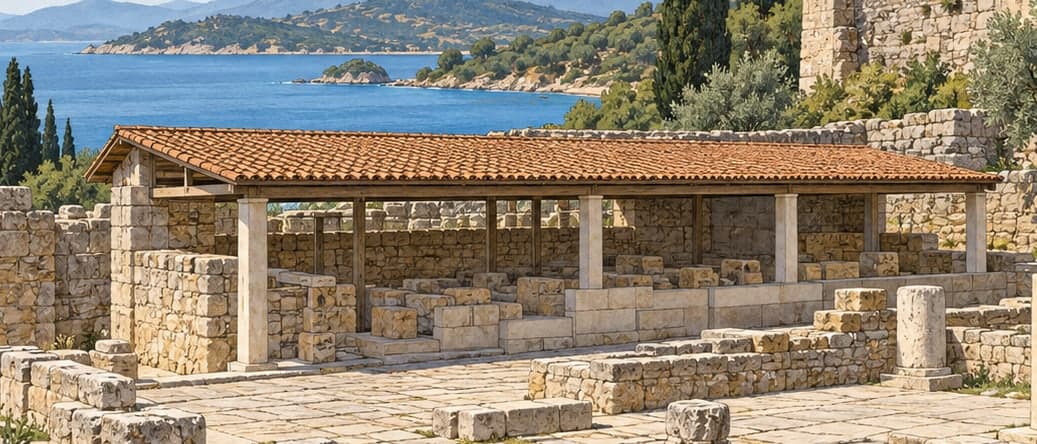
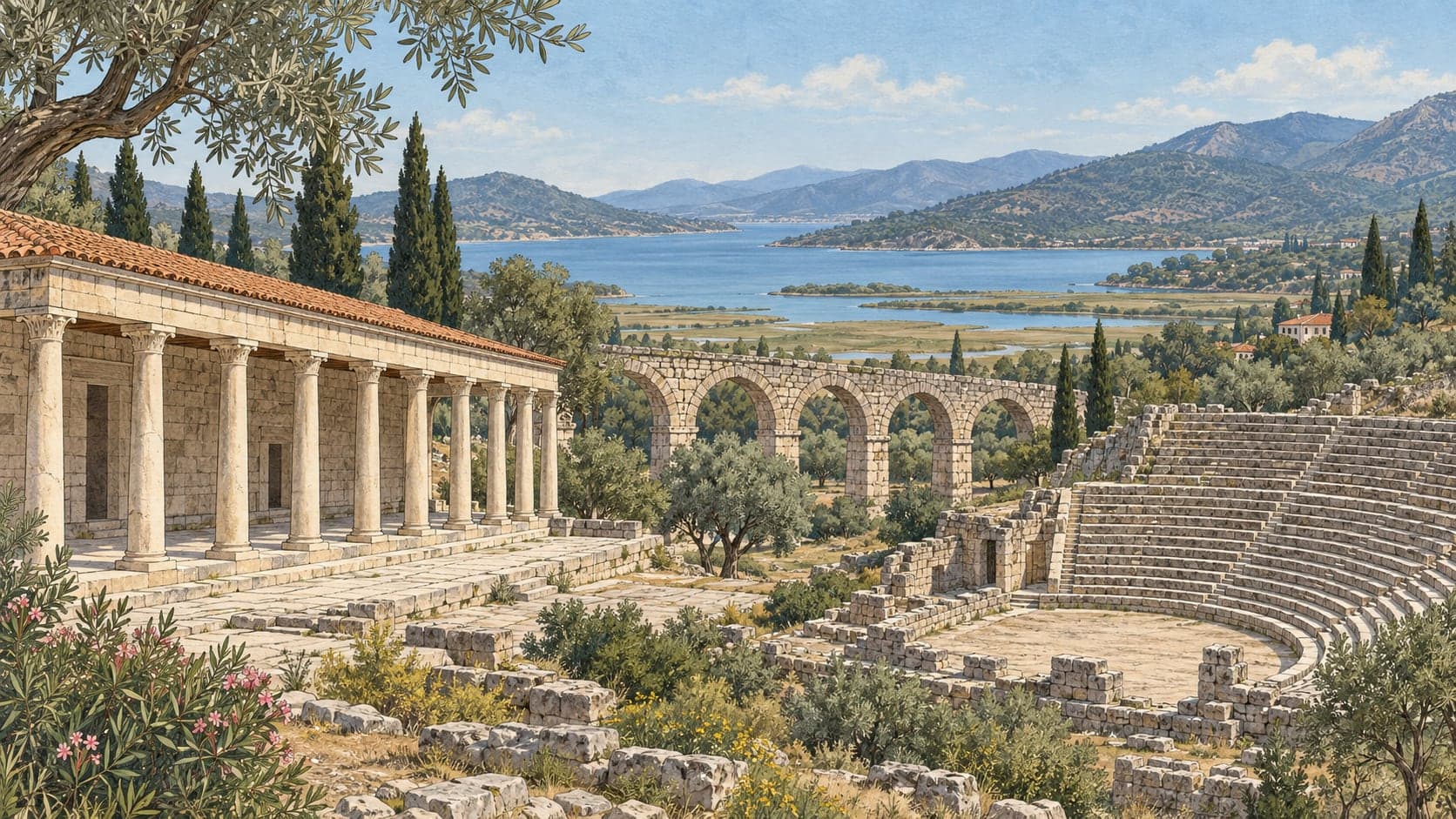
No scientific excavation has been carried out at Bargylia, which is why what is known about the city is limited. What survives are stretches of the ancient walls, temple foundations, an altar with reliefs, remains of a theatre, a small odeon, a stoa, Roman aqueducts, a Byzantine wall and fragments of the necropolis.
The Tuzla wetland at Boğaziçi is a winter home for migrating birds. Pelicans come first among the species feeding across its 380 hectares, along with gadwall, mallard, white-fronted goose, ferruginous duck, coot, heron, flamingo, goose and moorhen. The village itself lives by fishing, and it is one of the places along this coast where summer tourism has taken hold.