Guide
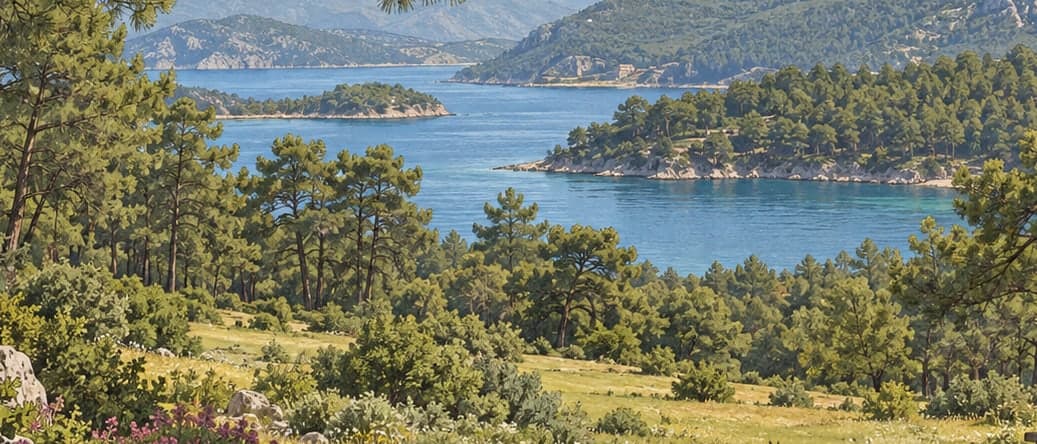
Sırtlandağı Aleppo Pine Nature Conservation Area is closed to visitors: the Directorate General of Nature Conservation and National Parks states plainly that entering without permission is prohibited. It lies at the Sırtlandağı locality within the Milas Forest Management Directorate, in Muğla province, and it is listed here because it explains something about the landscape around Milas rather than because it can be walked.
The reason for the protection is a single tree species. Aleppo pine, Pinus halepensis, has its main range on the western Mediterranean coast; in Türkiye it occurs in only two localities, one among the red pines near Karatepe at Kızyusuflu village in Adana's Kadirli district, and the other around the Gulf of Güvercinlik between Milas and Bodrum. Sırtlandağı belongs to the second. The directorate describes it as the largest natural range in the country where the species forms pure and mixed stands, and protects it as a rare ecosystem with genetic reserve value. Red pine grows there alongside it.
The boundary has moved four times and the record keeps all four figures. The area was declared on 17 August 1988 at 784 hectares. As the natural cover deteriorated in parts of it, a ministerial approval dated 23 February 1995 and numbered 34 redrew the limit at 760 hectares. A later approval from the Directorate General digitised the boundary using the 1981 forest delimitation maps, giving 714.74 hectares. Most recently, an approval dated 6 August 2025 and numbered 20467515 resolved mismatches with the current cadastral lines and set the area at 735.56 hectares.
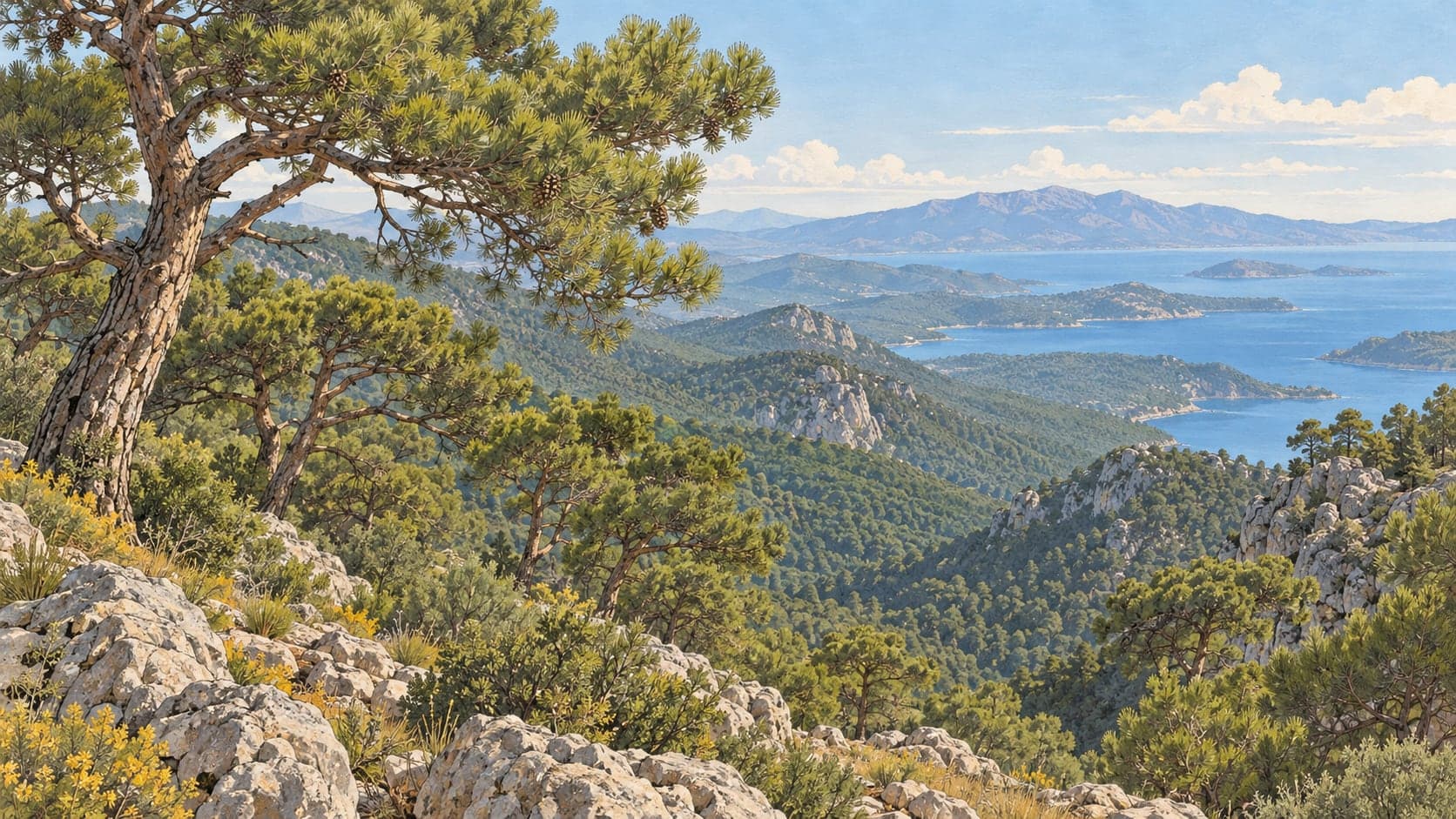
Aleppo pine is easy to recognise where it can be seen legitimately elsewhere. Unlike other pines its crown is rounded in youth and spreads into an umbrella with age. The buds are small and free of resin, pointed and egg-shaped, with scale tips curling backwards; the needles are light green and their basal sheath is 10 to 12 millimetres long. Cones ripen over two years, turning glossy brown, long and conical on a thick stalk that leaves them hanging almost parallel to the shoot. The description comes from university forestry course notes the directorate cites on the page.
- Designated
- 17.08.1988