Guide
Alexandria Troas lies within the boundaries of Dalyan village in the Ezine district of Çanakkale. The city was founded in 310 BC in the name of Alexander the Great, and the name means Alexander's home in the Troad. Its planned extent covers 390 hectares inside eight kilometres of wall, which makes it, by the Ministry's account, one of the largest cities in Anatolia.
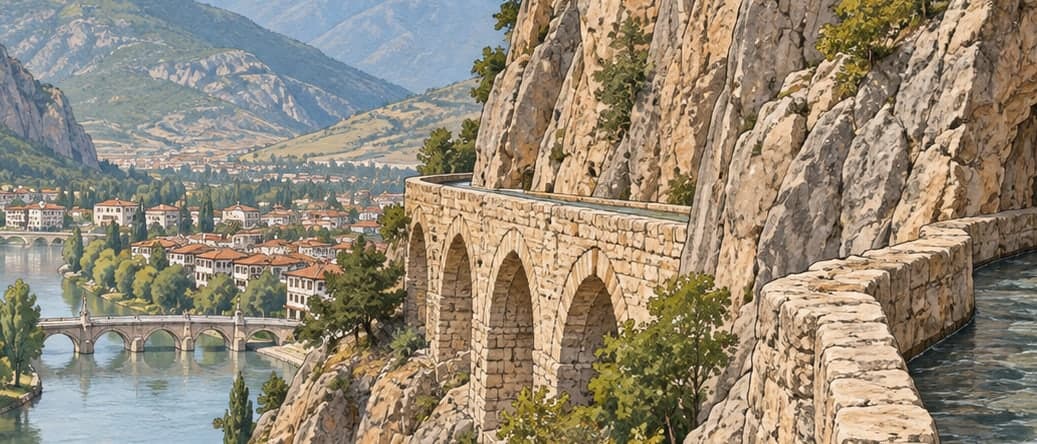
For many years it served as the main harbour of the region, and in the Roman period, its best, its population reached a hundred thousand. Standing where Europe meets Asia, it drew the attention of rulers looking for a capital: Caesar wanted to make it one, and Constantine I also considered it, going as far as starting building work here before settling on Constantinople instead. Under Hadrian (AD 117–138) construction intensified, and with the backing of Herodes Atticus of Athens, one of the richest men of the ancient world, an enormous aqueduct was brought from Kaz Dağı and the Herodes Atticus bath was built, which the Ministry describes as the largest bath yet found in Anatolia. The gymnasium of Herodes Atticus stands immediately beside it.
The city kept its importance into the Christian period and became one of the centres of early Christianity. In the AD 50s Paul stayed here seven days, preaching and gathering followers, and it is from this harbour that he is known to have set out to carry Christianity into Europe — which makes the city a place of pilgrimage as well as an archaeological site.
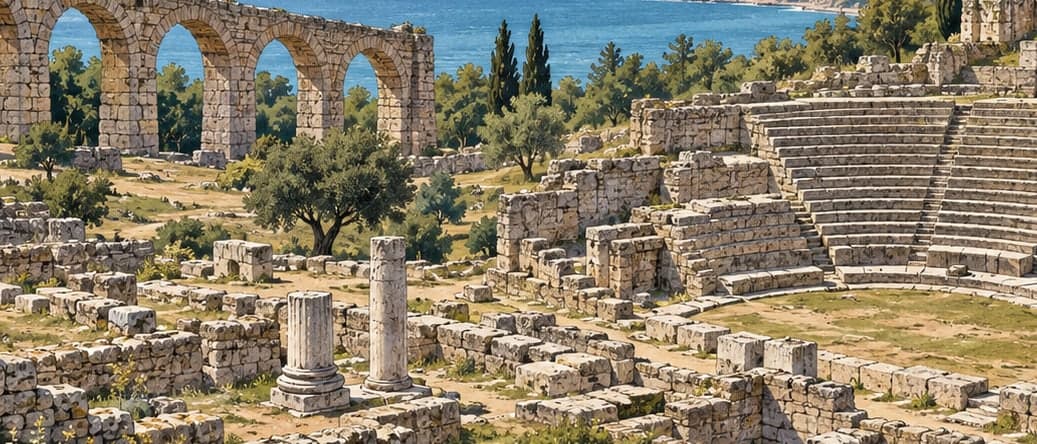
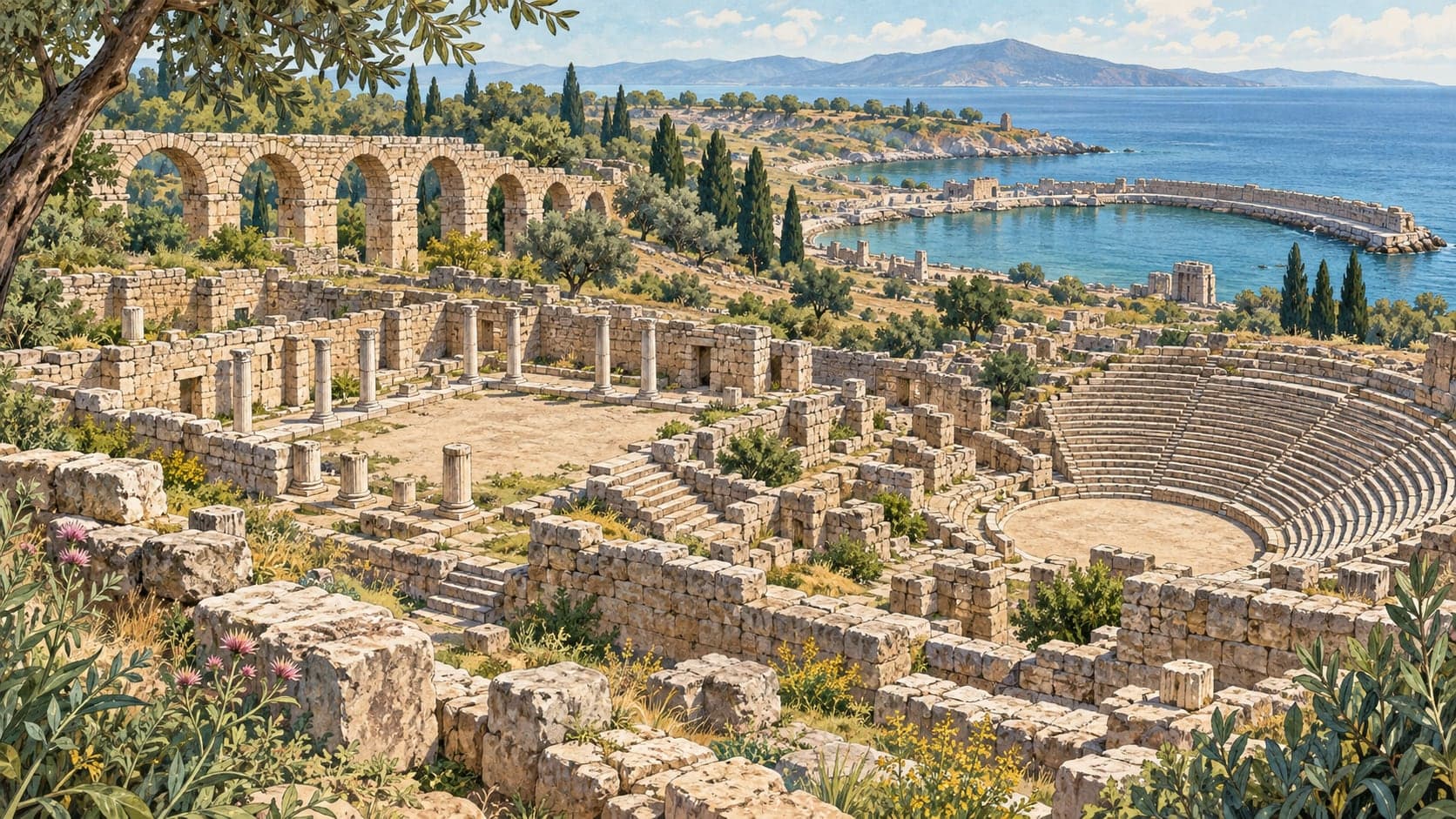
Of the buildings a visitor can see, the ancient harbour is now cut off from the sea and is at its best at sunset; Roman soldiers are known to have passed through it during the eastern wars, and Roman merchants are said to have come here and settled in the city. The great bath was built together with the aqueduct in AD 135, and what stands today is what survived the earthquake of 1809; at 123 by 84 metres it is among the largest Roman baths in Anatolia, with the gymnasium attached to its west side and, nearby, the nymphaeum or monumental fountain. The theatre occupies the highest point in the city and looks out over Neandria on Çığrı Dağı to the east, Lesbos to the south, Tenedos to the west and the Dardanelles to the north.
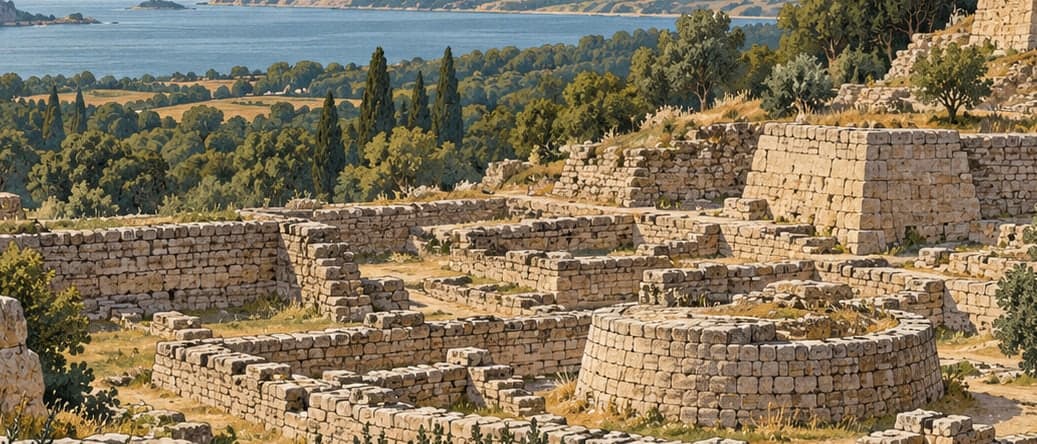
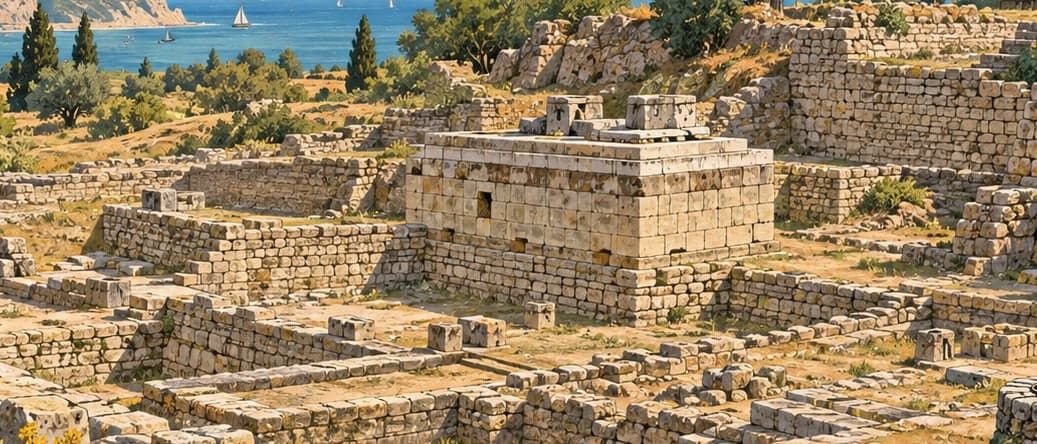
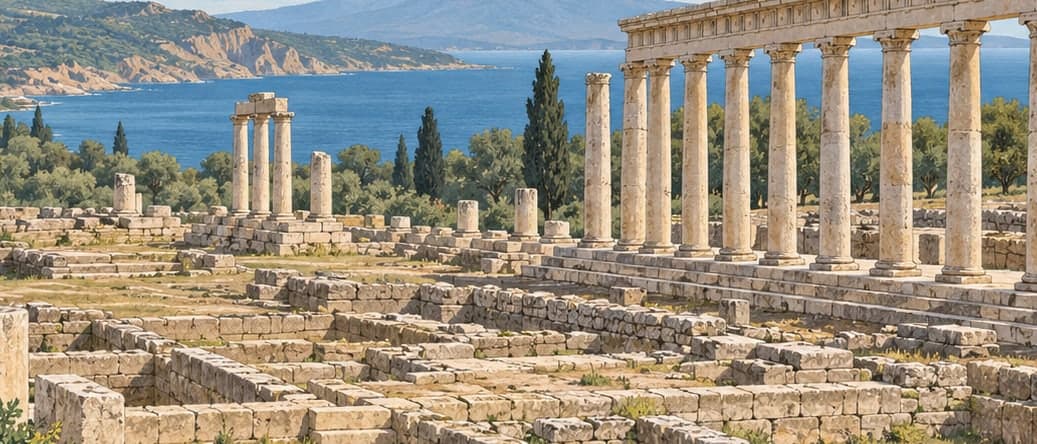
North-west of the theatre stands a four-sided building known locally as the Saray or Maldelik. A great variety of legends attach to it, but its function has never been established; in antiquity its southern corner was joined to the theatre street by a corridor. West of the city centre, beside the administrative public buildings, excavation continues at a temple, where a great many carved and coloured marble architectural pieces have come out of the ground — evidence of the city's wealth and the range of its trade. On the east side stands the Neandria Gate, an enormous water gate with a round inner courtyard twenty metres across and a tower on either side, built at the start of the 3rd century BC and in use until the city was abandoned. Village minibuses from Ezine serve the site.