Guide
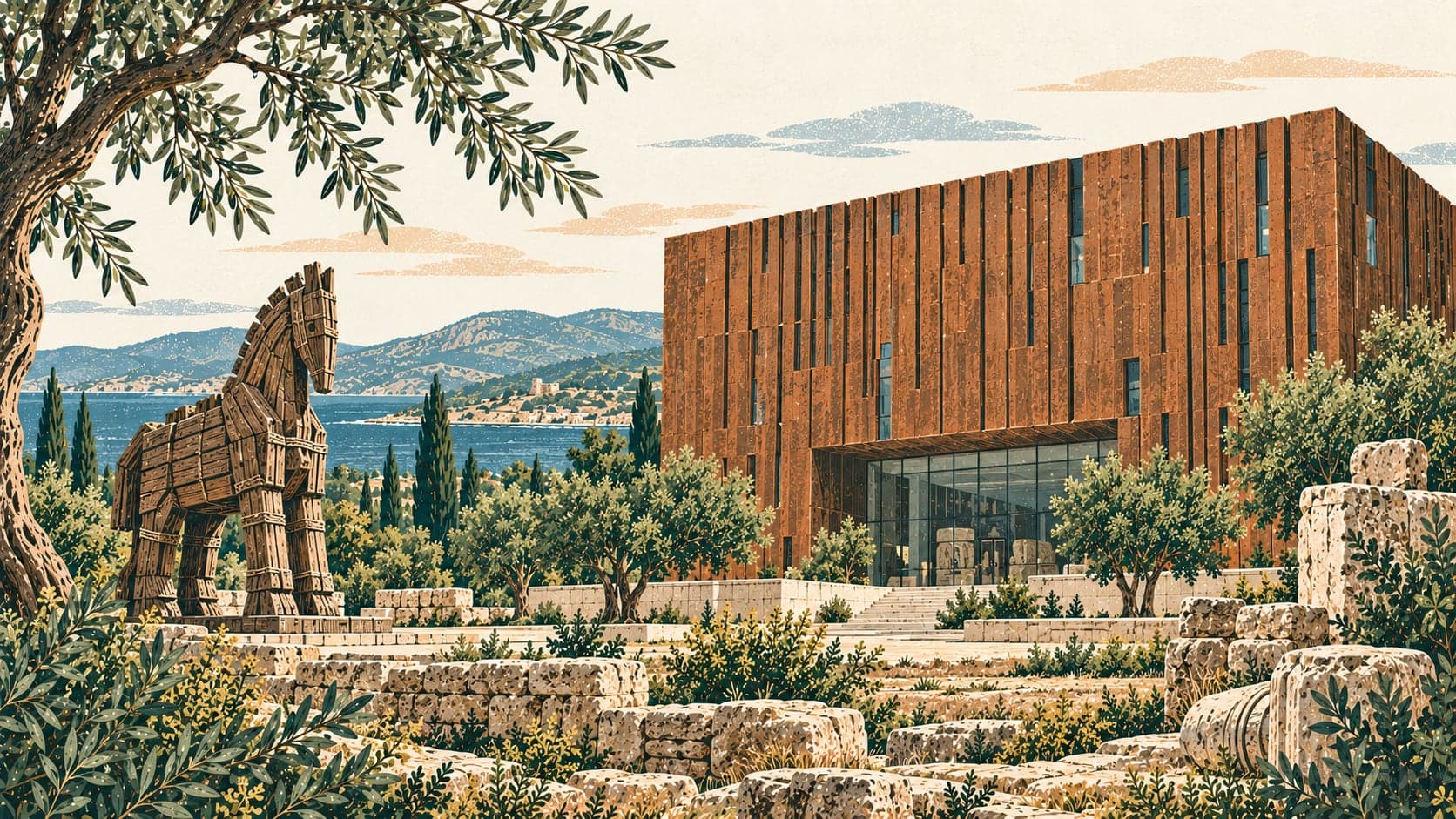
The Troy Museum stands in the Tevfikiye quarter of central Çanakkale, on the plain below the mound itself. Its plot covers about 90,000 square metres, of which 12,765 are built: galleries, stores, offices and public facilities. A further 37,250 square metres are given to open display, landscape and visitor areas.
The building has a ground floor and three storeys above it, and every display level is reached by ramp — some 480 metres of ramp in all. The visit begins on the way down, along walls whose niches set out the successive layers of Troy through grave stones, large statues, reconstructed scenes and photographs at scale.
The museum tells the life and archaeological history of Troy and of the cultures of the Troad — the region Homer fixed in memory through the Iliad — by way of the objects the excavations produced. The account is divided into seven chapters; the directorate names six of them: the archaeology of the Troad, Bronze Age Troy, the Iliad and the Trojan War, the Troad and Ilion in antiquity, the East Roman and Ottoman periods, and the history of archaeology and the traces of Troy.
The entrance level runs as a circulation band about the Troad and its surroundings, and it orients the visitor before the galleries proper: what archaeology is, how archaeological and archaeometric dating work, and what terms like Neolithic, Chalcolithic, Bronze Age, Iron Age, mound, restoration and conservation mean, set out in diagrams, drawings, texts and interactive displays.
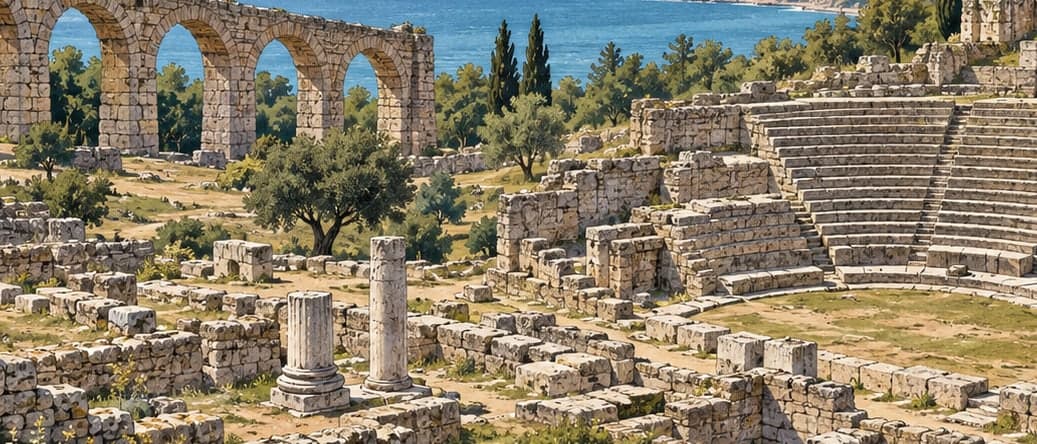
The ground floor takes the Troad as a whole, its geography and its remains, with the histories of Assos, Tenedos, Parion, Alexandria Troas, Smintheion, Lampsakos, Thymbria, Tavolia and Imbros alongside short accounts of their excavations.
Among the objects from Parion is a bronze amphora of the second half of the fourth century BC, found in 2005 in the southern necropolis of the ancient city. It stands 34 centimetres high. The main scene on its body shows satyrs and maenads dancing in the ecstasy of a Dionysiac rite, thyrsoi and torches in their hands and panther skins thrown back over their shoulders. Beneath each handle is an applied figure of Eros of very fine workmanship, and the foot is ornamented with an Ionic cyma, with silver used in the triangular details.