Guide
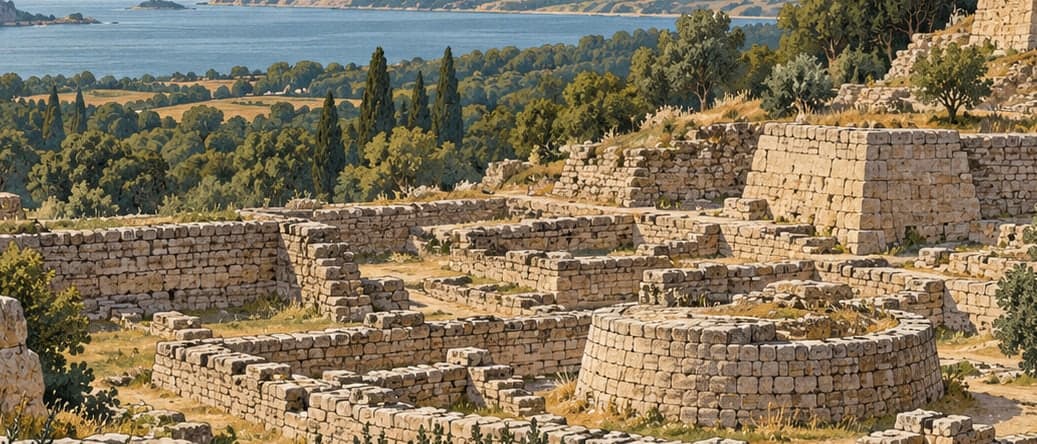
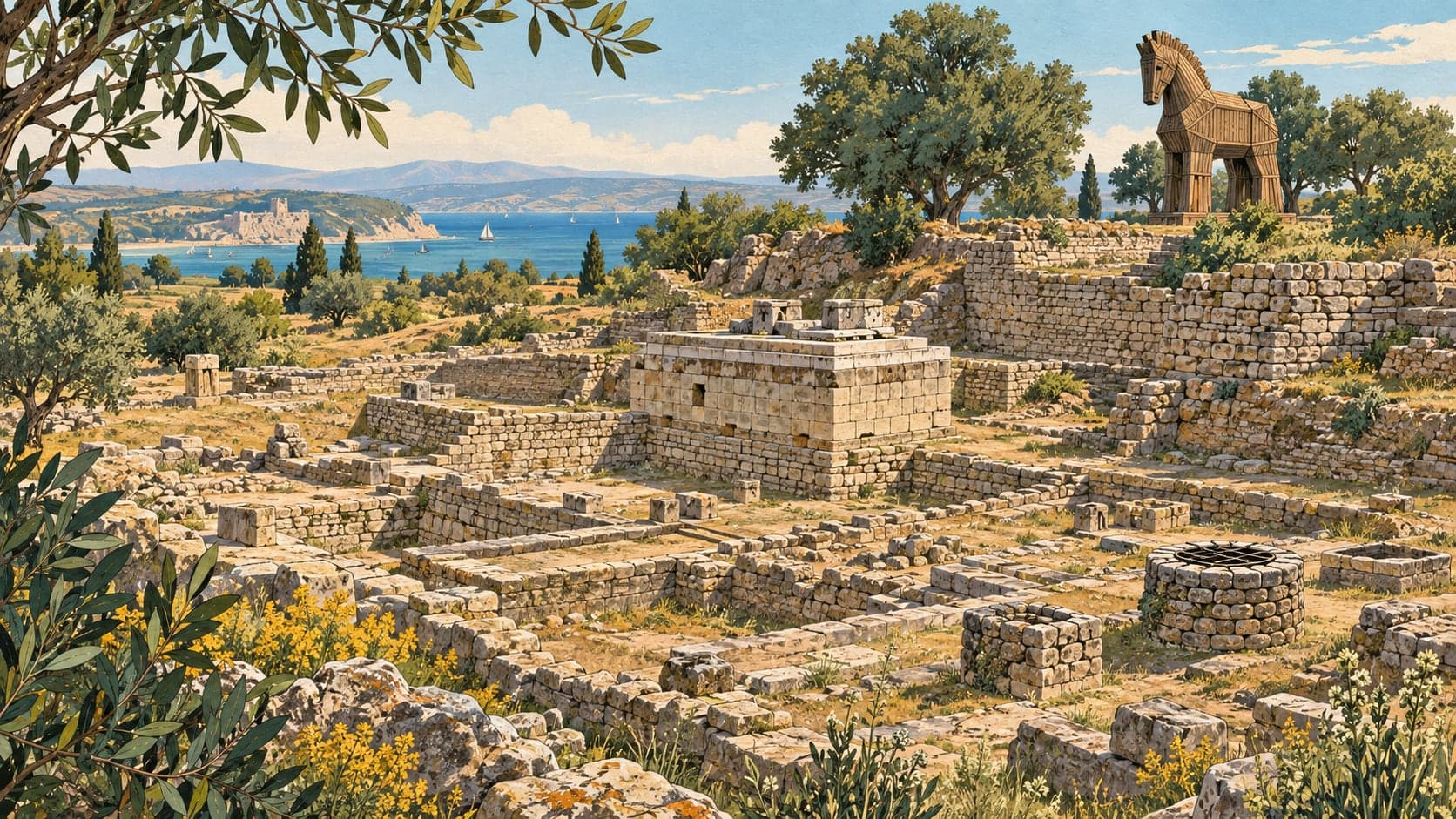
Troy is among the best known ancient cities in the world. What sets it apart is its nine superimposed settlement layers: they span more than three thousand years without a break and let you follow, one after another, the civilisations that lived where Anatolia, the Aegean and the Balkans meet.
The earliest layer belongs to the Early Bronze Age, between 3000 and 2500 BC. Occupation continued without interruption, and the sequence closes with the Roman layer, dated between 85 BC and the eighth century AD. The city's position kept the trading and cultural links of its successive rulers with other regions consistently important. Because its stratification runs unbroken, Troy serves as a reference for other archaeological sites in Europe and the Aegean.
Excavation began in 1871 with Heinrich Schliemann, and was carried on by W. Dörpfeld and C. W. Blegen. Work continues at the site today.