Guide
The city of Alexandria Troas was founded in 310 BC in the name of Alexander the Great. A plateau was enclosed for it by a wall eight kilometres long, and before long the city prospered and became an important centre.
Suetonius, who wrote the life of Caesar, records that because the city stood at the meeting point of Europe and Asia it was even considered as the capital of the Roman empire. The emperor Constantine is said to have had similar thoughts, but in the end Constantinople was chosen as the capital.
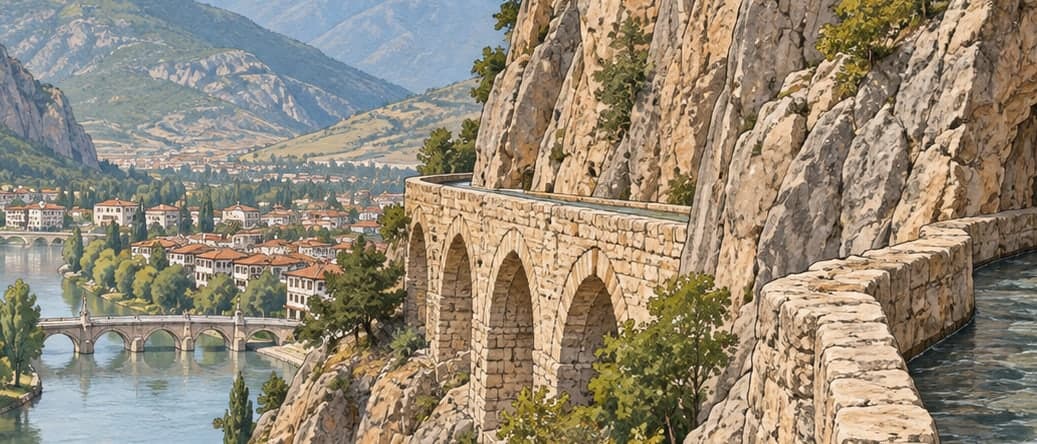
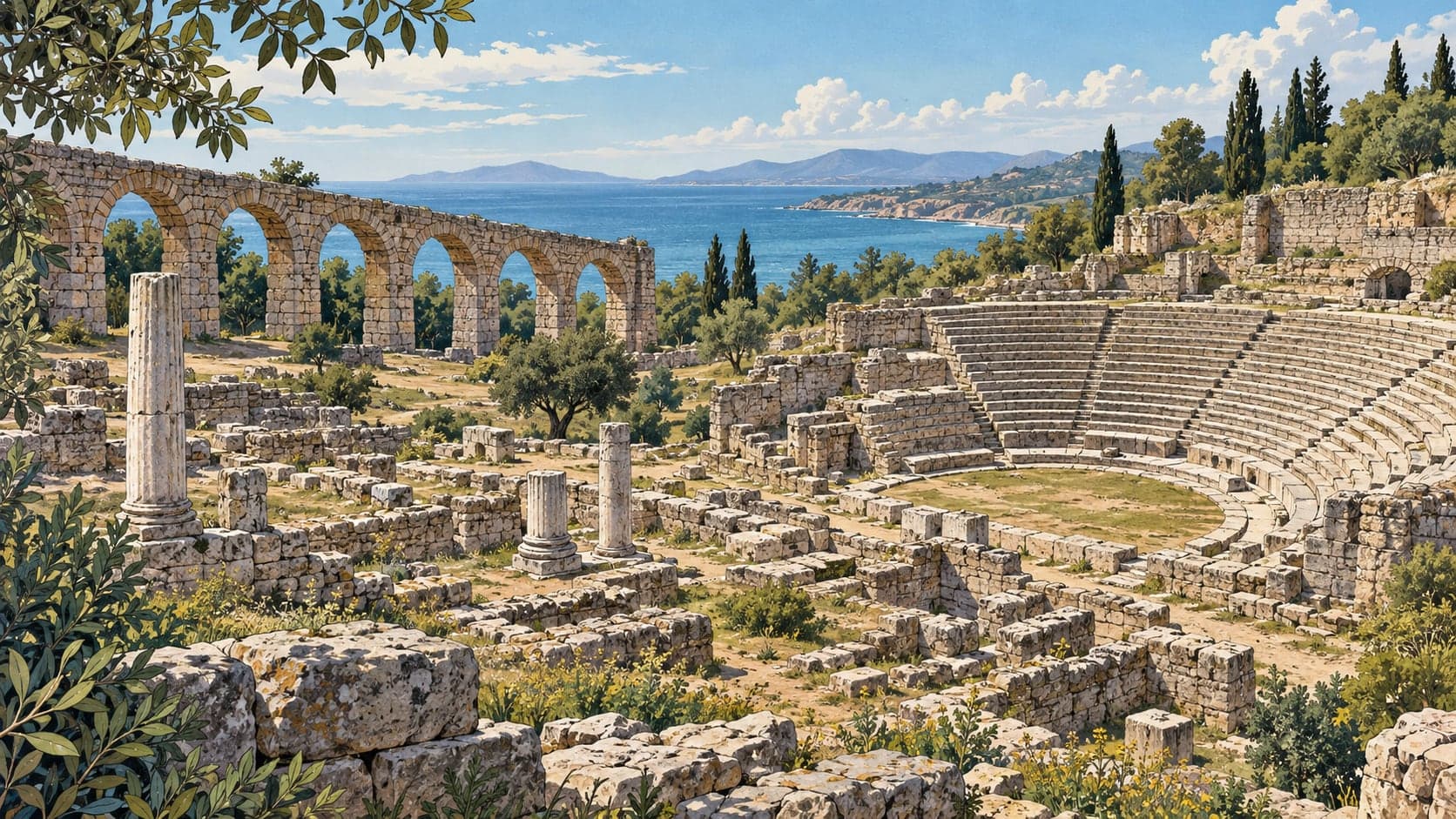
The city revived a second time under Augustus, who had a colony founded here for retired Roman soldiers in the middle of the first century BC and supported its becoming a Roman metropolis. Saint Paul saw the city in that state when he visited in AD 52 and decided to cross from here to Europe. Another golden age came in the second century AD, when Herodes Atticus of Athens, one of the richest men of the ancient world, had a great aqueduct built from Mount Ida to Alexandria Troas.
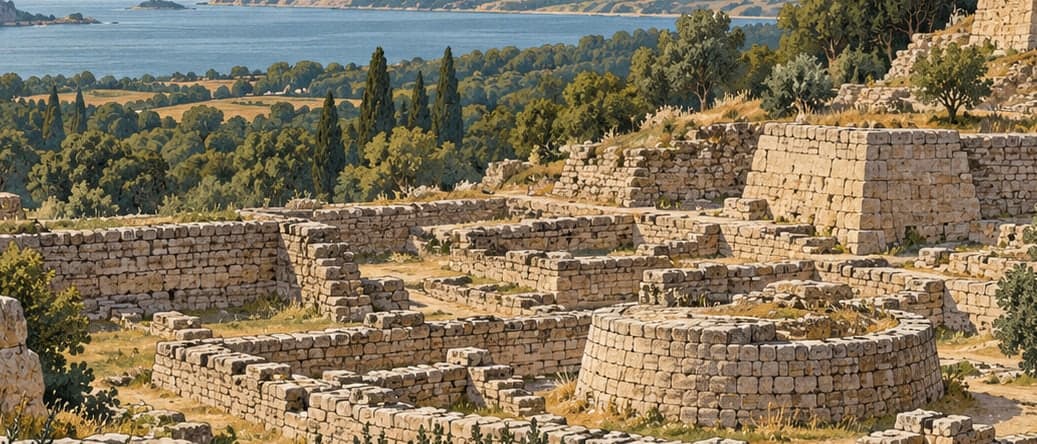
The eastern gate, also called the Neandria gate, is a great water gate on the eastern side of the city, with a round inner court and a tower on either side. It was built at the beginning of the third century BC and remained in use until the city was abandoned. The inner court is twenty metres across. What is unusual here is that the lower part of the walls is cut from the bedrock and the rises of bedrock within the court were levelled.
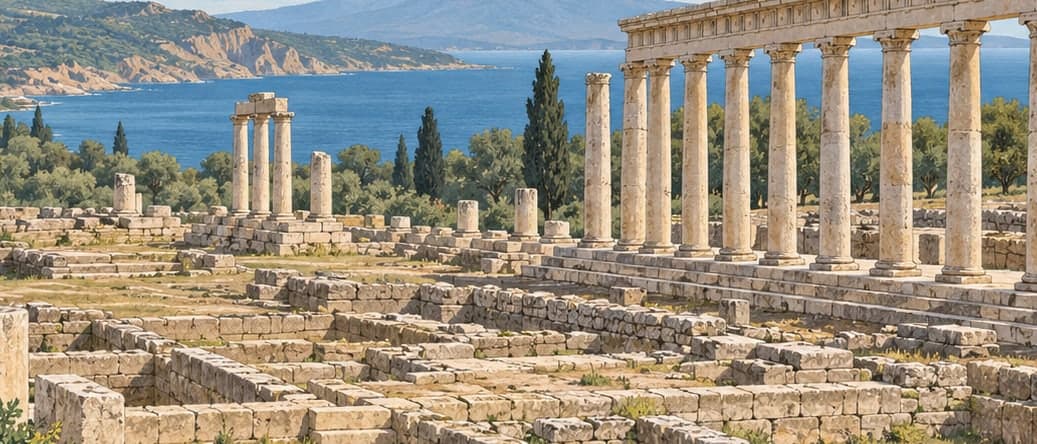
The great bath of the city was built together with the aqueduct in AD 135. Much of it was still standing until 1809, when it was brought down by an earthquake. At 123 by 84 metres it is among the largest Roman imperial bath buildings in Anatolia.
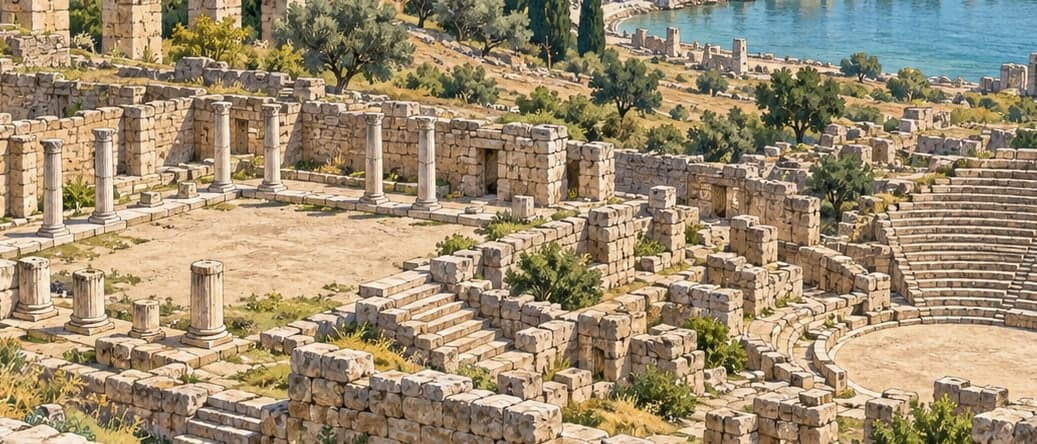
A great theatre was built at the highest point of the city as early as the Hellenistic period. From it visitors look out over the city and beyond: east to the early settlement of Neandria on Çığrı mountain, south to Lesbos, west to Tenedos and north to the Dardanelles.
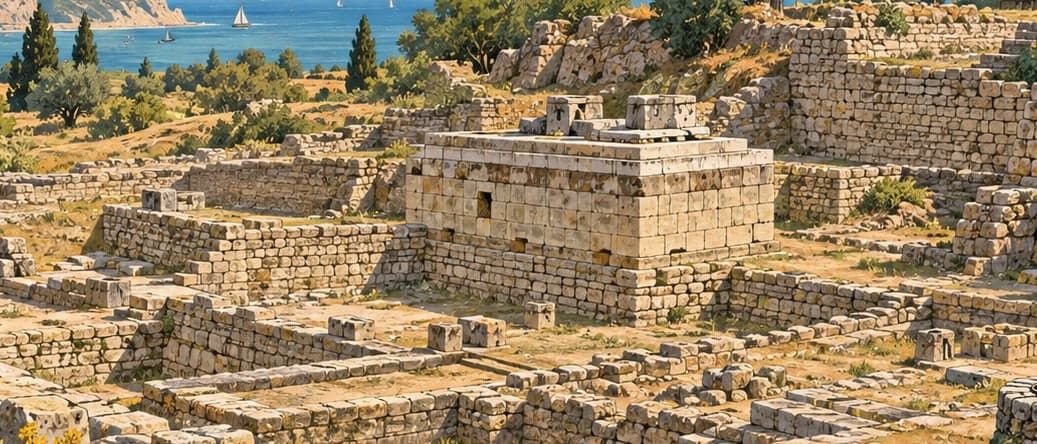
North-west of the theatre stands a rectangular building whose purpose has never been settled, though many tales attach to it. In antiquity its southern corner was joined by a corridor to the theatre street.