Guide
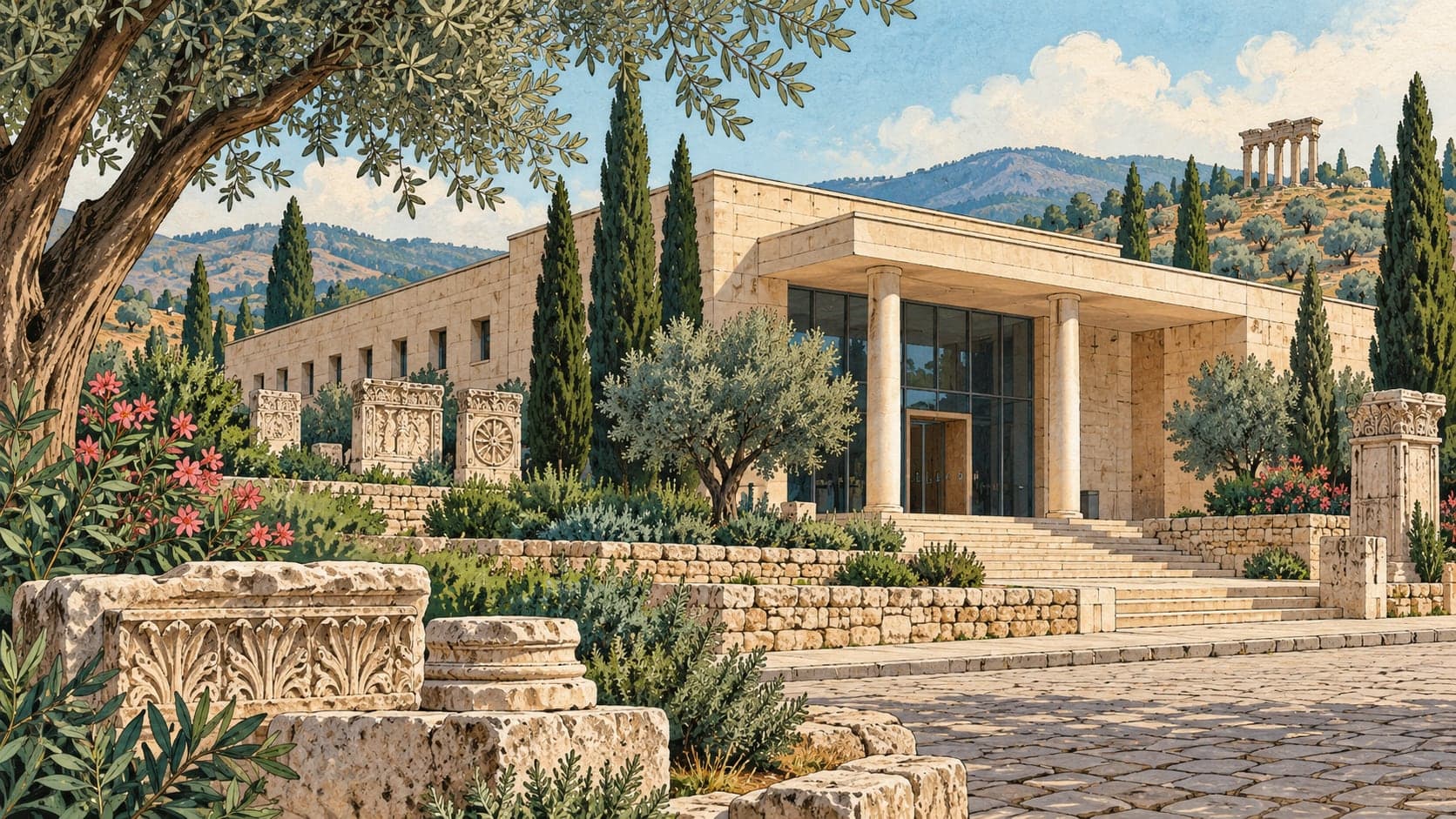
The Aphrodisias Museum opened in 1979 and shows only what has come out of the ground at Aphrodisias itself. Most of it is sculpture, which is the point: a school of sculptors worked here from the 1st century BC to the 5th century AD, cutting marble brought from quarries a kilometre north of the city, and the museum's own claim is that the work of that school is what makes it one of the most unusual museums in western Anatolia.
The building is worth attention before the contents. The first museum here was very small, and rather than replace it the Ministry of Culture's monuments board decided to add an annexe and show the Sebasteion reliefs in it. Roman and Byzantine walls, not especially important ones, lie under the annexe, so the structure was designed in steel and set on piles placed to miss every wall fragment and every tree. Steel posts at 180-centimetre intervals, spaced to suit the Sebasteion reliefs, carry beams spanning 5.4 metres; the result is a building held in the air, which you can walk under and look beneath.
The route turns right immediately from the entrance. On the wall opposite the shop are tondo busts of ancient philosophers and statesmen. The next hall holds imperial statues, portrait statues and busts, and a sarcophagus carved with figures of the seasons. Reliefs in the corridor come from the monumental tomb of Zoilos, the city's second founder, and date to the Augustan period. The Melpomene hall shows draped statesmen, the muse of tragedy and Apollo; the Odeon hall, a boxer and seated artists.
The room that sets this museum apart from any other is the corner of unfinished sculpture before the next section — a collection of world importance for what it shows about how the work was actually made, stage by stage. Beyond that are cases of prehistoric material from Aphrodisias and its surroundings, wall cases of coins, and the hall named after the Achilles and Penthesilea group, made from one of the more tragic episodes of the Trojan war, where a Diskophoros, a young Herakles and a satyr carrying Dionysos also stand. The Sevgi Gönül hall is open to visitors.
Visit status for this record: open to visitors.