Guide
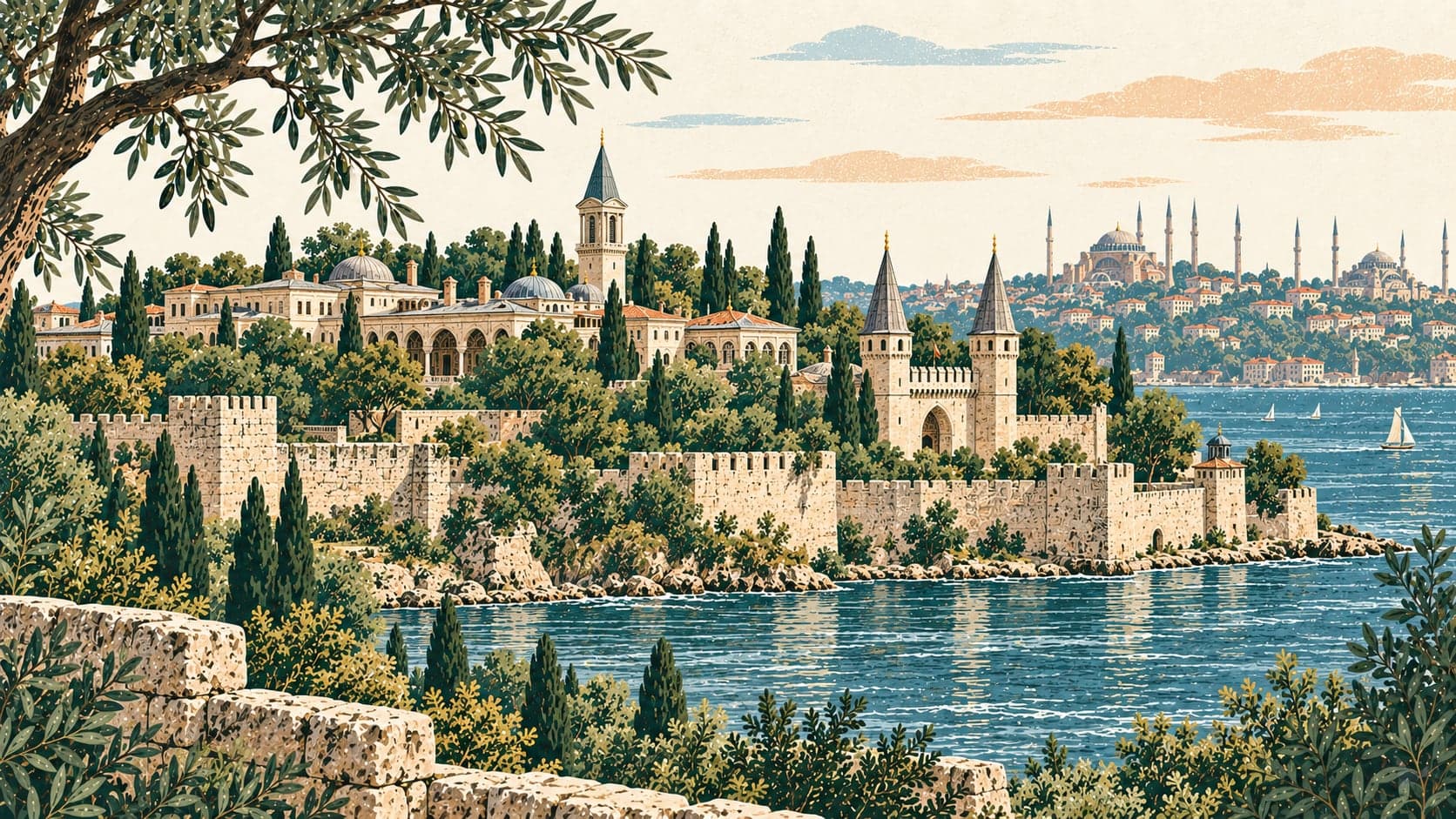
Topkapı Palace stands at Sarayburnu, the tip of the historical peninsula of İstanbul between the Sea of Marmara, the Bosphorus and the Golden Horn, built on the Byzantine acropolis. It was the seat of government of the Ottoman empire and the residence of its sultans for about 380 of the empire's 600 years, until Abdülmecid built Dolmabahçe. At one time close to four thousand people lived within it. Built for Mehmed II in 1478, it covered roughly 700,000 square metres in its early years; the site today is 80,000.
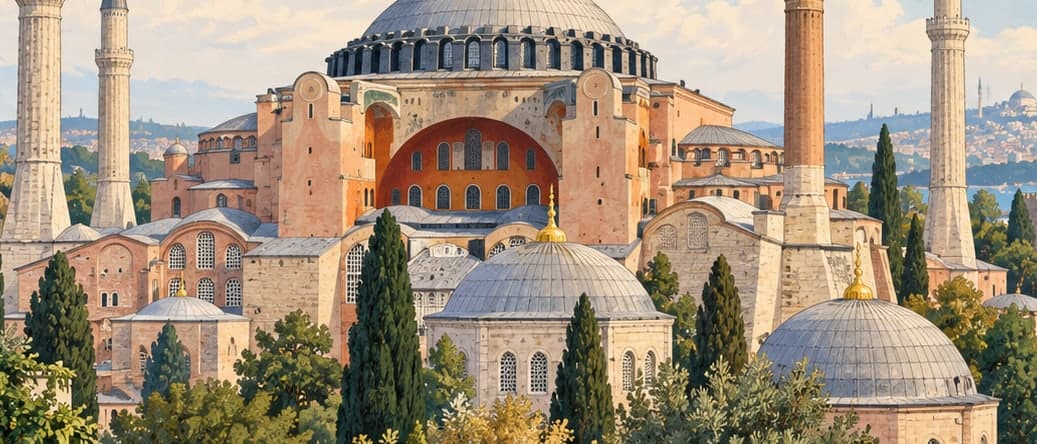
The palace is cut off from the city by the Sûr-ı Sultâni, the wall Mehmed II had built, on the land side and by the Byzantine walls on the sea side. Besides the various land and sea gates opening to different parts of the grounds, the monumental entrance is the Bâb-ı Hümâyûn, the Imperial Gate, behind Hagia Sophia. Because the palace served at once as government, school and royal residence, it falls into two main parts: the Birun, the service buildings of the first and second courtyards, and the Enderûn, the buildings of the inner household.
Above the Imperial Gate, written by Ali bin Yahya Sofi in celi sülüs in a facing composition, are verses 45 to 48 of the Sura of al-Hijr. The inscription over the gate records that this blessed fortress was built and raised by the command of Sultan Mehmed Han, son of Sultan Murad Han, son of Sultan Mehmed Han, sultan of the lands and khan of the seas, conqueror of Constantinople, in the blessed month of Ramadan in the year 883 of the Hegira — November or December 1478. The monograms of Mahmud II and Abdülaziz below the inscription and inside the gate show that it was repaired more than once.
There are small rooms for the gatekeepers on either side of the Imperial Gate. Above it stood a small apartment in the form of a pavilion that Mehmed II had made for himself, lost in a fire in 1866. The importance of that upper floor lay in its use as the Beytül mâl, the treasury between the gates: under the system by which the wealth of the sultan's servants, or of those who died without heirs, passed to the imperial treasury, this was where goods not taken into the treasury were held in trust for seven years.
The first courtyard, entered through the Imperial Gate and irregular in plan, held the buildings of secondary importance in the threefold system of palace, city and state. This was the part the public could enter on certain days.
The palace was emptied when the royal household moved to Dolmabahçe, Yıldız and the other palaces, but it never lost its standing: many officials went on living in it, and it was repaired from time to time. Particular care was given to the yearly maintenance of the Chamber of the Holy Mantle, holding the sacred relics, which the sultan and his family visited during Ramadan.
Its life as a museum began by degrees. Under Abdülmecid it was opened to visits for the first time, in something like the manner of a museum, when the English ambassador of the day was shown the objects in the treasury. Showing the antiquities of the treasury to foreigners then became a custom, and under Abdülaziz glazed vitrines in the empire style were made and the objects displayed in them. When Abdülhamid II was deposed there was a proposal to open the imperial treasury to the public on Sundays and Tuesdays, but it came to nothing.
On the order of Mustafa Kemal Atatürk the palace was placed under the Directorate of the İstanbul Museums of Antiquities on 3 April 1924 to be opened to the public, serving first under the name of the Treasury Stewardship and then the Treasury Directorate; today it works as the Directorate of the Topkapı Palace Museum. After small repairs and the administrative arrangements needed for visitors, it opened as a museum on 9 October 1924, the parts shown then being the Imperial Council chamber, the Audience Chamber, the Mecidiye Pavilion, the Chief Physician's Room, the Mustafa Paşa Pavilion and the Baghdad Pavilion.
Topkapı is the foremost of the monuments of the historical peninsula of İstanbul, inscribed on the UNESCO World Heritage List in 1985. It received 4,683,250 visitors in 2024.
Visit status for this record: open to visitors.
Entry fee
- Topkapı Sarayı Kombine Bilet (Topkapı Sarayı + Aya İrini + Harem) · Local
- 500 ₺
- Topkapı Sarayı Kombine Bilet (Topkapı Sarayı + Aya İrini + Harem) · Foreign
- 2750 ₺
- Topkapı Sarayı Kombine Bilet (Topkapı Sarayı + Aya İrini + Harem) · Reduced
- 250 ₺
- Harem · Local
- 400 ₺
- Harem · Foreign
- 1050 ₺
- Harem · Reduced
- 150 ₺
- Aya İrini · Local
- 350 ₺
- Aya İrini · Foreign
- 1050 ₺
- Aya İrini · Reduced
- 150 ₺
- Okul Öğrenci Grupları · Reduced
- 75 ₺
- Gece Turu · Local
- 1000 ₺
- Gece Turu · Local · Student
- 500 ₺
- Gece Turu · Foreign
- 4000 ₺
- Gece Turu · Foreign · Student
- 750 ₺
Visiting hours
- Visiting hours
- 09:00:00 - 17:00:00