Guide
The Sadberk Hanım Museum was set up in 1974 with a fund created within the Vehbi Koç Foundation to display the personal collection of Sadberk Koç, and it is, according to Turkish Wikipedia, the first private museum in Türkiye. It opened to visitors on 14 October 1980 in the restored Azeryan Mansion at Büyükdere on the Bosphorus.
Sadberk Koç, wife of the foundation's founder Vehbi Koç, had gathered objects from her youth onwards and worked during her lifetime to see them shown in a museum. The wish was carried out by her family seven years after her death, around a collection of some 3,500 pieces of traditional handwork. Before the museum could be founded, officials of the Ministry of Culture and Tourism and the Koç family worked together on a law allowing private individuals to establish museums, and a regulation for private museums was drawn up.
The purchase in 1983 of Hüseyin Kocabaş's collection of coins and archaeological material turned the museum into a small archaeological museum as well. The building next to the Azeryan Mansion was restored and added to the museum under the name Sevgi Gönül Building, and the archaeological collection is displayed there. That restoration won the museum a Europa Nostra award in the conservation category in 1988.
The collections have grown steadily through gifts and purchases and now number some twenty thousand objects. The main groups on display are archaeological finds from the civilisations of Anatolia, running from the sixth millennium BC to the end of the Byzantine period, Islamic works, Ottoman costume, and İznik tiles and ceramics of the fifteenth to seventeenth centuries. In 2023 the Ministry of Culture and Tourism gave the museum its Special Award for the breadth of its collections and for the modern museum practice made possible by its restoration and conservation workshop.
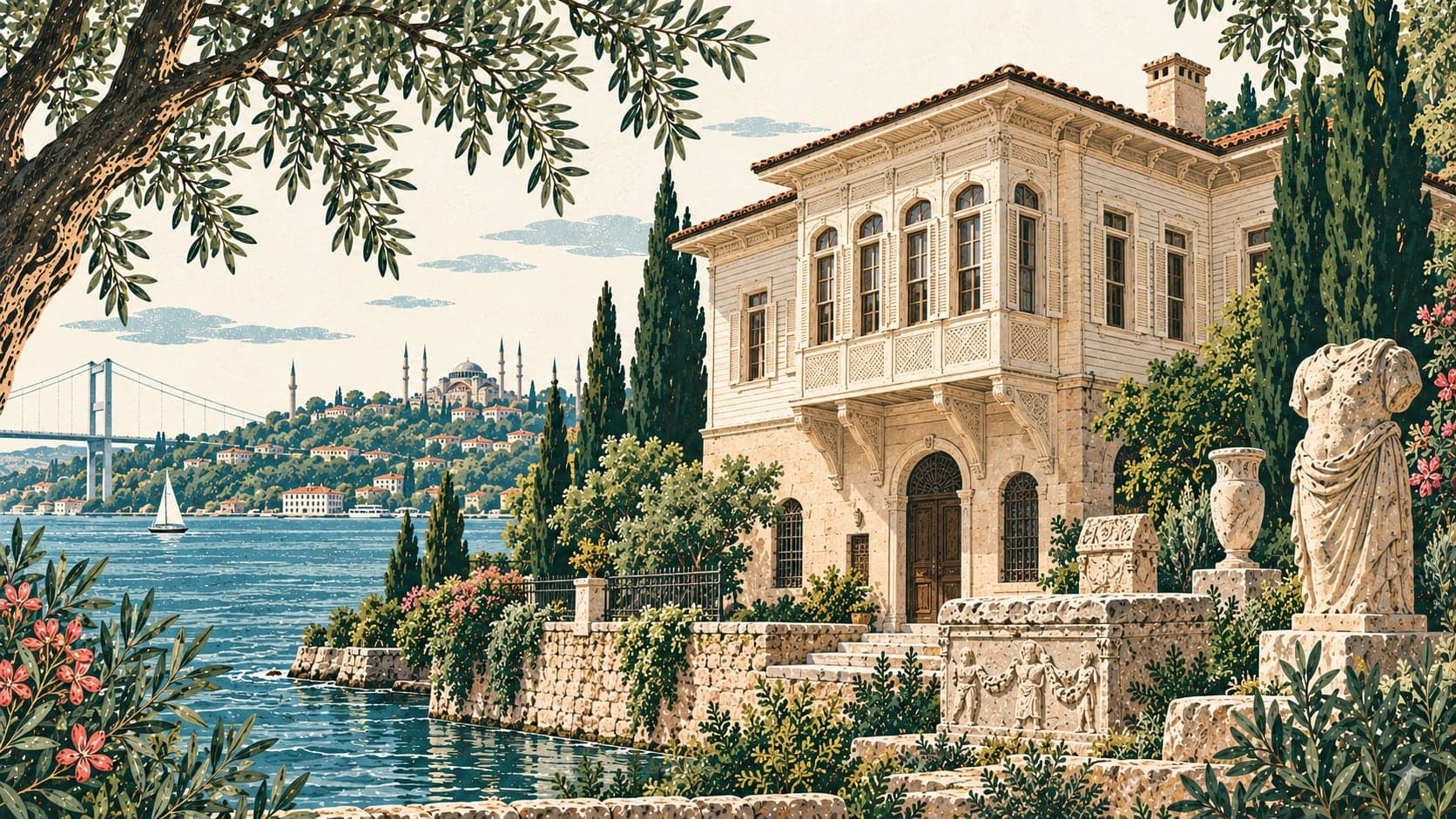
The Azeryan Mansion is a nineteenth-century wooden waterside house of three storeys with a wooden attic, built in a manner drawing on local European architecture. Timber and turned-and-plastered work rest on a masonry foundation. It belonged to the Azaryan family, a wealthy Catholic Armenian family from Sivas. The Koç family bought it in 1950 and used it as a summer house until 1978, and between 1978 and 1980 it was turned into a museum to a restoration project by the architect Sedat Hakkı Eldem.