Guide
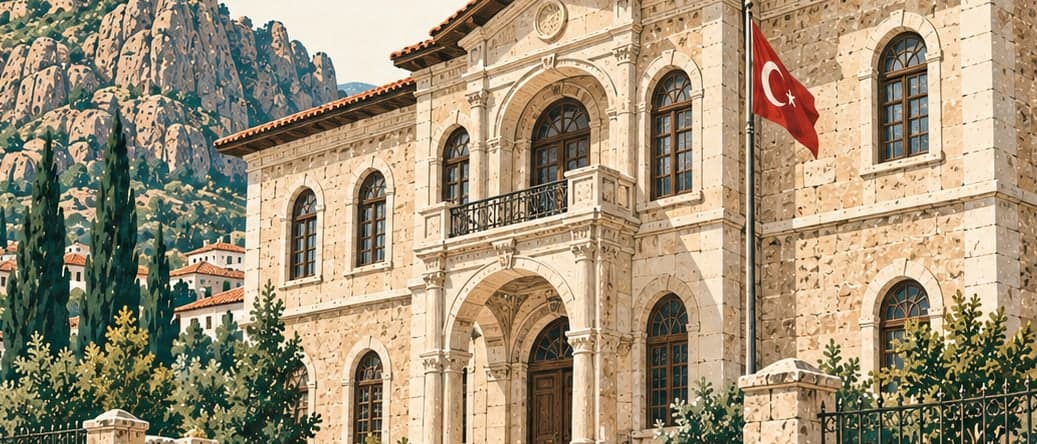
The Mevlevihane of Afyonkarahisar goes back to the thirteenth century and, in the tradition of the order, ranks second after Konya. It stands in the town centre, and the mosque that forms the main part of this large complex is known as the Mevlevi mosque or the Tomb mosque.
Streets close the mosque on the north, west and south; houses stand to the east. Two iron gates lead into the courtyard from north and south. The northern gate is lower down, with steps up first to the courtyard and a second flight to the mosque door, and the entrance front faces east. The main unit contains the tomb, the semahane with its prayer room, the sherbet room, the women's gallery and the porch for latecomers; the dervish cells and other parts of the Mevlevihane, such as the kitchen, stand in the garden.
The building is cut stone, and above its door there is a Mevlevi cap carved in relief in place of an inscription. The minaret with its single balcony is on the west. After the building collapsed, Abdülmecid had it rebuilt in 1844. A great fire followed, and in 1905 Abdülhamid II ordered another major repair, on which fourteen thousand gold pieces were spent.
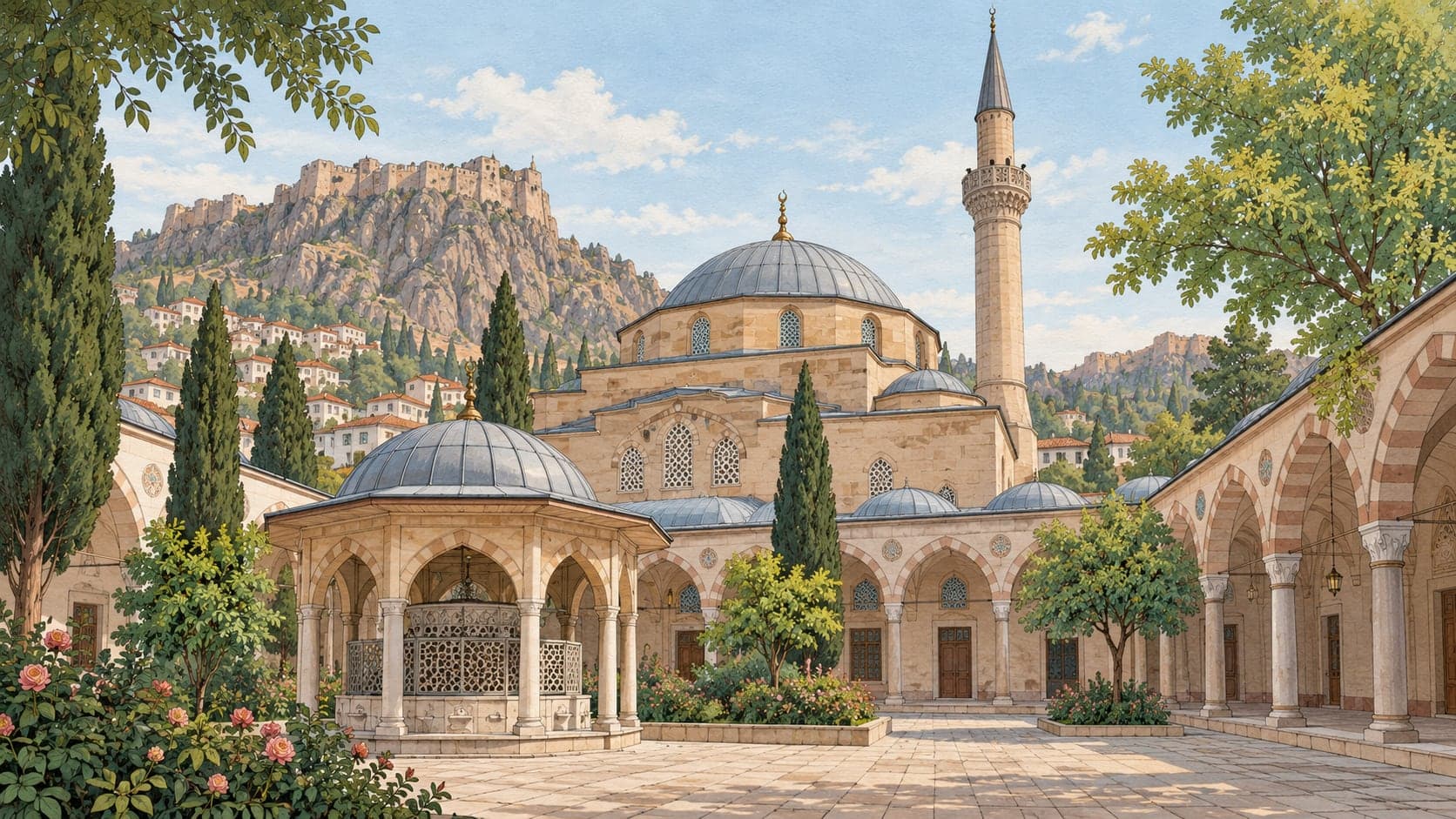
Up the steps from the main door on the north is a large courtyard ringed by the cells of the dedes, with an ablution fountain at its centre. The sheikh's house that once stood to the east was demolished after the fire. Part of the kitchen to the right of the door holds the çilehane, the room of retreat. A large dome with coloured glass windows in its drum covers the semahane. Above the sherbet room to its east is the women's gallery, screened with lattices and looking down into the semahane. To the left of the semahane is the tomb, holding twelve cenotaphs of Mevlevi sheikhs. Three of them descend from Mevlana: Aba Puş-i Veli, then Sultan Divani — whose other name was Mehmet Semai Çelebi — and Hızır Şah Çelebi. Elkas Mirza, a son of Shah İsmail, lies here as well. The mosque was repaired in 2008 and is open for prayer; the Mevlevihane serves as the Sultan Divani Mevlevihane Museum.