Guide
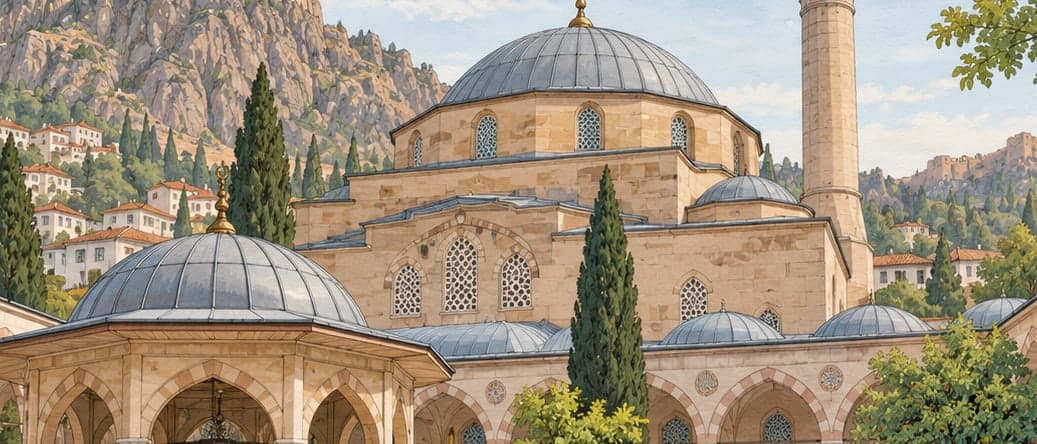
The great mosque of Afyonkarahisar was built between 1272 and 1277, in the Anatolian Seljuk period, by the sancak bey Nusretiddin Hasan, who commissioned it from the architect Emir Hacı Bey. It is one of the most important examples of the timber-columned, timber-beamed mosques of medieval Anatolia.
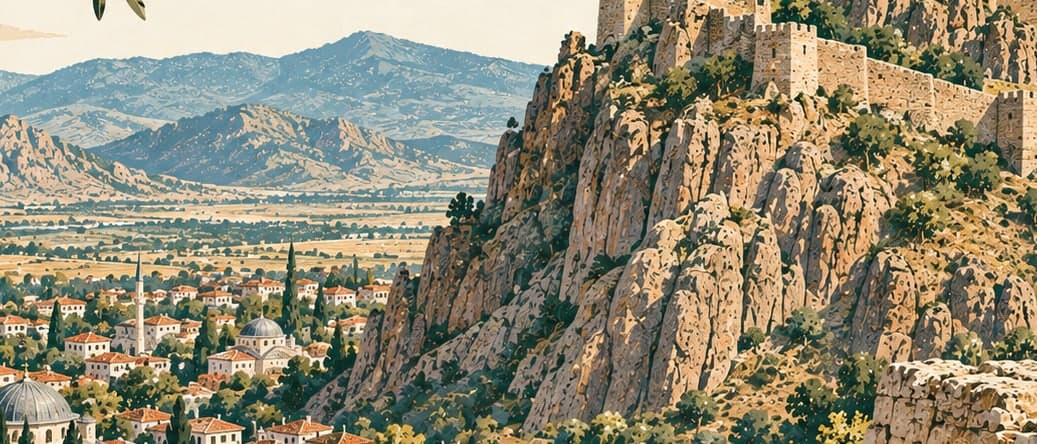
Standing at the foot of Afyon castle, it appears in some historical records from the sixteenth century onward as the Cami-i Kebir or the Hocabey mosque. The roof, laid over thick masonry walls, was earth-covered originally and is sheeted in zinc today; it rests on forty wooden columns in five rows of eight. The wooden capitals on those columns are worked with pendants and lozenges.
The stone mihrab is decorated with six tiers of muqarnas. The wooden minbar carries geometric patterns, triangular panels and interlocking work. There are three doors, opening east, west and north; the inscription on the two-leaved minbar door, carved in the Seljuk manner, gives the original date of construction.
A significant part of the painted decoration was destroyed between 1946 and 1953, and some of the columns and capitals were replaced. A number of the old wooden capitals are now displayed in the Afyonkarahisar Museum and in the open air.
In 2023 the mosque was inscribed on the UNESCO World Heritage list as one of five in the group called the Medieval Anatolian Wooden Hypostyle Mosques, together with the great mosque of Sivrihisar in Eskişehir, the Ahi Şerafettin — Arslanhane — mosque in Ankara, the Eşrefoğlu mosque in Konya and the Mahmut Bey mosque in Kastamonu.