Guide
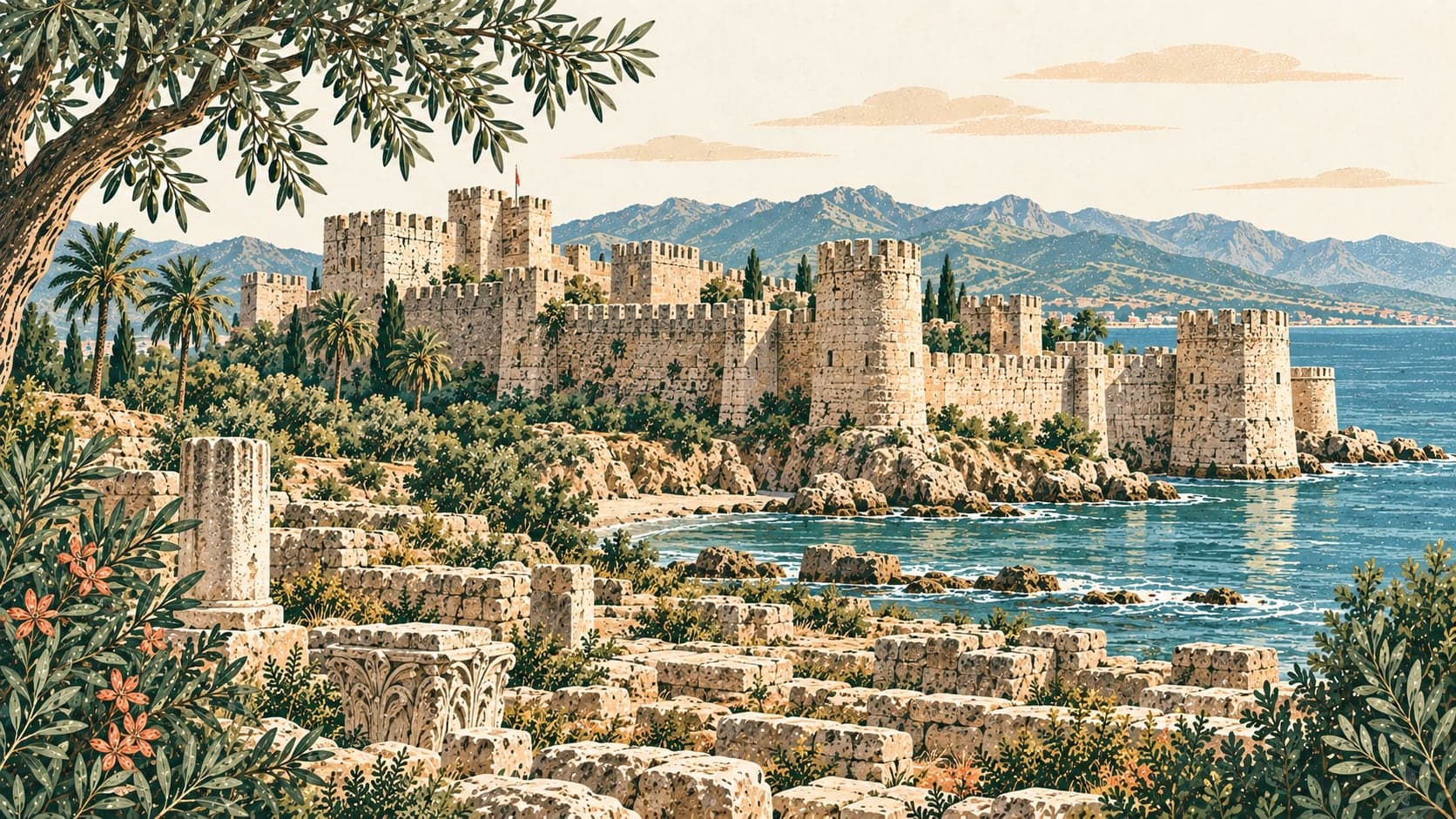
Mamure Castle stands along the shore near the Bozdoğan quarter of the Anamur district of Mersin, in the south of Türkiye.
It was built by the Romans in the third century to watch over the trade routes of the Mediterranean and Cilicia and to protect merchant ships from pirates. Damaged and ruined over time, it was repaired again in the twelfth century under the Armenian kingdom of Cilicia.
The castle was repaired in 1450 in the time of the Karamanid emirate and given the name Mamure, meaning prosperous. Bedreddin Mahmud Bey had a mosque built inside it between 1300 and 1308. In 1469 the castle passed to the Ottoman state, and it was repaired again in the fifteenth, sixteenth and eighteenth centuries.
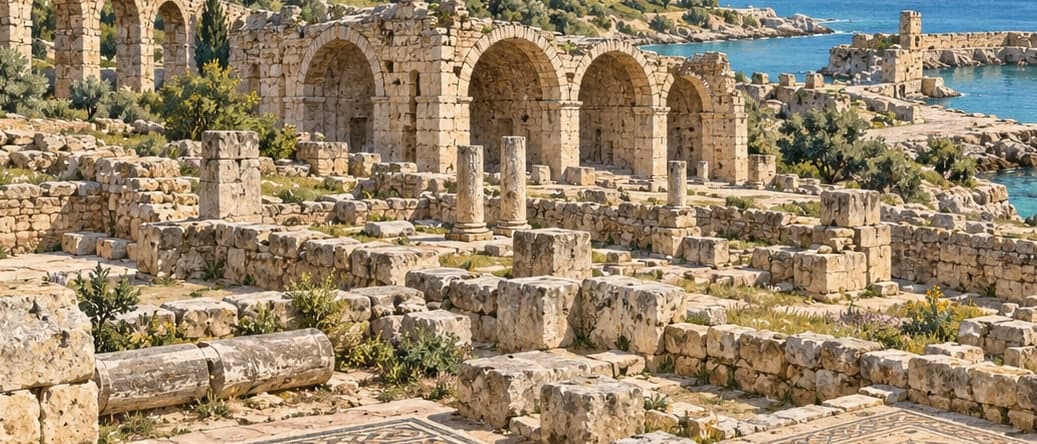
The whole measures about 240 metres from west to east and 170 from north to south, covering 23,500 square metres, and on the east and north it is ringed by a water ditch connected to the sea. The main gate is on the eastern face beside the main tower; another gate, carrying the building inscription, is on the north-western face. Inside, walls divide the space into three courtyards. In the western courtyard stands a small complex made up of a mosque with a single minaret and a ruined Turkish bath; in the southern courtyard are the remains of a lighthouse.
The massive outer walls carry thirty-six towers, some round and some angular, while the main tower on the east has a twelve-sided plan. The walls are of two storeys, fitted with battlements and loopholes and reached through a branching system of stairs and corridors.
This appears to be the castle on the Cilician coast that William Henry Bartlett drew in 1836 under the name Kalendria. That name, however, refers to Kalenderis — today Aydıncık — another town about sixty kilometres east of Mamure.
The castle has also served as a location for Turkish cinema and television, among them the 1967 film Malkoçoğlu Krallara Karşı with Cüneyt Arkın and the 1988 series Kuruluş Osmancık with Cihan Ünal.