Guide
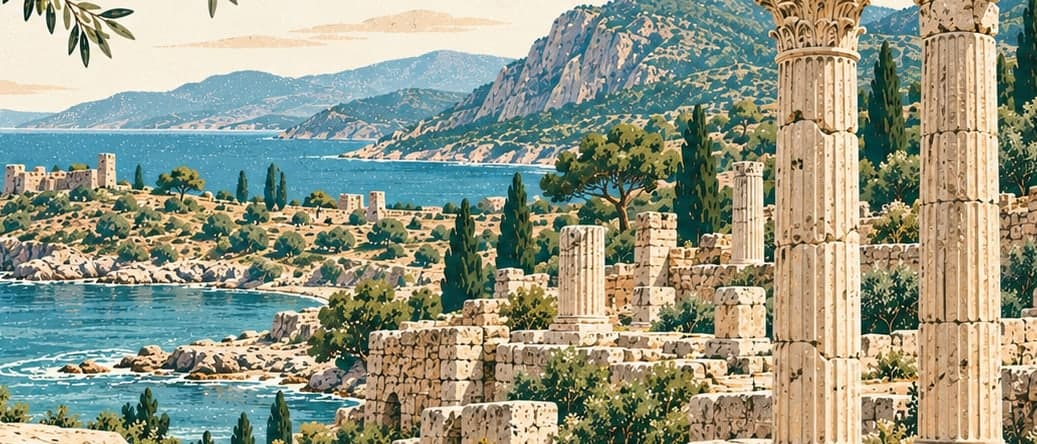
Arsinoe stands on Maraş Tepesi in the Bozyazı district of Mersin. A good many cities of this name were founded along the Mediterranean, and this is one of the four that are known. It became a bishopric at the beginning of the sixth century, was abandoned in the early Middle Ages and never settled again.
Strabo places it on the coast road: after Anemurium, he writes, comes the first city, Nagidos, and then Arsinoe, which has an anchorage.
The inscription about the city's founding and its dealings with neighbouring Nagidos is displayed in the Mersin Museum. From it we know the city was first founded around 270 BC in the time of Aetos of Aspendos, who established this harbour town in the name of Queen Arsinoe, wife of Ptolemy II of Egypt, and it was known as a sacred city. The same inscription records that a border dispute with Nagidos was settled and that two copies were made — one placed in the temple of Aphrodite at Nagidos, the other in an enclosed sacred precinct at Arsinoe.
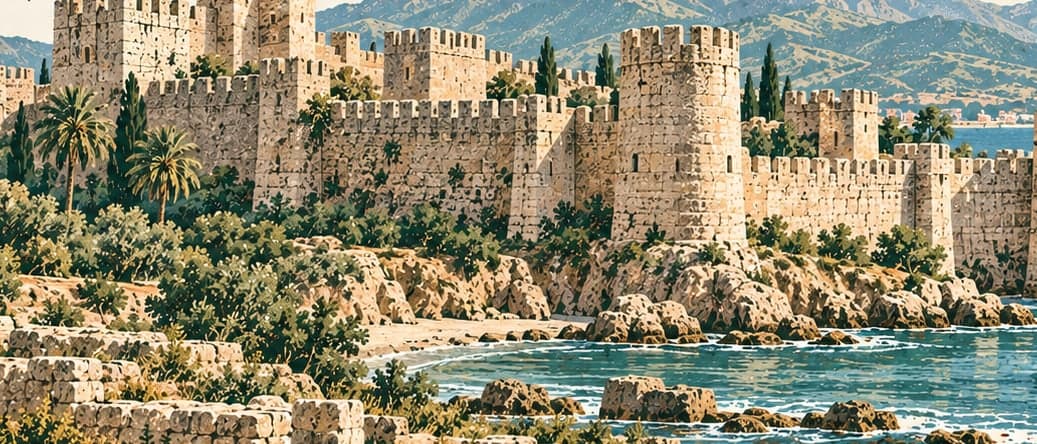
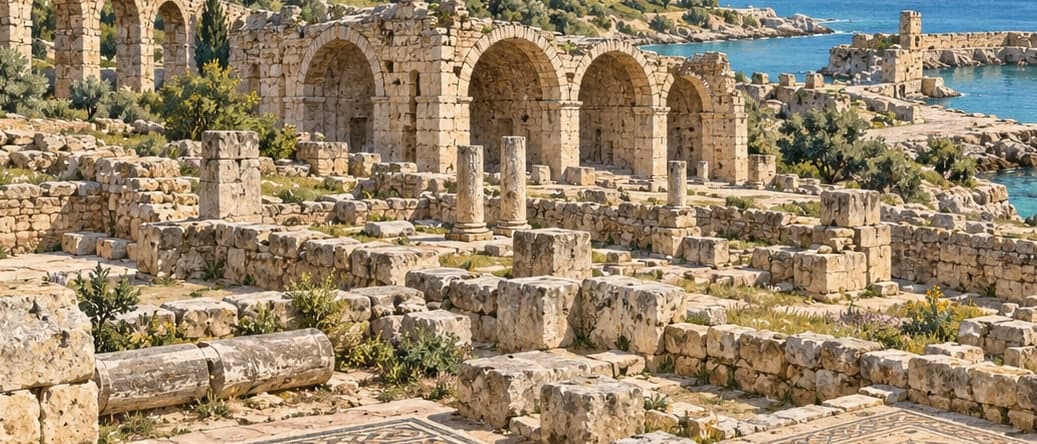
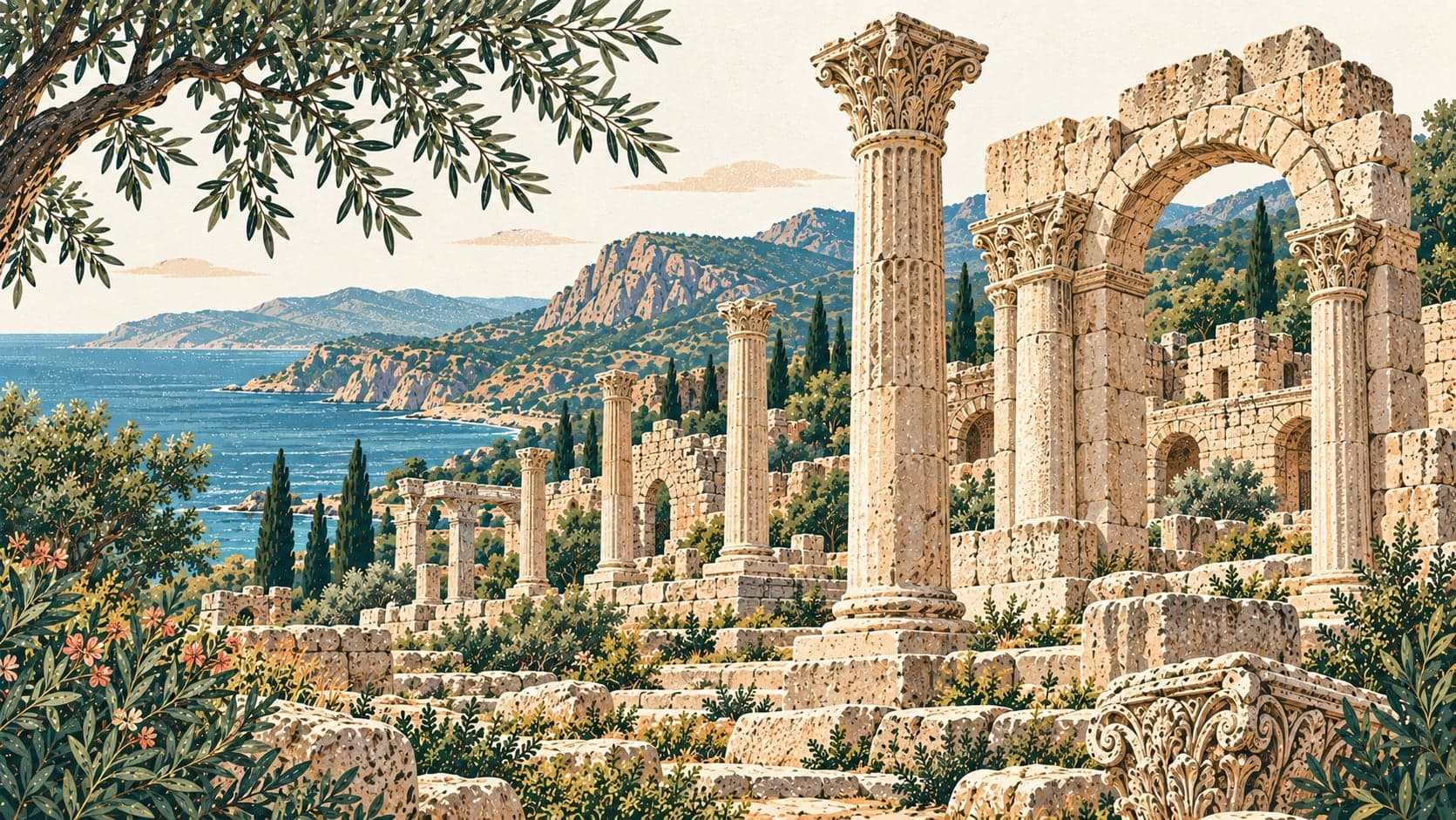
Arsinoe has an eastern and a western harbour, and fortress walls follow the fall of the ground around it; the western walls, strengthened with towers, are in fairly sound condition. Many building remains within the city have been destroyed entirely. The tombs stand out: two-storey vaulted structures, some with mosaics on their roofs, resembling those at Anemurium. Three churches of the early Byzantine period have been identified, of which only foundation traces remain. The church at the north-east of the site and the basilica to the east, built of cut and rubble stone, have kept their plans. There are also rows of houses of the Roman and early Byzantine periods.