Guide
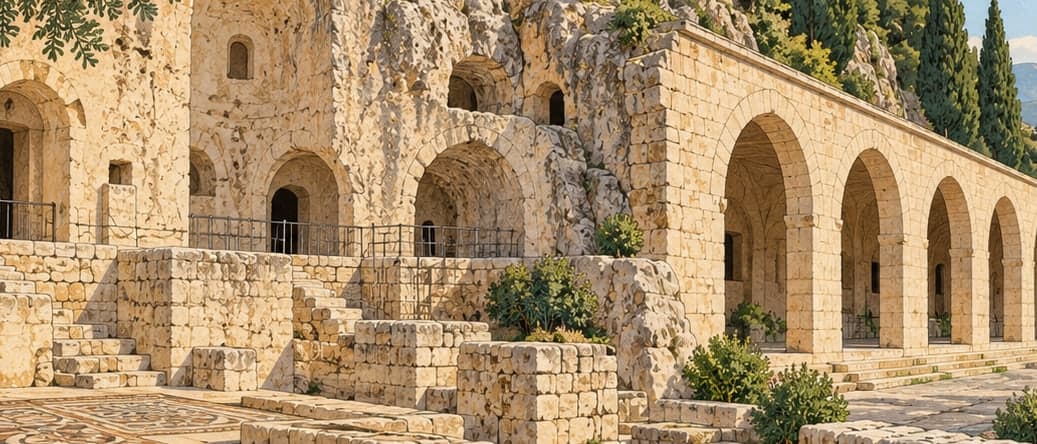
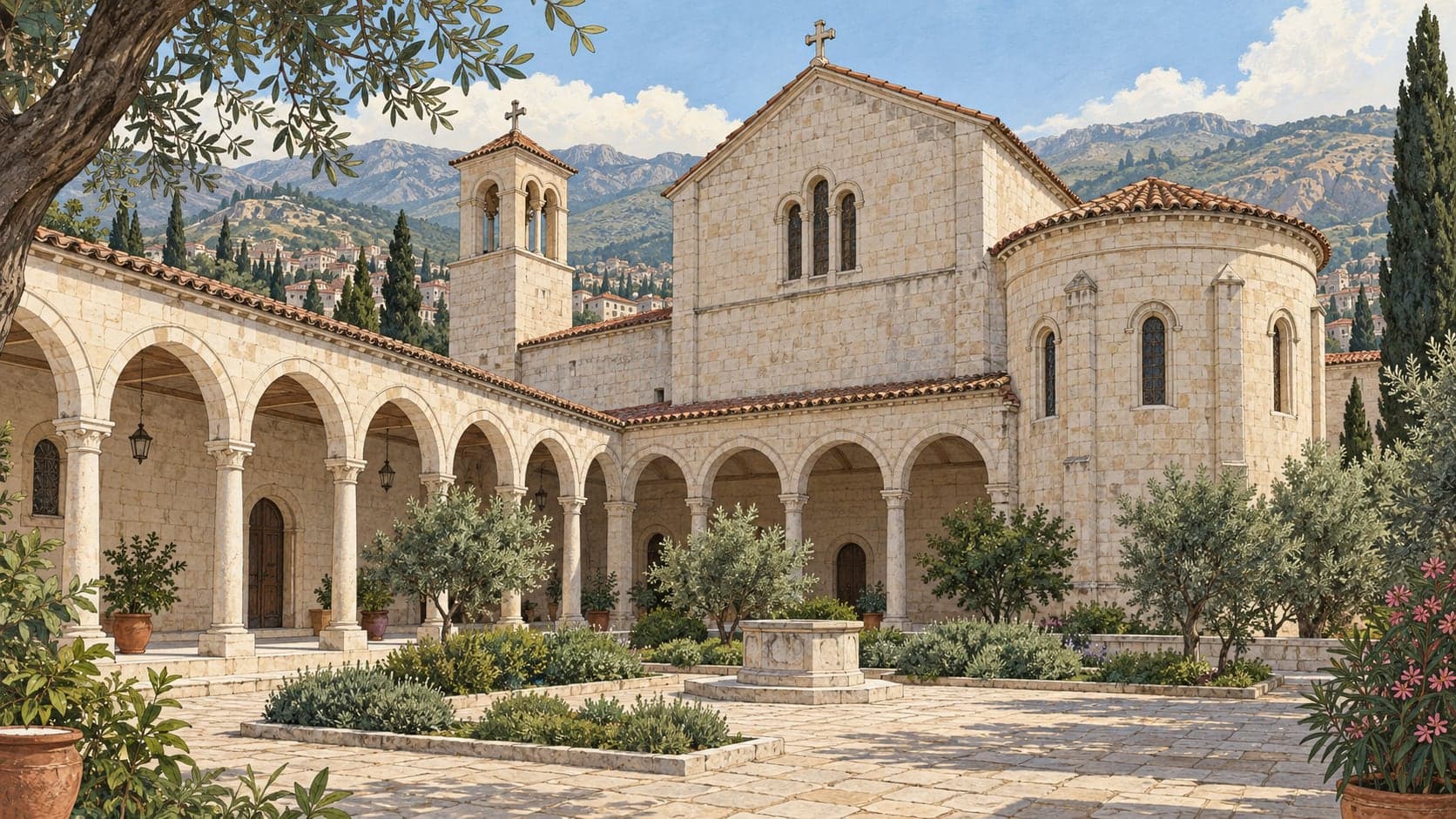
The Catholic church of Antakya is easy to walk past: the way in is a dead-end lane off the point where Kurtuluş Caddesi meets Kutlu Sokak, immediately north-west of the Sarımiye mosque, and the door opens not onto a nave but onto a covered courtyard with a pool, paved in fine stone and wrapped on two sides by an L-shaped wing. The rooms have carved shelving; on the wall facing one door a relief in the form of a marble votive stele sits in a closed arched niche with its inscription beneath. The portico opposite the entrance, three-stepped above and later closed with iron frames, leads into another room; its original floor survives, marble with geometric patterning between, and the side facing the courtyard opens in two Arab arches with no column set between them.
The Catholic presence here was re-established in 1846 at the wish of Pope Pius IX, after a gap of six hundred years, through the Capuchin friars. The first to arrive was P. Basilio Galli from the Parma province; after his death French friars followed, and in 1852 they obtained permission from Sultan Abdülmecid to build a Catholic church in Antakya and founded a small monastery. The Capuchins remained ninety years and were joined by Lebanese clergy. The present premises came later: two old houses bought in 1977 were restored and occupied.
The church is one of three places of worship that stand together on this stretch of Kurtuluş Caddesi. The Sarımiye mosque adjoins it to the south, and the Antakya synagogue is across the avenue, also to the south — a grouping the district authorities describe as the sign of long coexistence among the Muslim, Jewish and Christian communities of the town. One further name attaches to the buildings: the architect Vilyam Azaroğlu, who from the 1960s to the 1990s put up many of the apartment blocks, villas, hotels and religious buildings that changed the face of Antakya, was born in one of these houses in 1927.