Guide
The Kaman Kalehöyük Archaeological Museum was built to keep the finds from a single excavation where they came out of the ground. Digging at the Kalehöyük mound began in 1986 under Dr Sachihiro Omura for the Japanese Institute of Anatolian Archaeology; the museum went up between 2008 and 2010 through economic and cultural cooperation between the Turkish and Japanese governments, and opened on 10 July 2010.
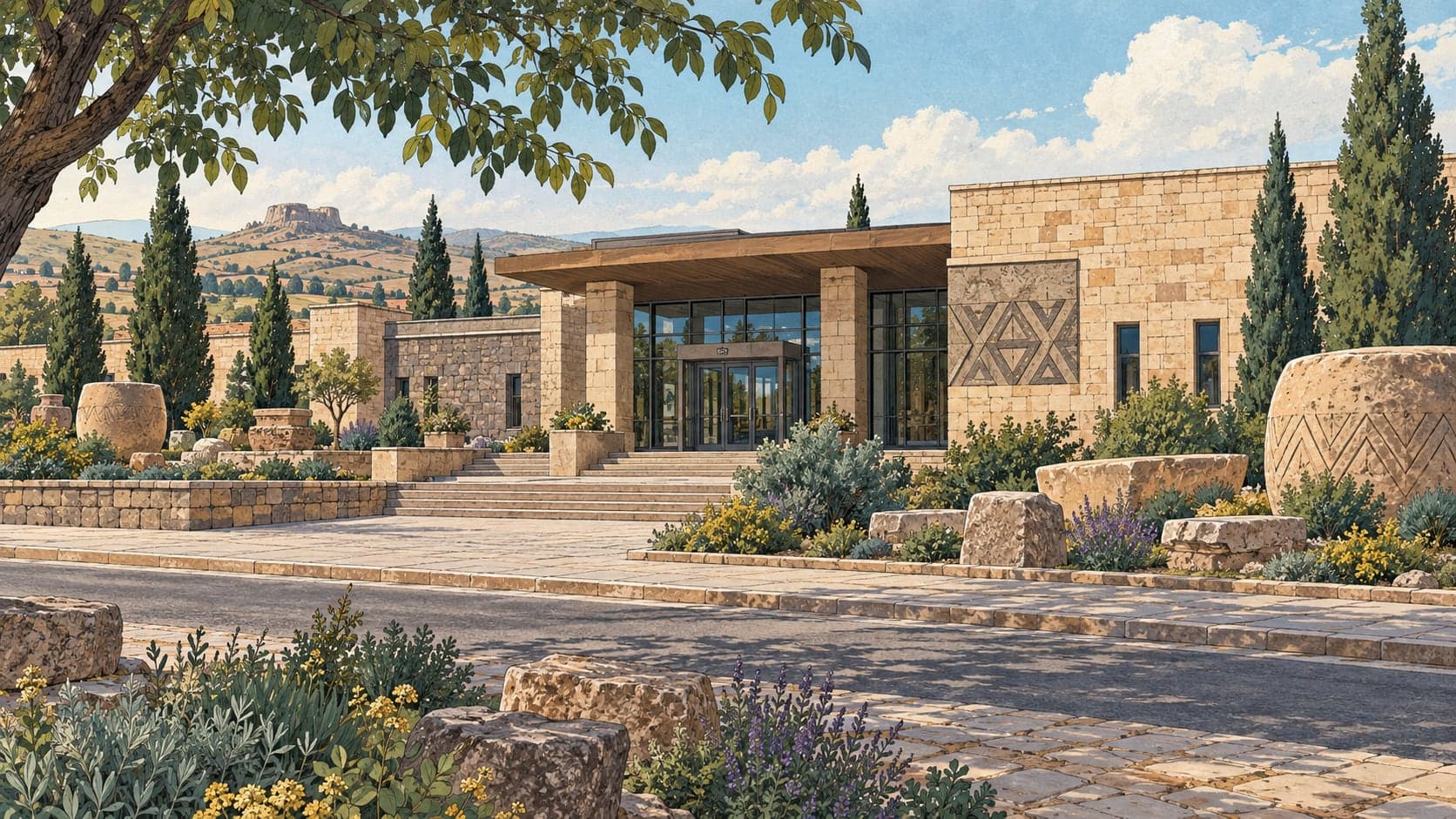
The building is shaped like the mound it serves, and grassed over. The ministry describes the result — a museum that sits in the landscape rather than on it, designed to be environmentally sustainable — as unique in Türkiye and in the world, and notes that it won the American Green Good Design award for best green museum in 2010 and was placed among the top thirty European museums in the 2012 European Museum of the Year competition.
The collection now runs to about 5,000 objects, from the institute's excavations at Kalehöyük, Yassıhöyük and Büklükale together with purchases and donations. The display uses models of the excavated settlements, virtual walk-through screens, three-dimensional object screens and holographic reconstructions alongside the objects themselves. Next to the museum is the Prince Mikasa Memorial Garden, a Japanese garden, and the two are usually visited together.
Teaching is a substantial part of what happens here. Every summer the museum runs an archaeology summer school for primary and secondary pupils: throwing pottery on the wheel, cuneiform writing, making clay figurines, jewellery design and seal impressions, with marbling and creative drama when a teacher and enough participants are available. Groups visiting at other times of the year can take part in the same activities.
The museum opens every day of the week from 08:00 to 17:00, and from April to October it stays open until 19:00.