Guide
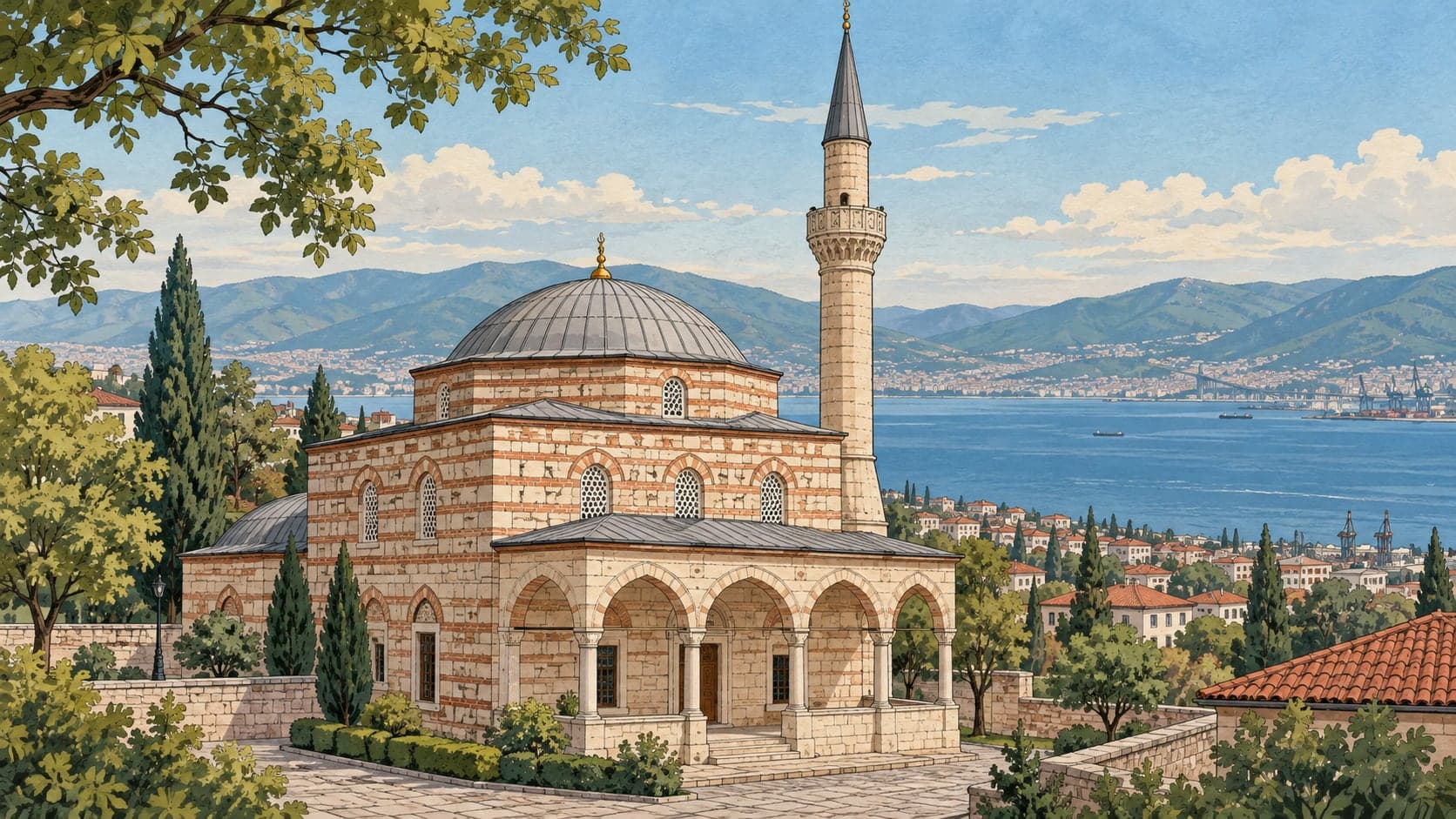
The mosque on Alaca Mescit Sokak in the Veliahmet quarter was built in 1598 by the kadı of İzmit, El Hac Mustafa bin Mehmet el Gümüşzade, over the remains of the Byzantine palace of Justinian. It was built on a quadrangular plan with masonry walls; the two side fronts and the rear have wooden eaves, the porch for latecomers having been added later. The inner walls kept the character of the period it was built in.
The minaret is masonry and stands out for its length in relation to the size of the mosque. The corbelling beneath its balcony is of the sawtooth kind, matching the eaves of the mosque, and it is that sawtooth minaret together with the tile decoration that gives the building its character. Over the door, reached through the later porch, there was a single-piece tile inscription made in the founder's name.
The mosque came through many earthquakes, but the Marmara earthquake of 17 August 1999 damaged it so badly that it collapsed. The rubble was cleared, and prayer continued first in a tent and then in a prefabricated mescid put up in its place. In 2005 the regional foundations directorate decided it should be rebuilt as it had been, and under the supervision of the High Council of Monuments it was reconstructed to its original form in eight months.
In its present state the mosque is single-storey with a capacity of 105 people including the porch, which is built of wood. The tile inscription made in the founder's name is of great value; it records that the mescid was built by El-Hacc b. Muhammed Mustafa, known as Gümüşlüzade, in the Hijri year 1007, to earn the favour and the mercy of God.