Guide
The building is the old İzmit Redif office — the headquarters of the Ottoman reserve army organisation, whose first centre was İzmit. It is said to have been built by the district governor Hasan Pasha during the reign of Abdülaziz (1861-1876), together with the imperial pavilion. Archive documents fill in the rest: one of December 1886 records a fire that destroyed a military depot and the house next to it, and one of October 1889 asks for the official opening of the newly built depot, arsenal and military office. The inscription on the building dates it to 1889-1890. Its architect is not known, and the depot and arsenal that stood behind it — marked on old city maps and visible in a photograph in the Yıldız albums — no longer exist.
The building served the 15th Corps as a military courthouse until the 1999 earthquake, which damaged it badly. Restoration finished in 2011 and it opened as the Atatürk and Redif Museum in 2012; structural problems and trouble with the display cases closed it again in 2020, and it reopened later that year with a new display.
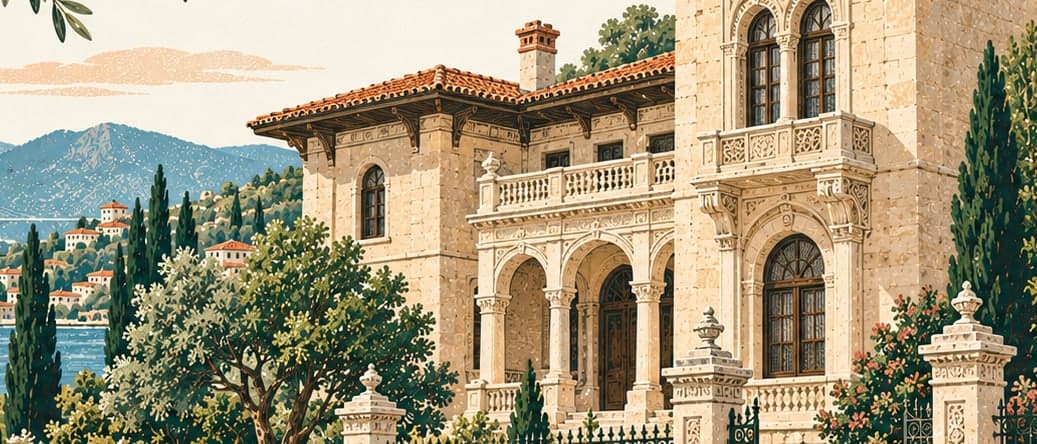
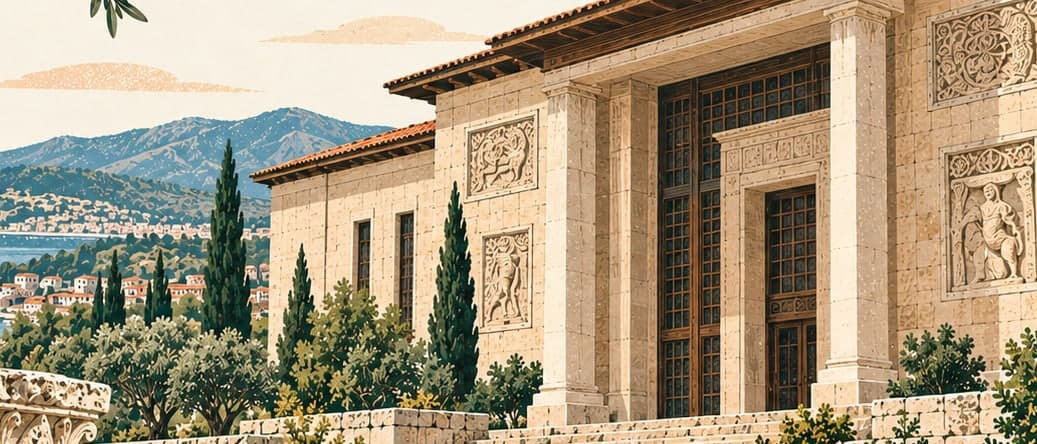
Architecturally it is a good example of the Empire style used for public buildings of the period. It is masonry, rectangular on an east-west axis, enclosed by courtyard walls; the single-storey side wings were raised to two storeys in the republican period. Four columns with fluted shafts and composite capitals stand before the entrance landing and carry the projecting bay above it, whose street-facing walls have rectangular windows aligned with the openings below. The entrance axis projects from the facade and is emphasised vertically by a rectangular inscription panel with the Ottoman arms. The courtyard wall curves in a half-circle at the north, on the line of the entrance, with the courtyard gate at its centre; the Ottoman inscription reading 'Daire-i Askeriye' and the arms that were originally on the lintel are gone. A second gate opens at the southeast. The ceiling decoration inside is of the same period.
Among the objects displayed, the one the ministry singles out is a 19th-century Hereke carpet, described as among the finest of its kind, shown as part of a section on traditional carpet weaving.
Visit status for this record: open to visitors.