Guide
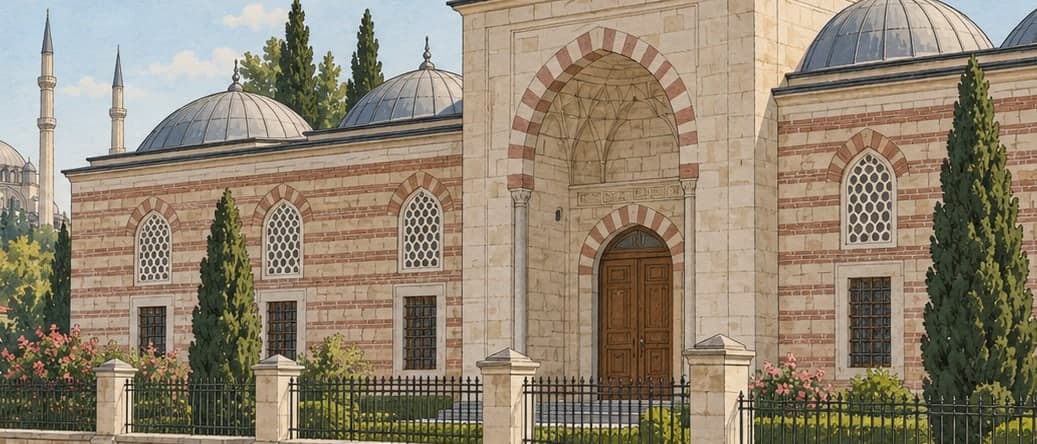
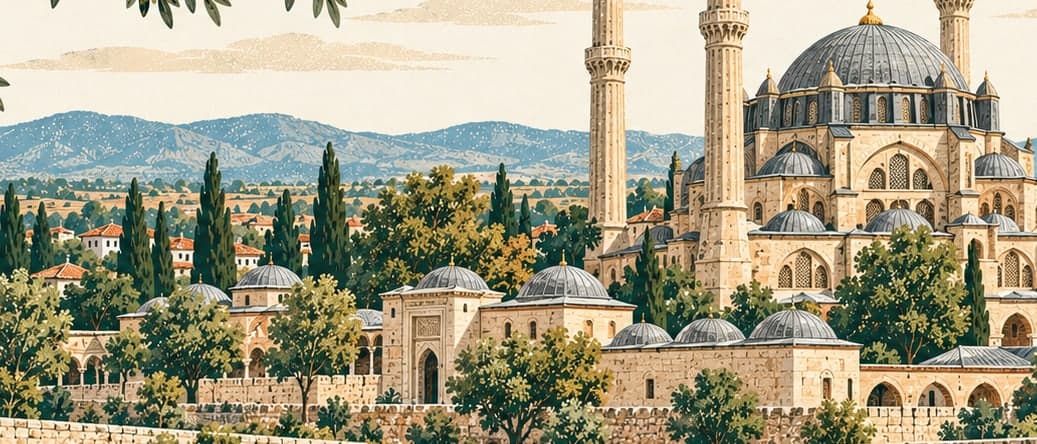
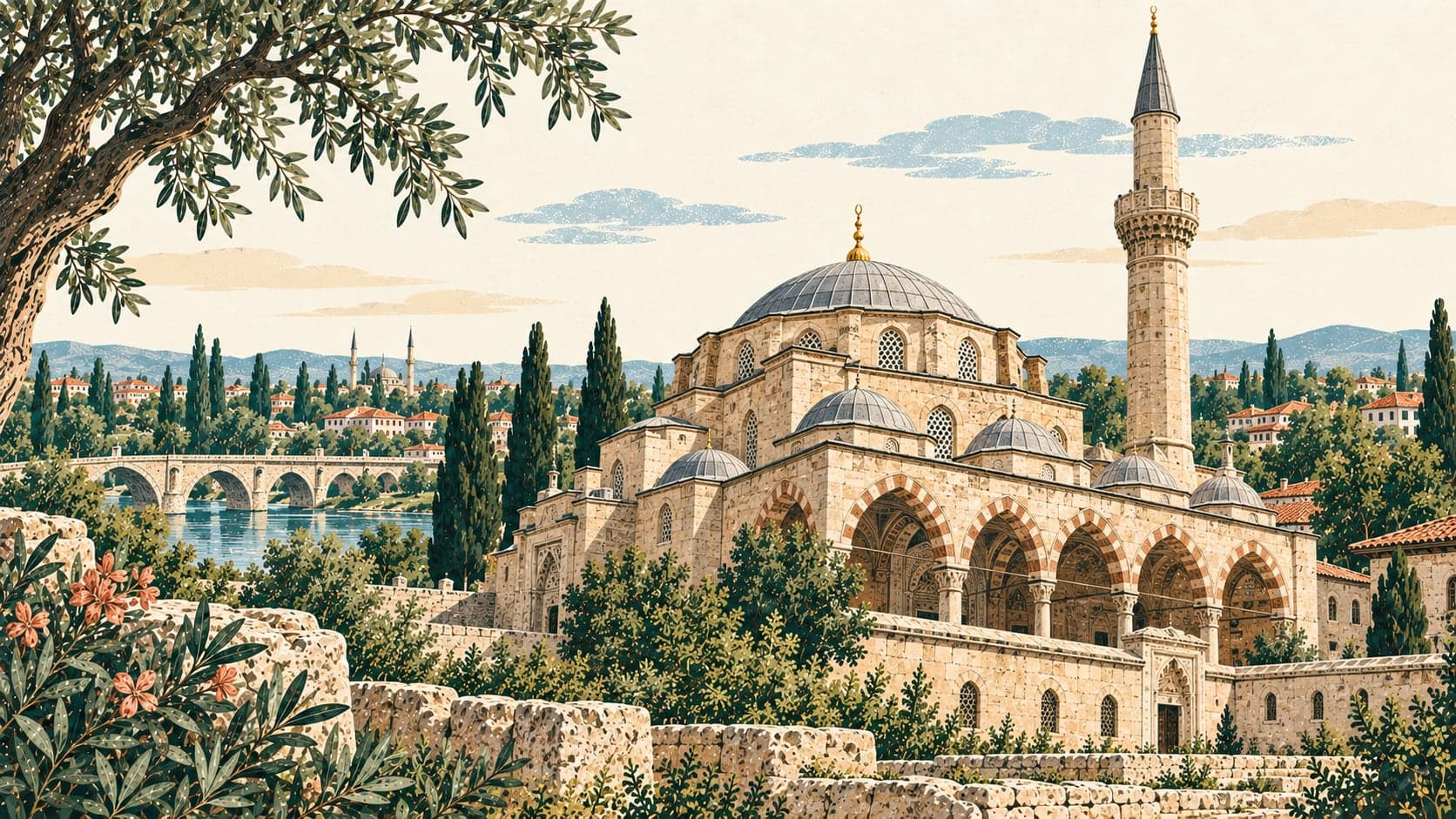
The Eski Cami, the Old Mosque, stands in the centre of Edirne and is known as the first monumental building in the city to have come down to the present in its original form. According to the inscription over its side door its architect was Hacı Alâaddin of Konya and his foreman Ömer ibn-i İbrahim. The mosque has nine domes, with a minaret at its north and north-east corners.
Building began in 1403 under Süleyman Çelebi, during the period of Ottoman history known as the Interregnum, and was completed by Mehmed I in 1414. The sultans Ahmed II and Mustafa II were girded with the sword here. The mosque was damaged by fire in 1749 and by earthquake in 1752 and repaired in the reign of Mahmud I, and it was restored again between 1924 and 1934, after the founding of the republic.
Two things inside it are treated with particular respect. The preaching pulpit is not used by the imams, out of respect for the memory of Hacı Bayram Veli, who is said to have come to Edirne in the reign of Murad II and to have preached in this mosque. And to the right of the prayer niche is the stone called the Rükn-ü Yemani, said to have been brought from the Kaaba, which is a place of particular visitation.
The white-painted walls and piers carry calligraphic inscriptions written between the eighteenth and twentieth centuries. Some were added in the reign of Mahmud I and some during the repair of 1863, and in later periods the noted calligraphers of the day gave their work here or wrote it in place. The gilded basmala to the right of the pulpit bears the signature of Abdülhamid II.