Guide
The Denizli City Museum shows the cultural, social and economic inheritance of the city from prehistory to the present. It opened on 13 March 2024 in the restored stone workshop buildings of the former Şehit Yusuf Batur industrial vocational high school, one of the notable works of early republican architecture in the city.
The buildings were put up in the 1940s and housed for many years the school of arts, later the Yusuf Batur high school, which was the centre of vocational education in Denizli. After the school's main building was demolished, the stone workshops stood empty and their demolition was raised in turn; through the efforts of local professional chambers and civic organisations they were registered instead as cultural property requiring protection.
Under a protocol signed in 2021 between the Ministry of Culture and Tourism and the Denizli metropolitan municipality, the buildings were restored as a museum complex. The work kept the original architectural fabric while creating a contemporary display space.
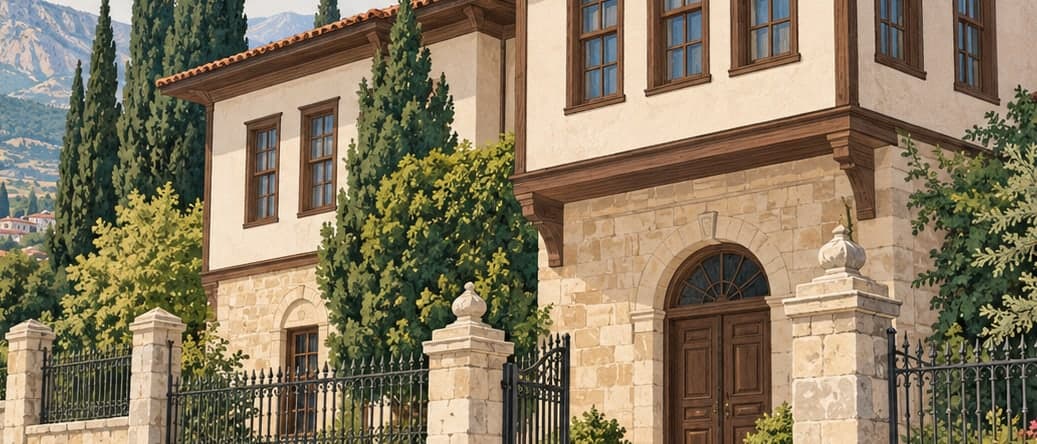
The buildings were designed by the architect Selçuk Milar, a student and assistant of the German architect Paul Bonatz. Carrying the marks of the Second National Architectural Movement and of modernism, they are plain, functional and cubic in form. Built in local travertine, with wide windows and high-ceilinged workshop spaces, they reflect the industrial architecture of their day. The museum covers about 2,500 square metres under cover.
The display is laid out across nine main halls and thematic corridors, using interactive panels, reconstructions and digital presentation.