Guide
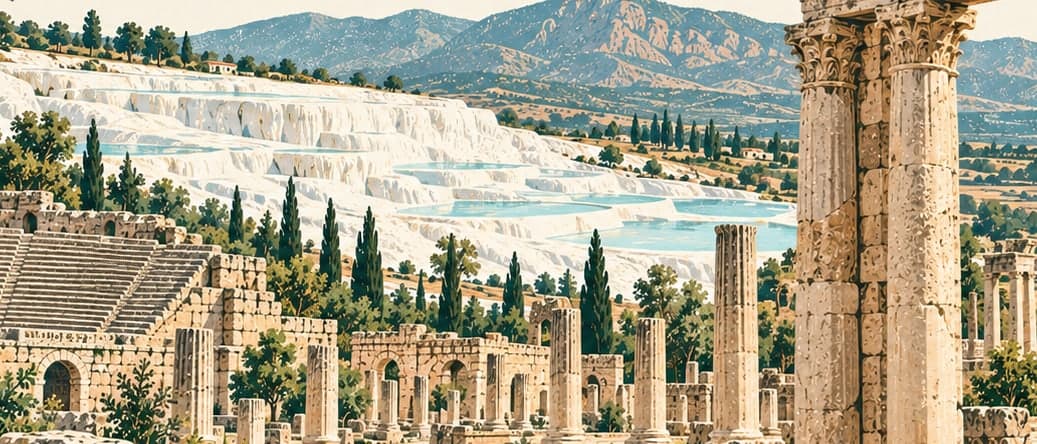
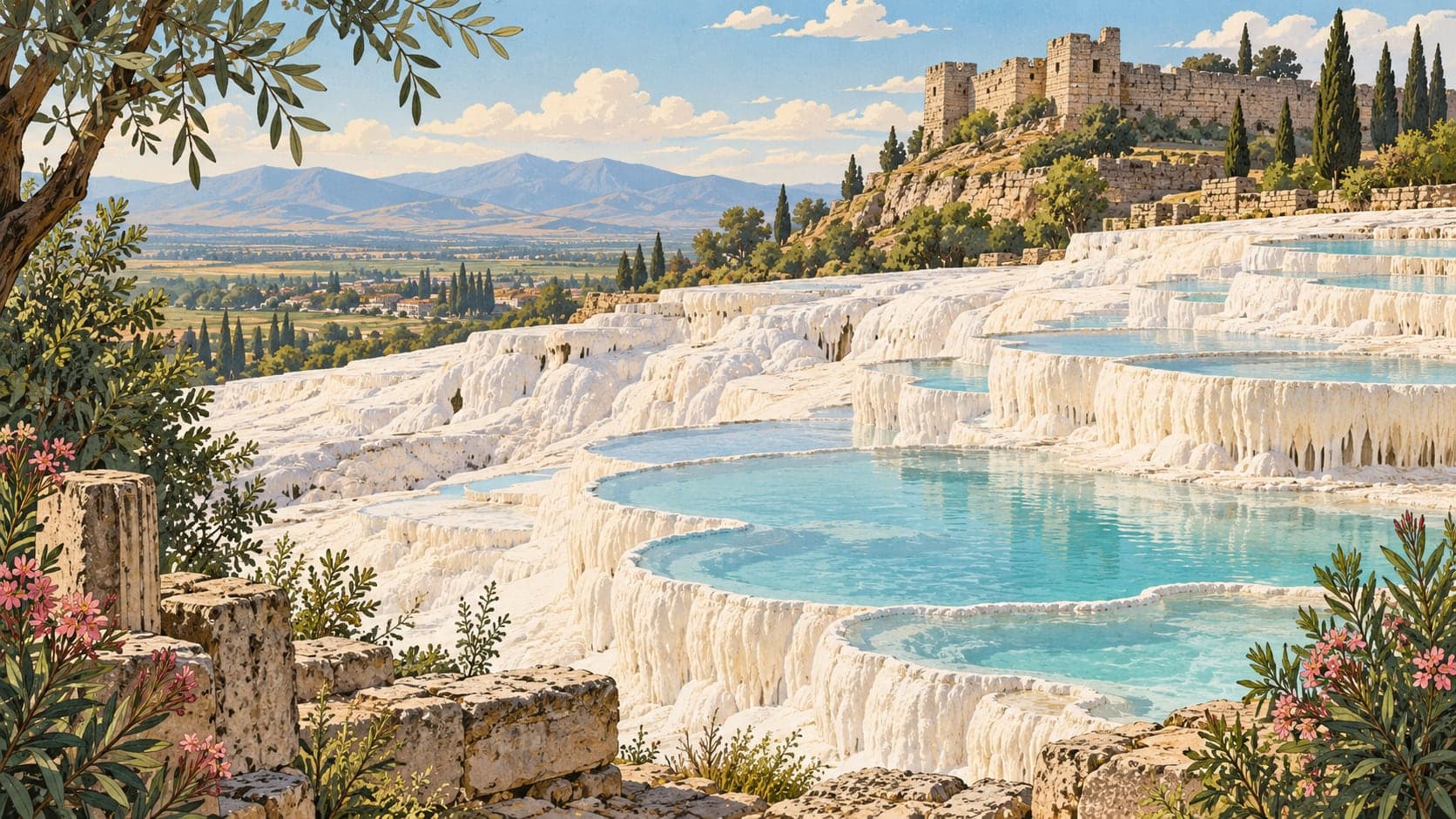
The water that made Pamukkale comes out of the karstic ground at 35.6 degrees, and as it cools and loses carbon dioxide the lime it carries precipitates out. The white calcareous tufa left behind — the heaps that look like cotton — is what the terraces are made of. The province sits in the Çürüksu valley, which has its own character because of these springs.
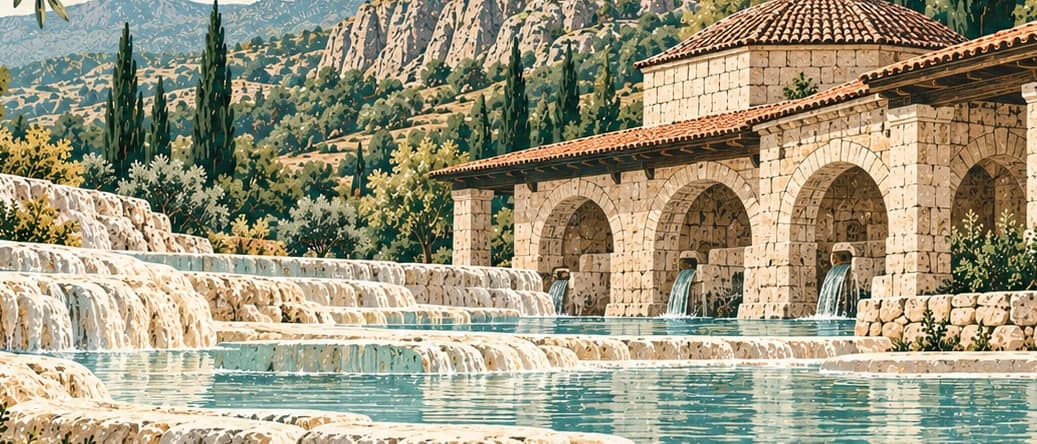
People have used the water for treatment for thousands of years and built working, ornate baths over it. Hierapolis became known across Anatolia in the Roman period for its springs, and the sick came for a cure; the city turned into a medical centre where patients stayed temporarily or for good. Graves in the Roman necropolis belong to people who came from elsewhere and stayed to the end of their lives. The research cited by the ministry indicates the treatments were directed by priests and physicians together, and that religious rites and public festivals were held where the springs rose.
The ministry's portal lists the conditions for which the water is recommended after a doctor's examination — cardiovascular and circulatory complaints, blood pressure, rheumatism, rickets, paralysis, and conditions of the skin, eyes and nervous system — and adds uses for the water taken warm. That is the ministry's claim and is reproduced here as such; this guide is not medical advice, and the source itself puts a doctor's examination first.
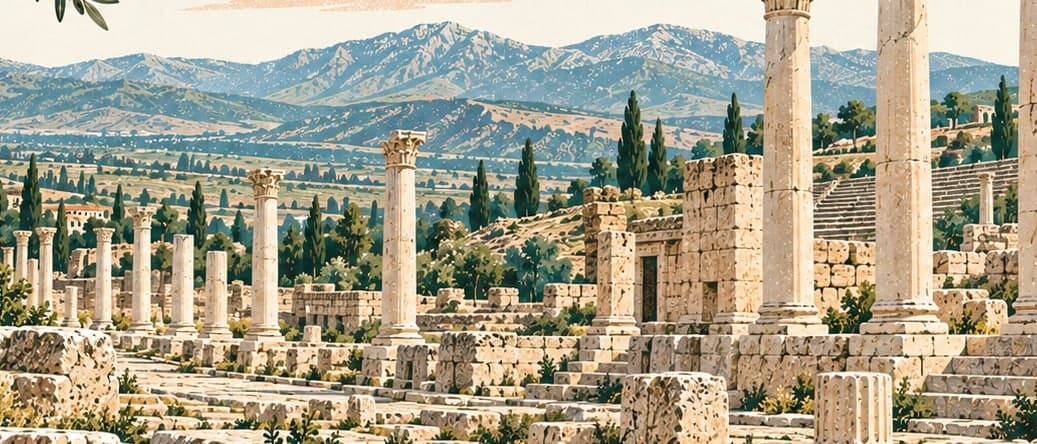
Pamukkale is on the UNESCO World Heritage List, and that is the frame the swimming happens in: the pools sit among the standing remains of Hierapolis, and access to the terraces is restricted to protect them.