Guide
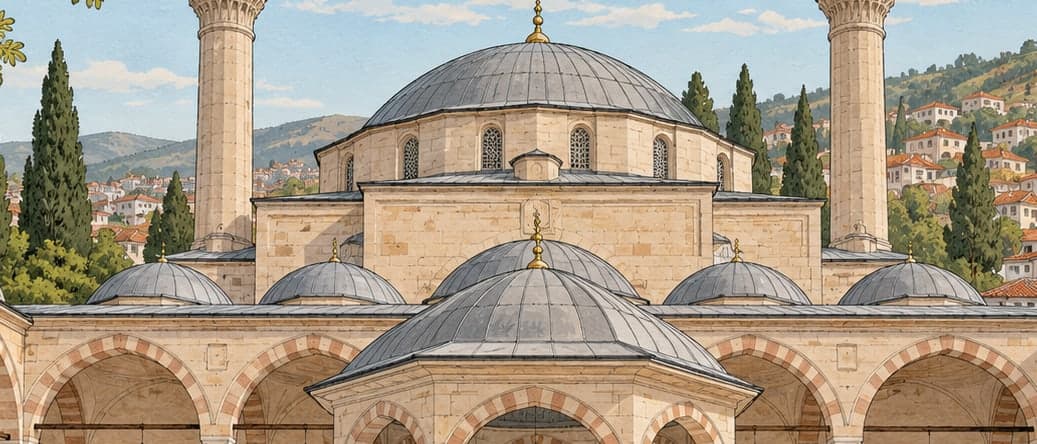
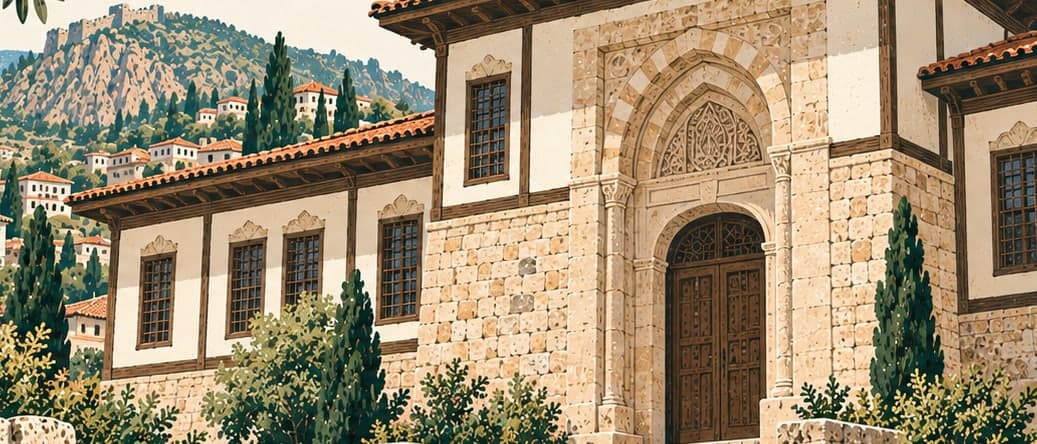
Kütahya's Tile Museum occupies the soup kitchen and tomb sections of the complex built in 1411 by the Germiyan ruler Yakub Çelebi II, which comprised an imaret, a medrese, a mosque, a library and a bath. The Ministry restored those sections as a tile museum and opened them in 1999, and describes the museum as the first and only tile museum in Türkiye. The plan centres on a domed space with an ablution fountain, off which open domed iwans on three sides and two rooms; in the tomb section is the tiled cenotaph of Yakub Bey II. The endowment inscription of the medrese, which has been destroyed, is set to the left of the museum entrance.
The cases follow chronological order and hold architectural tilework, tiled inscriptions, tiled vases, dishes and panels, and household objects made of tile, produced in Kütahya and İznik from the fourteenth century to the present. At the entrance is a stone inscription in Ottoman Turkish belonging to Yakub Çelebi II, the last Germiyan ruler, which the Ministry describes as the second largest stone inscription in the world. The museum, also known as the Gök Şadırvan, displays the texts of what is called the first collective labour agreement in history, signed on 13 July 1766 between the master cup-makers and their journeymen. It is 900 metres from the town centre.