Guide
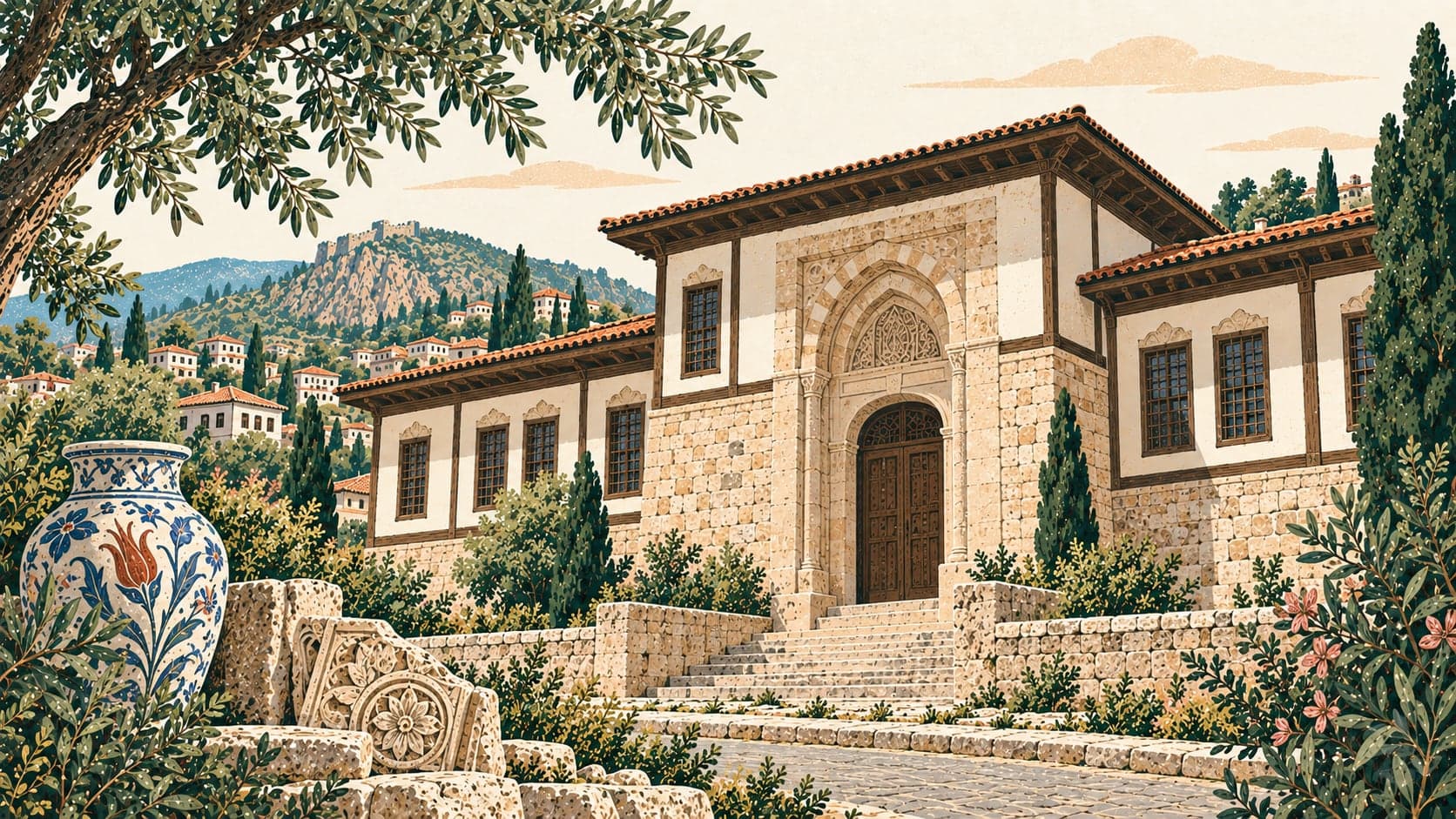
The Kütahya Museum is an archaeological museum housed in the Vacidiye medrese, a historic building beside the Great Mosque of Kütahya. The medrese is known to have been built in 1314 by Umur bin Savcı, one of the lords of the Germiyan emirate. As the collection gathered there grew, the museum was founded in 1965.
The building itself shows the features of Seljuk art, and the collection covers a long span: the Palaeolithic and Chalcolithic, the Early Bronze Age, the Hittites and Phrygians, the Hellenistic, Roman and Byzantine periods, the Seljuks and the Ottomans.
Among the valuable pieces are painted ceramics of the Late Chalcolithic brought from Hacılar in Burdur, along with fossils and material of the Early Bronze Age and the Phrygian period. Phrygian toys are shown here, with figures of the mother goddess Cybele, of priests, of a satyr and of Hekate.
The museum also holds Hellenistic and Roman ceramics, oil lamps and glass. The Amazon sarcophagus is among the most valued works in it.
Storage jars, bone tools and roof tiles from the rescue excavation at Seyitömer Höyük have an important place in the collection, as do the Hittite finds recovered by the museum in the rescue excavation at Ağızören. Roman gravestones draw a good deal of interest, and the marble ossuaries of the Roman imperial period, in which the ashes of the dead were kept, are among the important finds here.