Guide
Ballıca Cave Nature Park lies near the village of Ballıca in the Pazar district of Tokat and takes its name from that village. It was declared a nature park on 23 February 2007 with an area of 483 hectares. As more visitors came, the boundary had to be widened, and on 2 July 2015 a ministerial decision enlarged the park — all of it under forest regime — to 485 hectares.
The cave is thought to have begun forming four million years ago. It runs about 680 metres in length and stands 90 to 95 metres high, with five levels and eight chambers, and in some parts it is still forming.
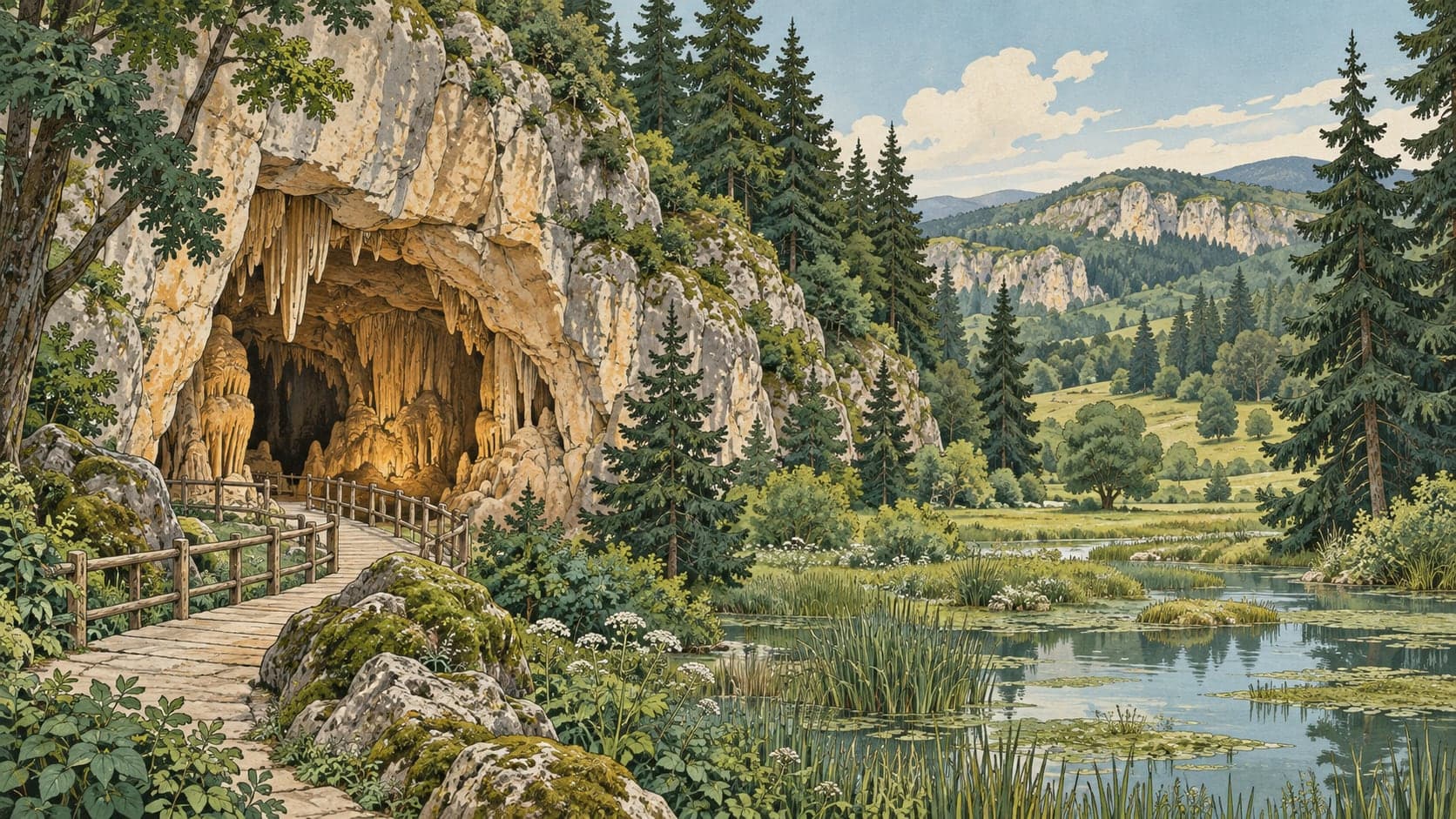
What sets Ballıca apart from other caves are its formations: onion-shaped stalactites, which are rarely met with, stalactites without matching stalagmites beneath them, and well-developed curtain travertines. The nature park has been placed on the UNESCO tentative list.
The plant cover is mostly broadleaf woodland — sessile and Türkiye oak, oriental beech, hornbeam, maple, white willow, terebinth, juniper, hawthorn, barberry, buckthorn, dog rose, sumac — with foxglove, St John's wort, common polypody fern, teasel, thistles, lords-and-ladies and yarrow among the ground plants.
Among the amphibians here are the eastern tree frog, the marsh frog and the common and variable toads. The reptiles include the spur-thighed tortoise, the Caucasian and snake-eyed lizards, the Turkish gecko and the grass snake. Birds recorded in the park include the great tit, the stonechat, the grey heron and the marsh harrier, and there are mammals such as the fox.
- Designated
- 23.02.2007