Guide
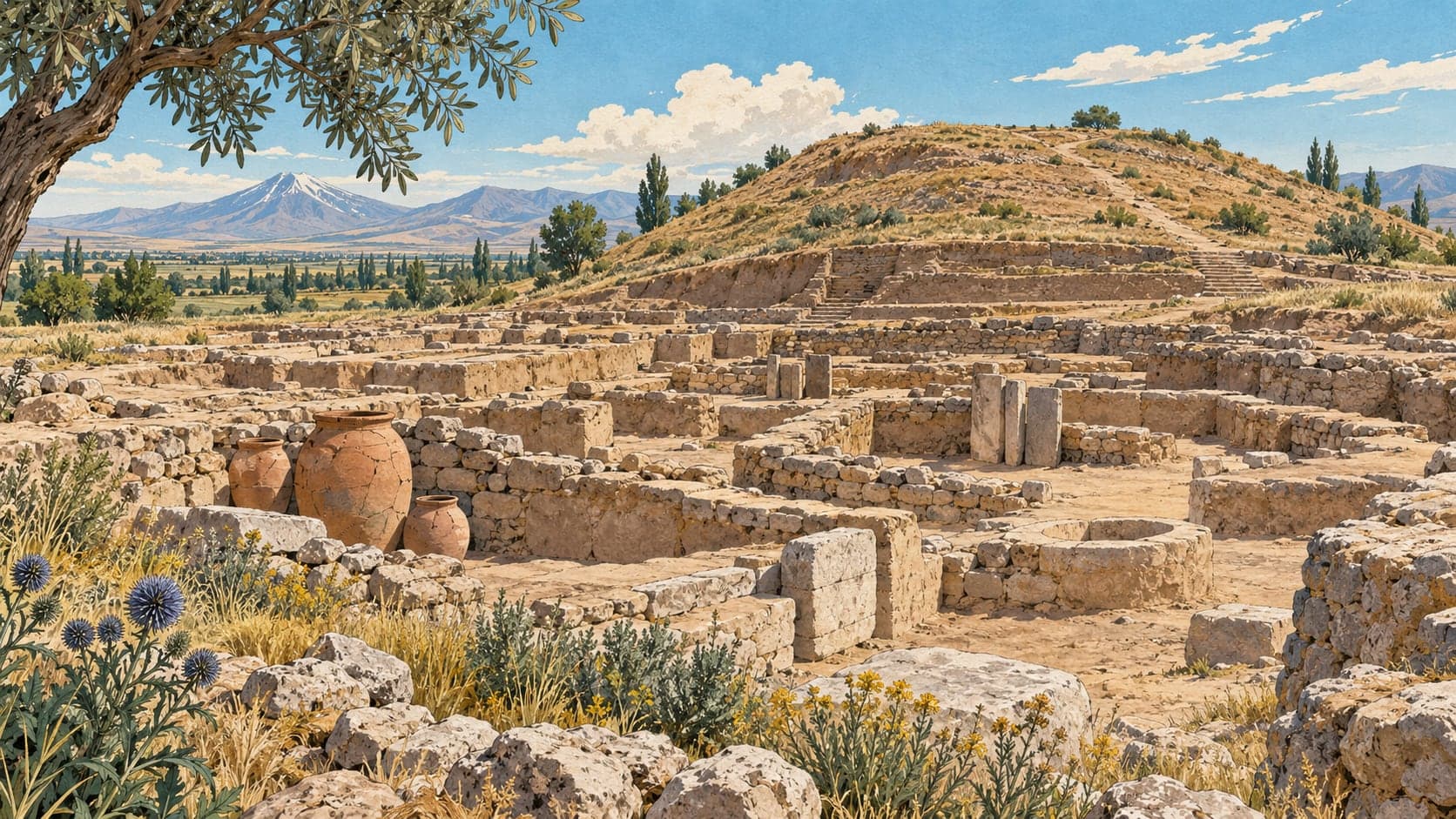
Acemhöyük stands at Yeşilova in Aksaray and is one of the largest mounds in Anatolia — roughly 700 by 600 metres and 20 high — with a Lower City around it. The source identifies it with Puruşhattum, the Assyrian city named in Akkadian and Hittite texts, and describes it as the foremost centre of metal production in Anatolia four thousand years ago.
It was the first site in the province to be excavated. Work began in 1962 under Nimet Özgüç and has been carried on by Aliye Öztan since 1989. Özgüç established at least twelve levels on the mound belonging to the Early Bronze Age and the age of the Assyrian trading colonies, and showed that the Lower City was occupied only during the latter.
The city grew steadily from Early Bronze II, around 2500 BC, and reached its height under the Assyrian colonies. A severe fire swept the whole of it in the eighteenth century BC and ended that period; what caused it is not known. Survivors rebuilt twice, and the site was abandoned altogether in the seventeenth century BC. After a long gap, settlement returned to the western and southern rises of the mound from the sixth century BC into the early Roman period.
The present name is much later. After Selim I's Çaldıran campaign, three clans brought from Iranian Azerbaijan settled at the foot of the mound, and Acemhöyük is named after them.
The excavations have produced the Sarıkaya and Hatipler palaces, houses, stamp and cylinder seals, pottery in a range of forms and decoration, traces of cloth, beads, gold ornament, ivory work and a gaming board. Of the many cities named in the cuneiform records found at Kaniş, the trading capital, only three were governed by a Great King — and Acemhöyük is taken to be one of them.