Guide
The mosque was built in 1428 by Yörgüç Paşa. He served for a time as sancak bey of Amasya, and when Çelebi Mehmed appointed his son Murad to that post as a boy, Yörgüç Paşa stayed on in the city as the prince's lala, his tutor and guardian. He later became vizier under Murad II, and he did a good deal for Amasya and the country around it.
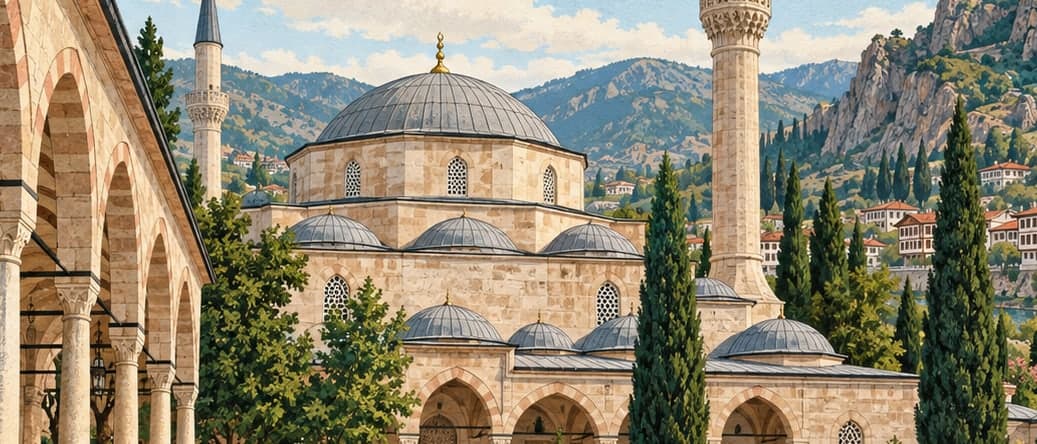
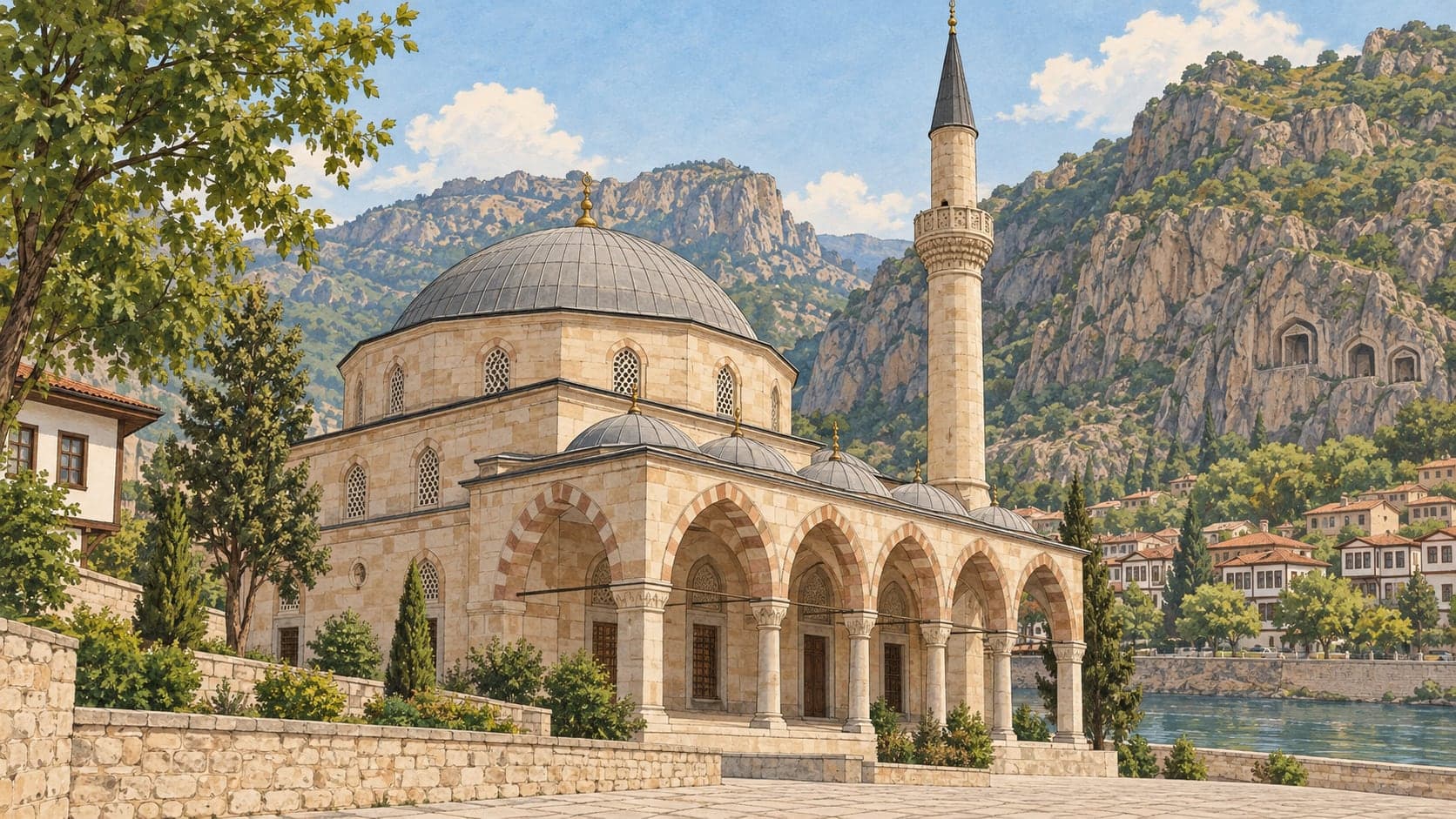
The building belongs to the inverted T plan common in Amasya. The walls are regular cut stone, and red and white marble used in places in the thick walls and in the arches of the windows gives it a coloured look.
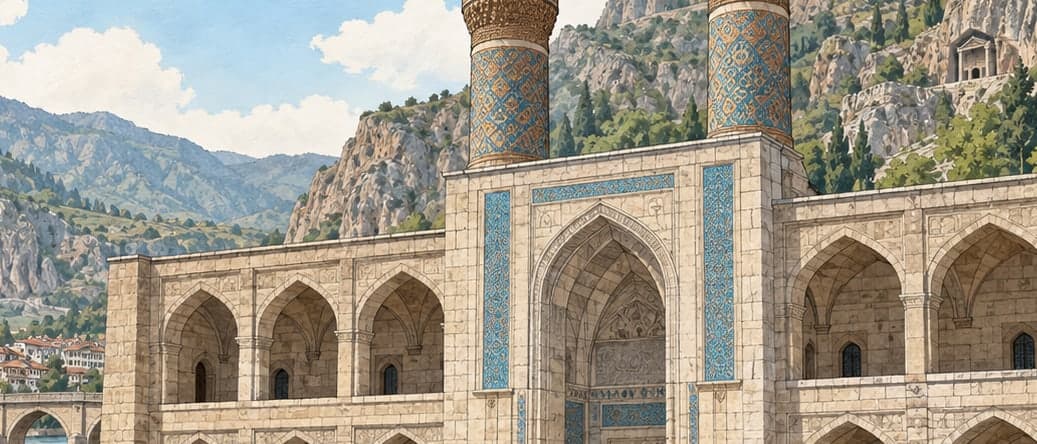
The entrance at the middle is in the form of a large eyvan. The great arch of that eyvan is likewise red and white marble, and rather than being set directly on the walls it was built on a slight projection from them, which makes the entrance elegant. Above the door are blind windows decorated with geometric and flower motifs, and the inscription sits beneath them.
One of the more interesting things about the mosque is that the space for latecomers is inside the main room rather than in front of it. Behind the door is the first section of the prayer hall, under a large dome, and doors in the east and west walls lead from it into the side sections, each covered by a dome of its own.