Guide
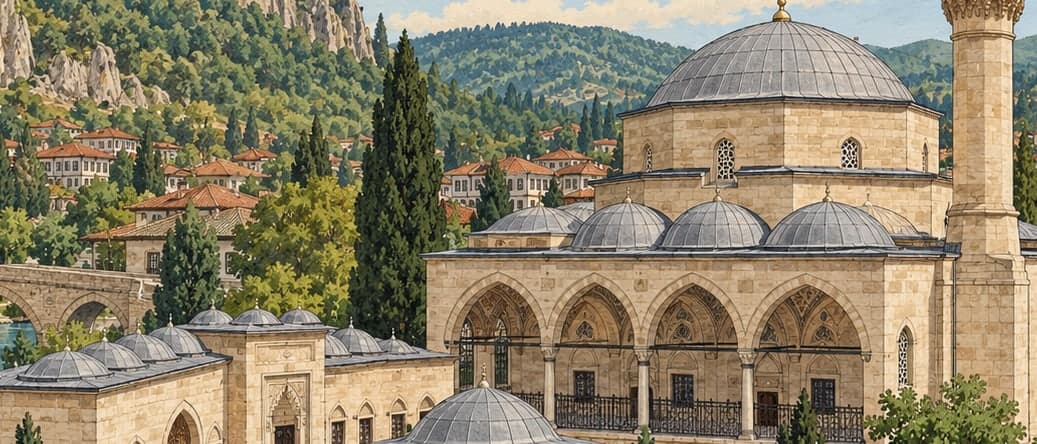
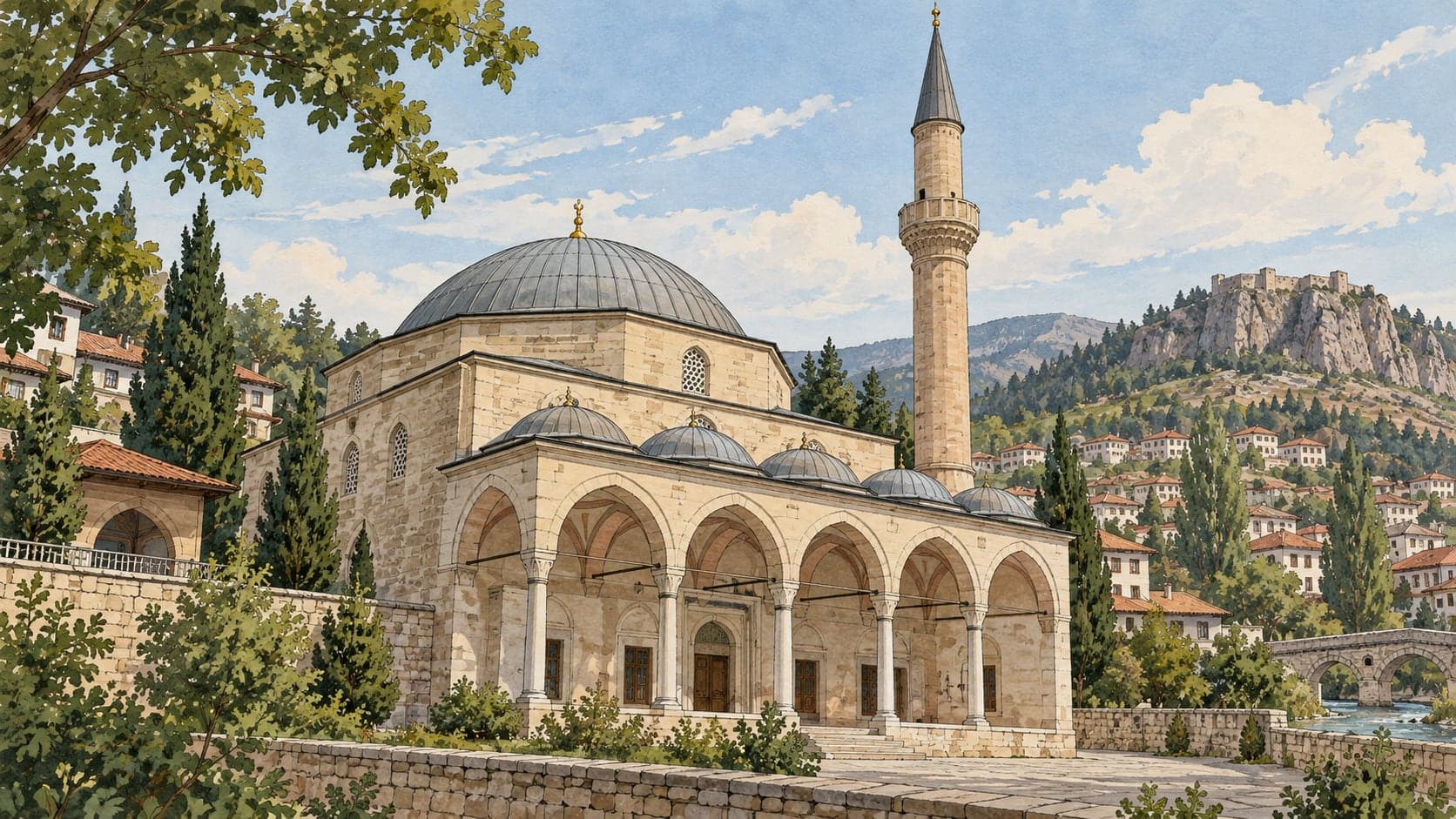
The Yakup Ağa complex in Kastamonu grew out of a single mosque, built by Halimi Çelebi, tutor to Selim I. In 1547 Yakup Ağa, treasurer to Suleiman the Magnificent, had the mosque renovated and added a medrese, a soup kitchen, a guest house and a primary school beside it, turning the whole into a complex. The mosque is cut stone with lead-covered domes and its minaret at the southwest corner. Its door is what people come to see: wood inlaid with mother-of-pearl, among the better examples of Ottoman carving, with panels on the leaves reading that the door of this mosque should always open in gladness, and bearing the declaration of God's oneness.
The soup kitchen stands on the north side of the complex, and next to it are five domed rooms behind a portico that served as the guest house. It is said that hot soup was available here at any hour, that the door was never shut, and that everyone who came was fed without distinction between rich and poor; the affection this earned is why the place is remembered as the Ağa's soup kitchen. The primary school taught reading, writing and religion to boys and girls between five and ten, and the building now sells handicrafts. The medrese has domed rooms at its entrance and vaulted rooms to the south, and its layout does not follow any of the standard Ottoman medrese plans. The complex is on Kefeli Yokusu in the Hepkebirler quarter.