Guide
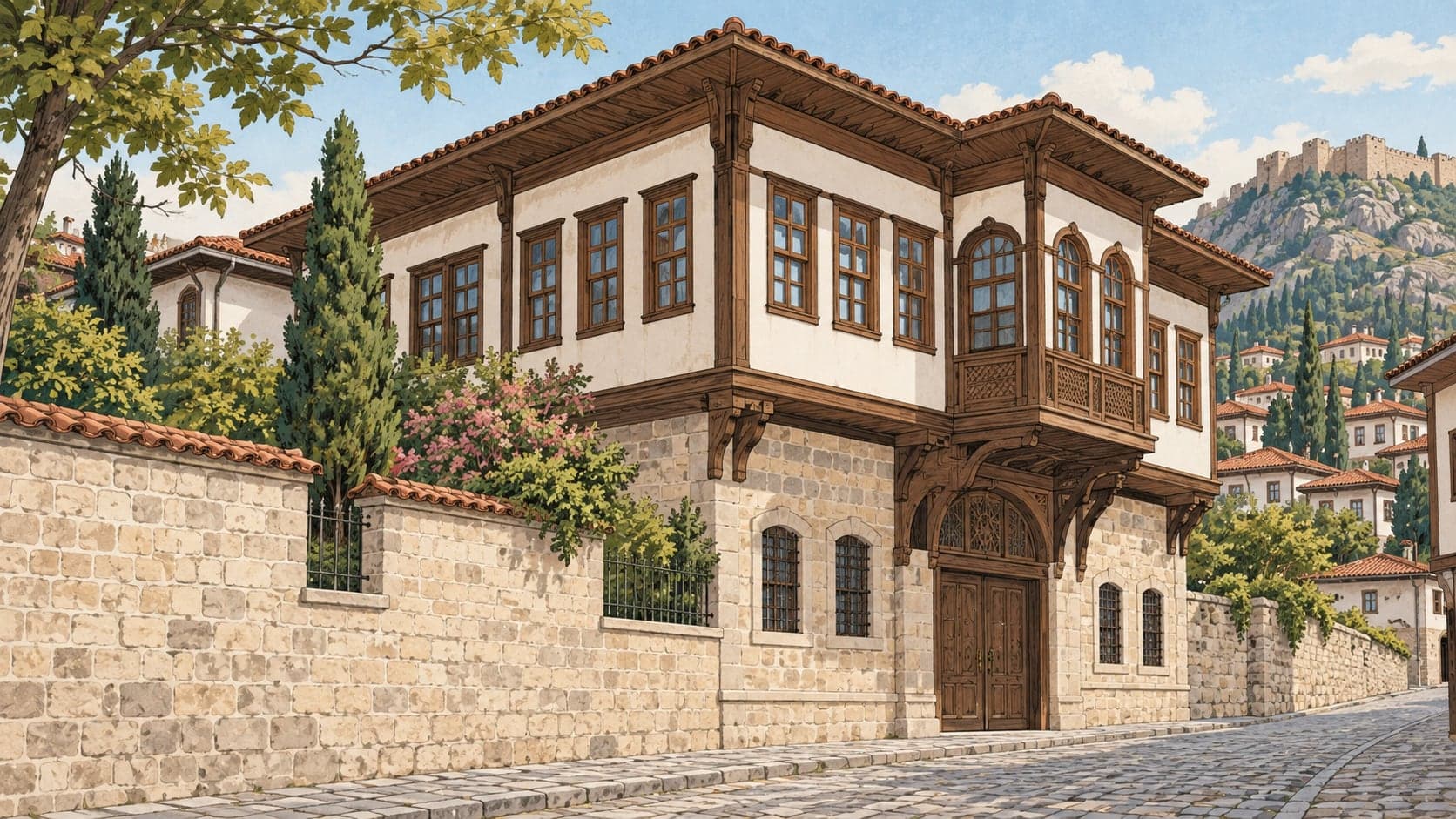
Liva Pasha's konak is one of the rarer survivals of domestic architecture in Kastamonu, and the ethnography museum in it is about the life of this city in particular. It was built as a house between 1879 and 1881 by Mir Liva Sadık Pasha, then head of the Kastamonu military recruitment office. Three storeys over a basement, it has 22 rooms and six halls, a double staircase, and — in the basement — its own bath and kitchen, which is much of why it reads as a 19th-century way of living rather than a set of rooms.
The Ministry of Culture and Tourism expropriated and restored it, and it opened as the ethnography museum in 1997. The basement holds the boiler room and the ground floor the offices; the two upper floors are the display.
The middle floor is the crafts: woodwork, coppersmithing, rope-making, packsaddle-making, shoemaking, tablecloth block-printing, weaving and harness-making, all of them trades that existed in Kastamonu. The top floor reconstructs a 19th-century Kastamonu household, with the harem and selamlik sections, the clothes and the objects in use, staged with mannequins.