Guide
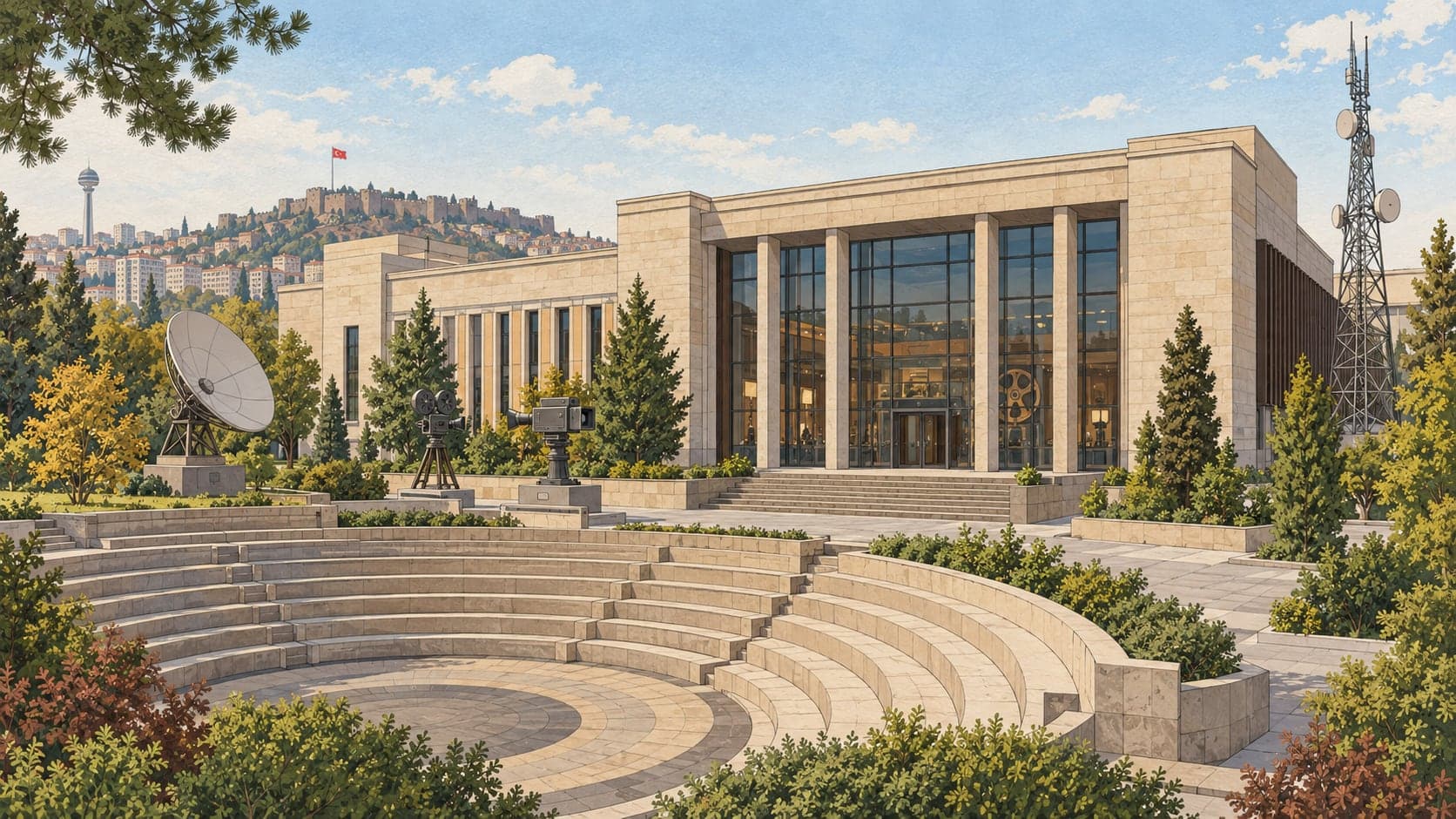
The TRT Museum of Broadcasting History is in Or-An in Ankara. It opened in 1981 as the TRT Radio Museum, showing old radio equipment that had been gathered together. In 1994 material taken out of service in the radio and television studios of Ankara and İstanbul was refurbished and the museum opened at its present site in Or-An under the name TRT Museum. It was brought within the scope of private museums by a letter from the Ministry of Culture dated 28 November 1994, and from 10 December 2012 it was registered again and reopened on a different plan as the TRT Museum of Broadcasting History, under the title Sounds, Colours, Memories.
The museum is curated by TRT's own managers. What is displayed rests on material from earlier museum projects within the broadcaster, but to give a complete picture of how broadcasting developed, material was also gathered by going through all of its broadcasting centres, archives and programmes. Apart from the computer equipment and the architectural work, everything that makes up the museum — the software, the graphics, the holograms and the workshop applications — was done by TRT staff with TRT's own means.
This is not only a museum of historic objects but a teaching centre where the stages and the rules of broadcasting can be seen and learned in practice. It holds studios that let visitors see behind the camera and try things for themselves: radio, radio drama and television studios, and a virtual studio.
One section holds recordings of programmes about Atatürk made from the 1970s onwards on subjects ranging from children to daily life and agriculture, images used in television broadcasts between 1970 and 1980, and a special collection of little-known photographs of Mustafa Kemal Atatürk. The microphone used at the ceremony where he read his Tenth Year Address in 1933 is shown here along with the original sound recording.
Another section holds shellac records, microphones and sound recording equipment belonging to TRT Radio, which began broadcasting on 6 May 1927. Of the roughly sixty objects in this display, the instruments dating from the 1930s draw the most attention.
A further section shows recordings of programmes broadcast in the 1940s — the serial readings, radio theatre and the children's hour — along with effects equipment, old radio sets, records and the measuring and maintenance instruments used in the first years of broadcasting.
The television section holds picture recording systems, cameras and editing equipment, in black and white and in colour.