Guide
Some sources call it the Canbolad mosque, the Canboladiyye or the Canboladoğlu mosque, and it is the central building of the Canbolad Paşa complex — the mosque Evliya Çelebi described as fit for a sultan. The name in its own endowment deed is different: Tekke Camisi. Canbolad Bey admired Mevlana Celaleddin-i Rumi, had a lodge built in his name, and put this mosque in front of it, which is where the name comes from.
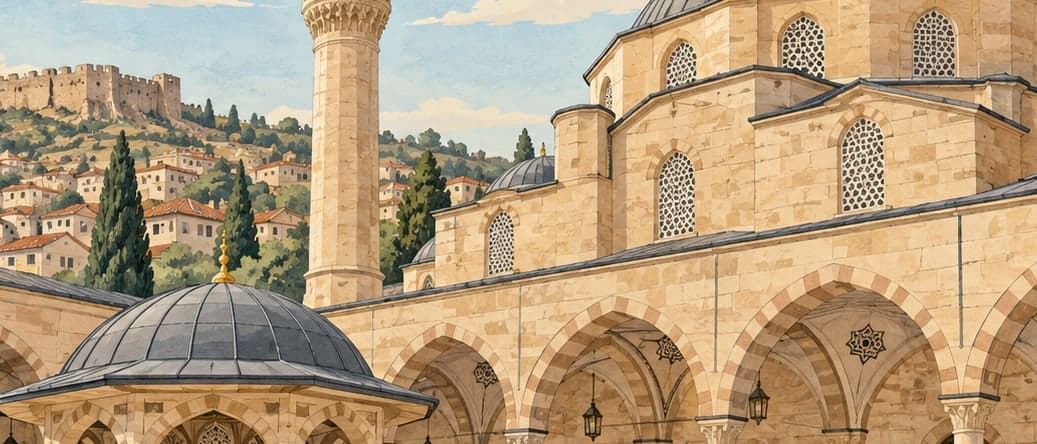
It stands apart from other buildings of the region in its look as much as its technique, carrying qualities integrated with Ottoman art rather than local practice alone. What makes it the most important mosque in Kilis to look at is concentrated on the north: the main doorway, the windows east and west of it, the tiles in the window tympana, the waterspouts and the rosettes beneath them. The other three faces carry windows in two tiers, the upper ones with stained glass; all are rectangular with straight lintels, framed in black and yellow marble.
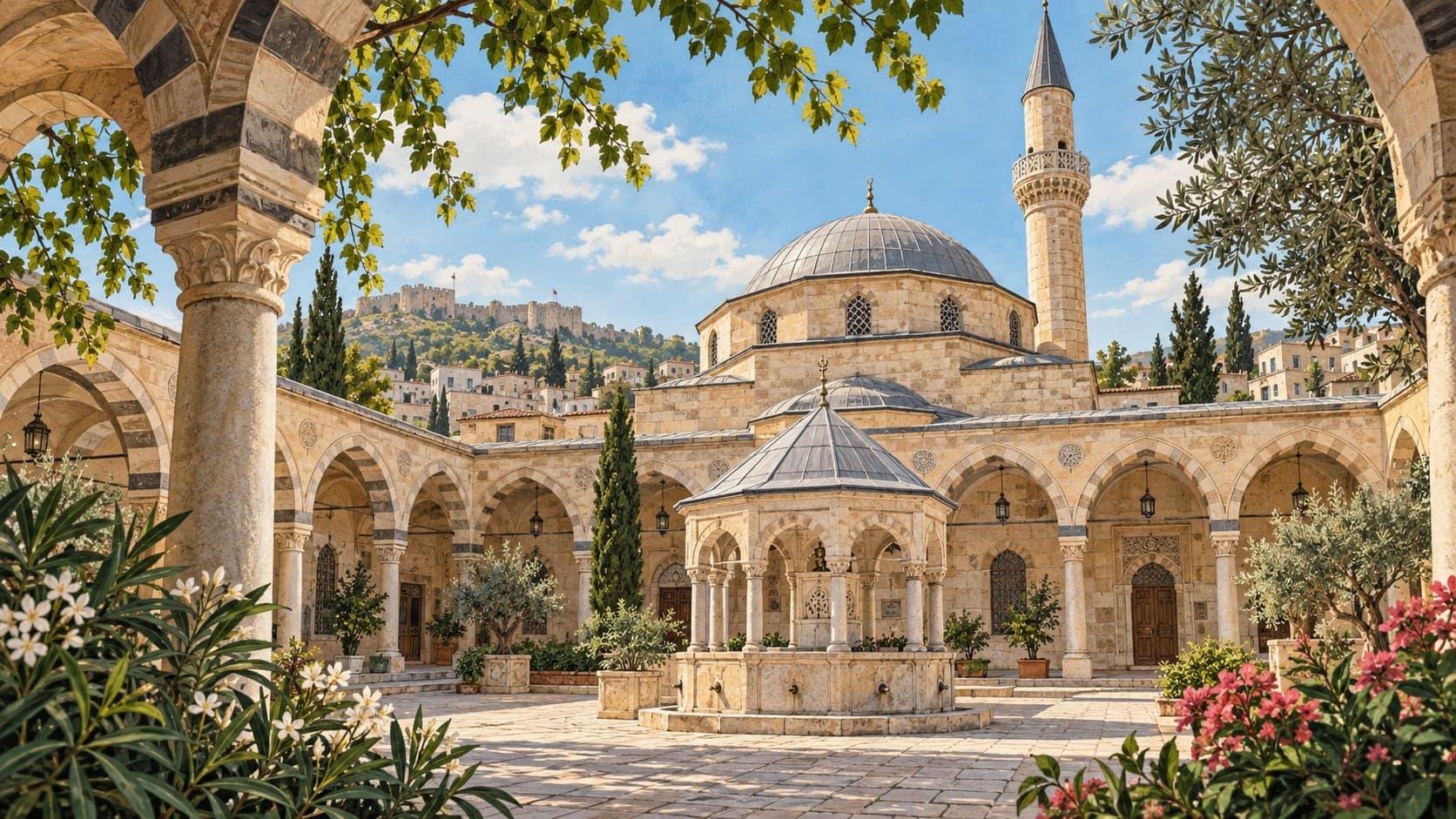
Medrese cells surround the site. The mosque has a wide courtyard and an imposing entrance; the courtyard is paved in white stone, with a well of two rings on the right and a stone ablution place in front of it.
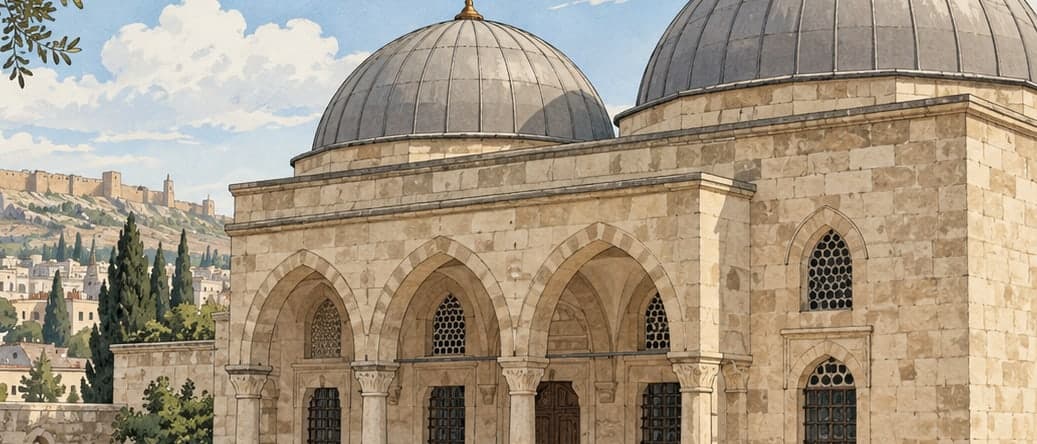
The essentials of the building are a square plan, a five-arched porch for latecomers, and a single great dome over the prayer hall. On its polygonal drum, that dome measures 14.40 metres across — the largest in Kilis — and the porch and the whole of the prayer hall are domed. The mihrab and the minbar are what stay in the memory: the stonework itself, and the coloured stones chosen for it. Some who have studied the mihrab hold that the care and regularity of its carving gives the clue to when the mosque was built. The minbar, reached by nine stone steps, likewise uses stones that differ in kind and in colour.