Guide
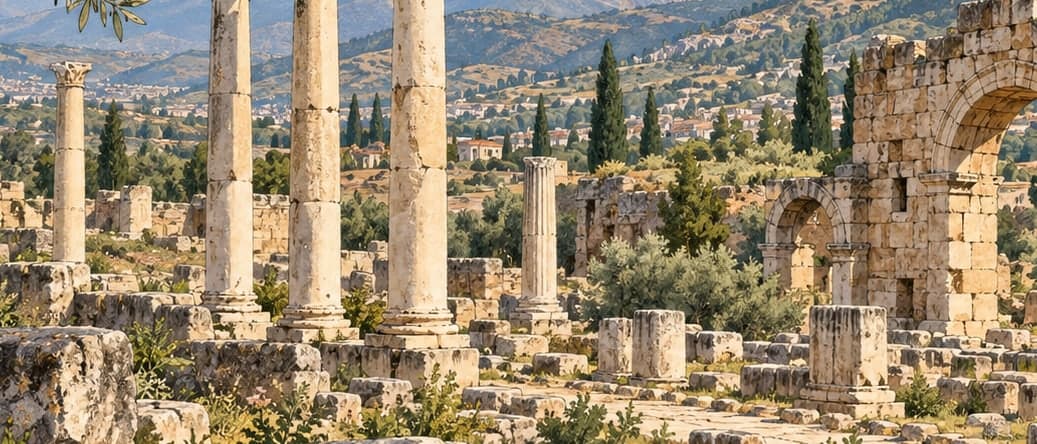
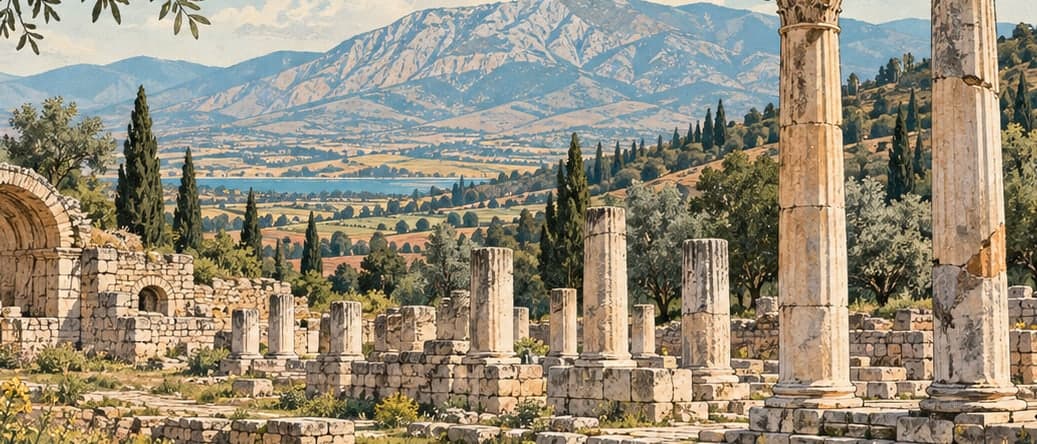
Set expectations before making the trip to Sebastapolis, in the Tavas district of Denizli: the traces of settlement cover a wide area, but you cannot read the buildings on the surface. Only parts of structures show, and most of the city is buried under soil washed down by erosion. Traces do turn up in the privately owned fields around it when the land is ploughed. When the city was first founded is not known; the visible remains belong to the Roman and Byzantine periods, and they amount to three things — the mound, the stadium and the cemetery.
The mound, Höyük Tepesi, is about 150 metres across and seven metres high and formed the acropolis. There are traces of a monumental building on top of it, and the foundation lines together with friezes and architectural fragments scattered nearby suggest the city's temple stood here. The stadium measured roughly 60 by 150 metres; farming has damaged it and only some of the seating steps remain, while erosion has filled the floor. Its southern end is closed and its northern end open. The necropolis lies about 1.5 kilometres east of the acropolis, on both sides of the road, with sarcophagi now sitting at ground level; those on the surface date to the Roman period. To get there, follow the Denizli-Muğla road to Tavas, continue 1.5 kilometres towards Muğla, then take the road south to Kızılca; the site is two kilometres east of the village. Minibuses run from Denizli bus station to Tavas and on to Kızılca.