Guide
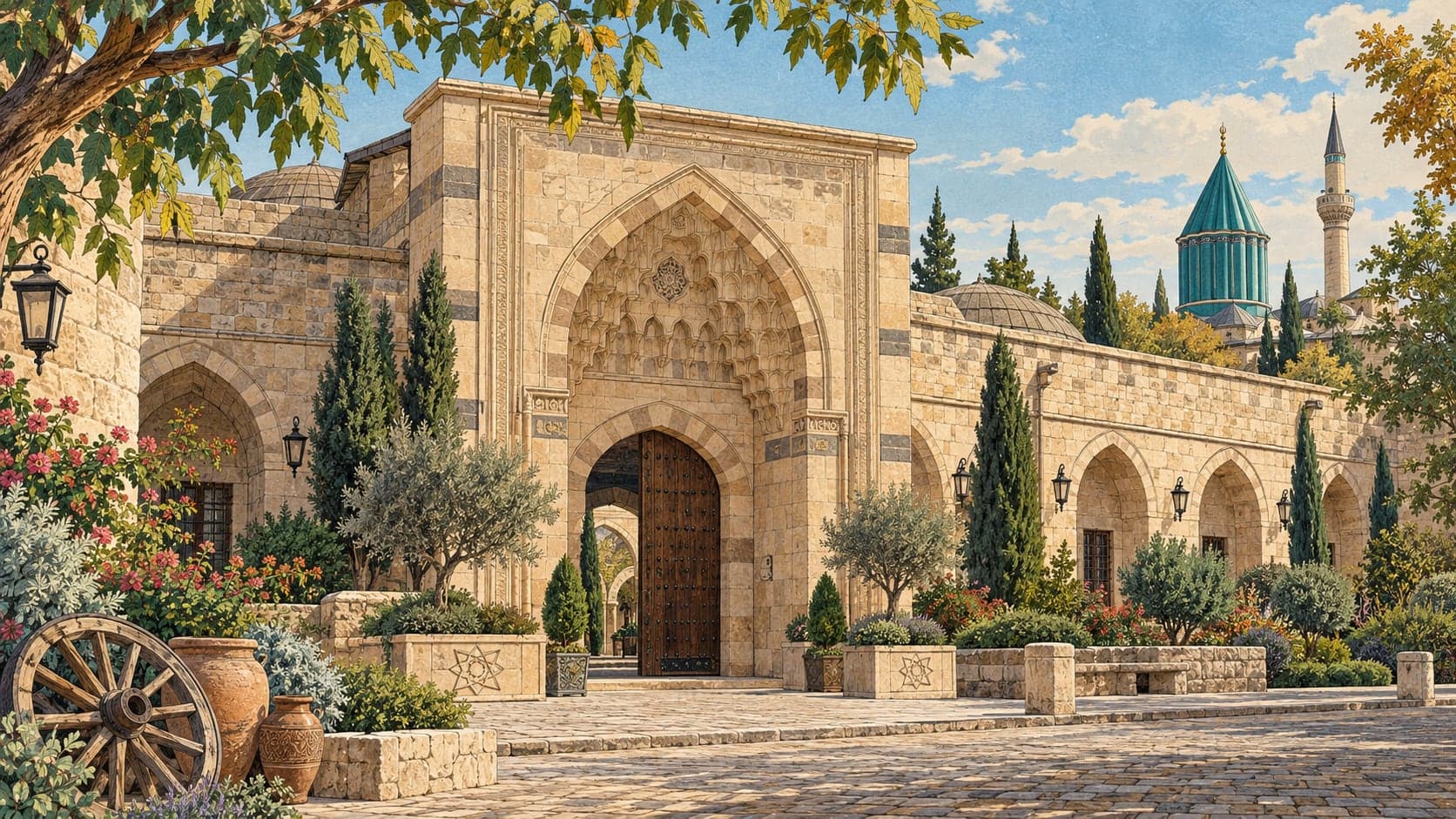
The Obruk caravanserai has stood on this road since 1220, and the two museums inside it take the traveller's oldest concerns as their subject: what there was to eat, and what the place smelled like. Both are run by the operator of the caravanserai, which works today as a museum hotel.
The culinary section covers Anatolian cooking from the Seljuk into the Ottoman centuries, and its material is the equipment rather than the recipes: ceramic and copper vessels, cooking gear, table settings and spice grinders. The operator points to the large cauldrons, pots and trays of the Seljuk rooms as evidence of cooking done for crowds, and to the Ottoman cases — finely worked serving dishes, cutlery sets and spice jars — as the courtly end of the same story. Workshops and events on traditional cookery are run alongside the display.
The scent section is in two parts and is meant to be walked through with the nose. Familiar notes — rose, jasmine, apple — sit beside musk, amber and patchouli, and beside the smell of basil and of bread.