Guide
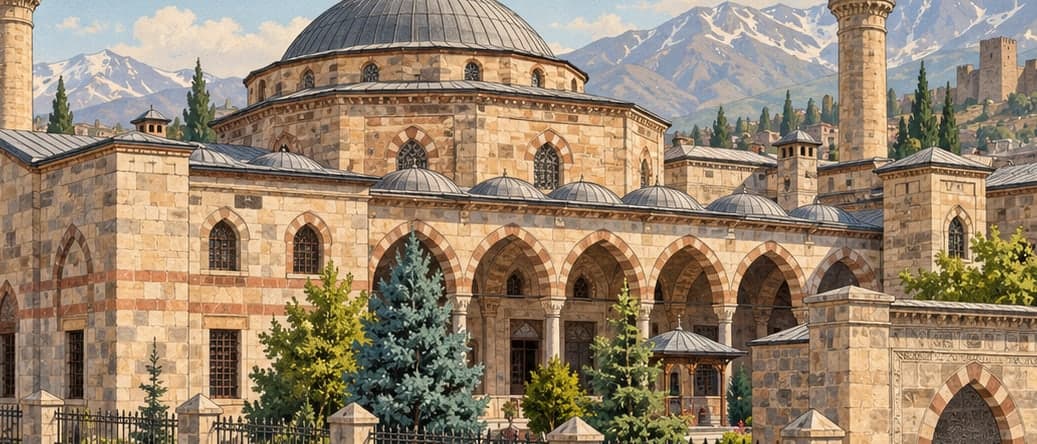
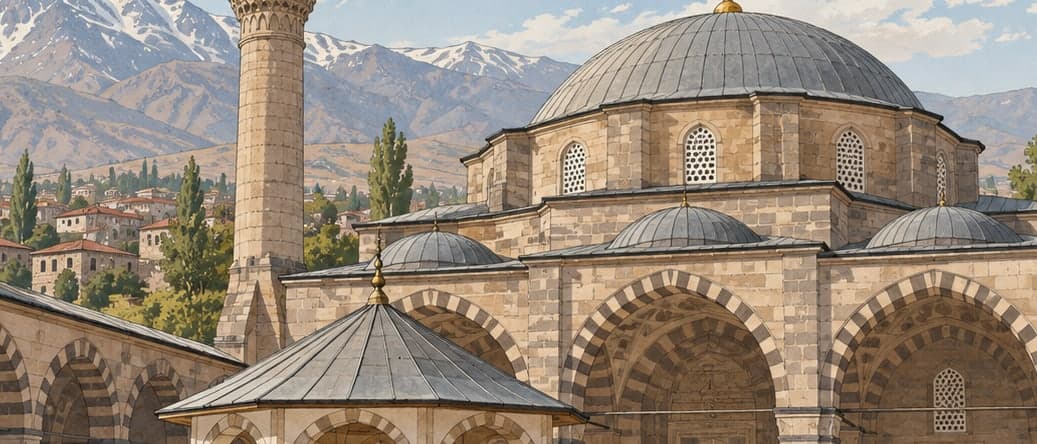
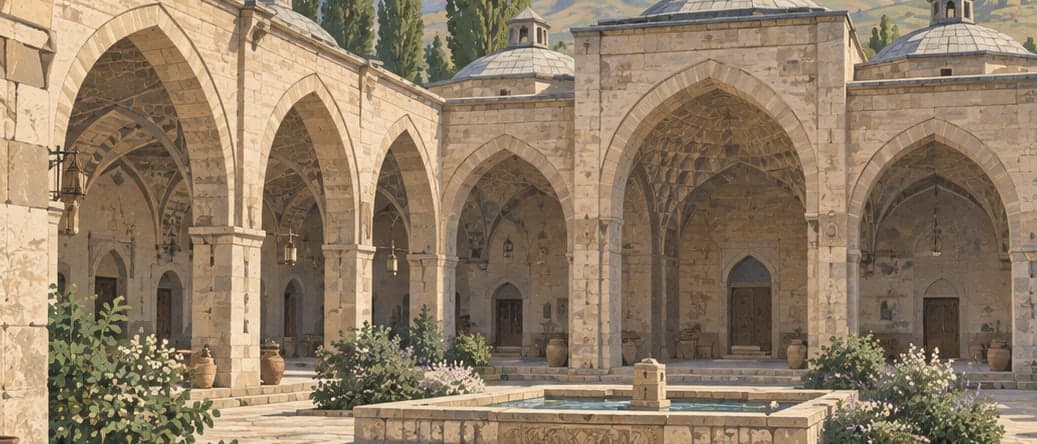
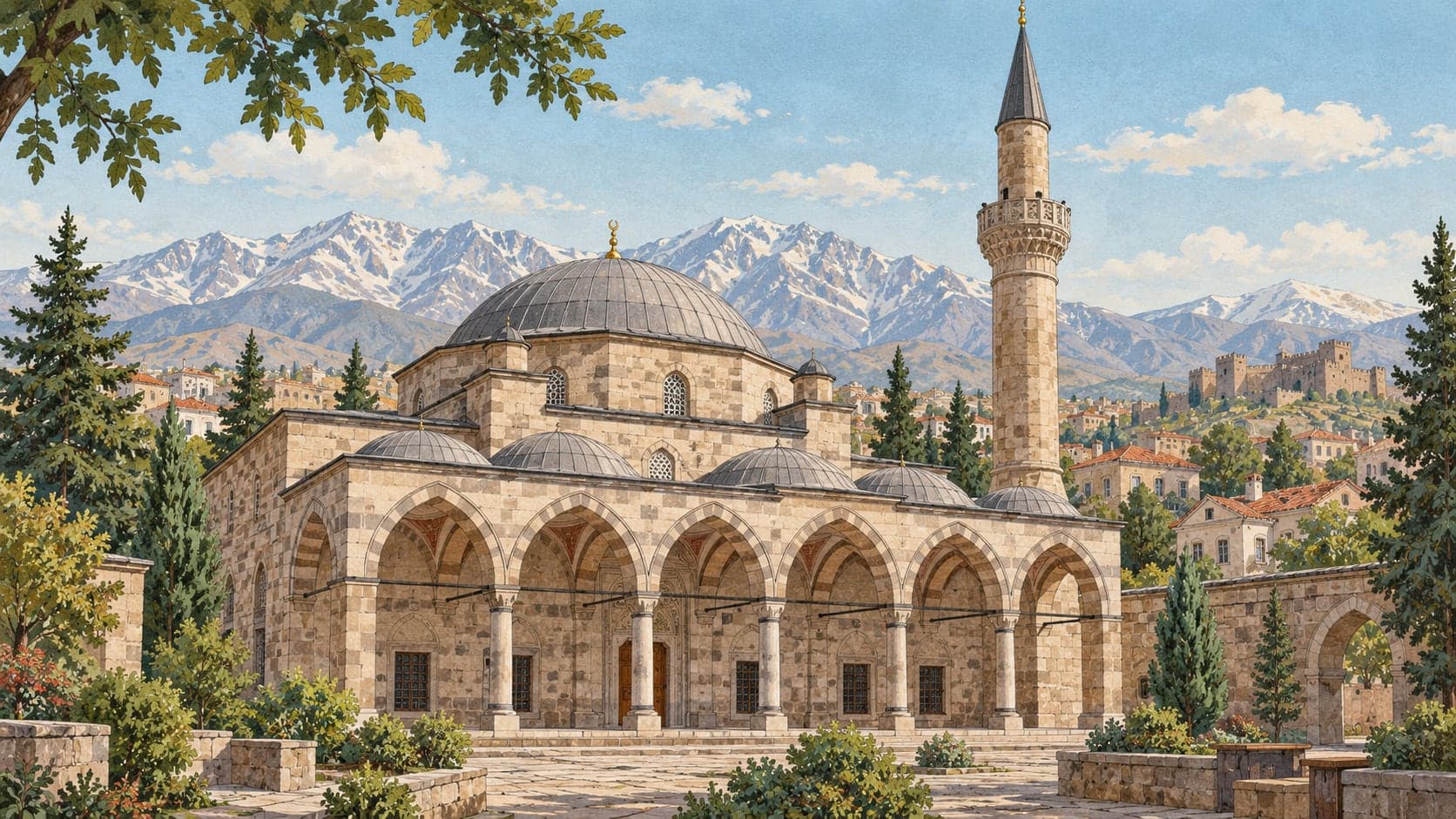
The Murat Pasha Mosque gives its name to the quarter and the street it stands on in Erzurum. It was built in 1573 by Kuyucu Murat Pasha, one of the pashas of Selim II, and it forms a group with the bath next to it, the tomb of Ana Hatun and the Ahmediye Medrese. The mosque is square, and the prayer hall is covered by a central dome carried on six muqarnas columns resting on squinches at the corners. The six round columns holding up the arches of the porch were damaged in earthquakes and have been strengthened with metal bands around them.
There are twelve windows in the dome drum, with a Quranic verse worked below them. The squinches and arches of the dome were decorated in the nineteenth century with flower and leaf motifs in the European manner, painted in oils on plaster. The mihrab, set within a rectangular niche, is stone with muqarnas ornament, and the wooden door, minbar and window shutters are among the better examples of Ottoman woodwork. The minaret stands separate from the mosque on an octagonal base and is shared with the Ahmediye Medrese next door; it was built fairly recently in place of an older, taller and thicker one. The walls are cut stone and the portal and its frames are of the red stone known locally as kamber.