Guide
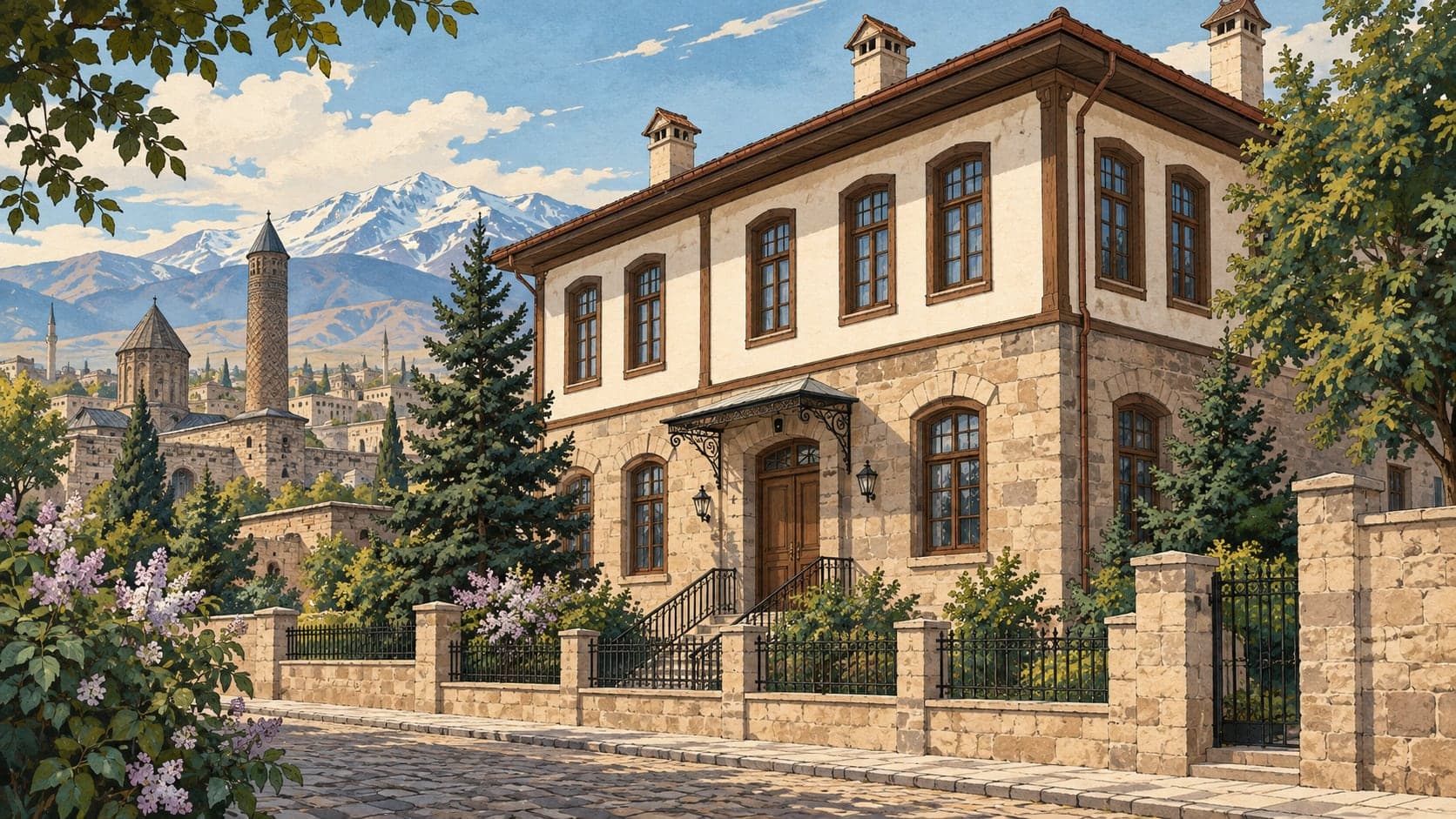
The Atatürk House Museum in central Erzurum is where the Erzurum Congress was actually worked out. Its building date is not known; the ministry estimates the late 19th century. It served briefly as the German consulate in 1915-16, and after Erzurum's liberation on 12 March 1918 it was handed to the provincial governor as a residence. Governor Mahir Akkaya lived here until 3 July 1919, and the house was emptied when he left.
Six days later, on 9 July 1919, Mustafa Kemal Pasha moved in with Hüseyin Rauf Bey and their colleagues, and they worked here for 52 days, until 29 August. That is what the house is: the place where the congress was prepared. When he left, it went back to being the governor's residence. On 13 September 1924, on a later visit, the mayor Nazif Bey presented him with the deeds of the house and a gold key made by an Erzurum jeweller, as a gift from the city.
Its later history is a list of transfers. Between 1920 and 1934 it housed the commanders of the Erzurum corps; on Atatürk's death it passed to his sister Makbule Boysan, and after her death, at her wish, it was transferred to the child welfare institution on 12 October 1944. That body used it until 1980, and in 1984 it was passed from the Ministry of Health to the Ministry of Culture, repaired, and opened on 3 October 1984 as the Atatürk House Museum.
The house has a basement, ground and first floors and an attic. In the room to the right of the entrance hall are documents, photographs, clothes and belongings of Kâzım Karabekir, Rauf Dinç and Kâzım Yurdalan. Opposite it stands the printing press on which the eastern Turkish newspaper Envar-i Sarkiye, the National Struggle paper Albayrak, and the declarations of the Erzurum Congress were printed. Photographs and biographies of the congress delegates line the first-floor hall, which opens into the study, the reception room and the bedroom.
The museum also lists what happened under this roof beyond the congress itself: that Mustafa Kemal Pasha resigned from the army he loved and began civilian life here on 8-9 July 1919; that his civil registration was moved from Salonica to Erzurum; and that he was nominated from Erzurum in the parliamentary elections and elected a deputy for the first time.
Visit status for this record: open to visitors.