Guide
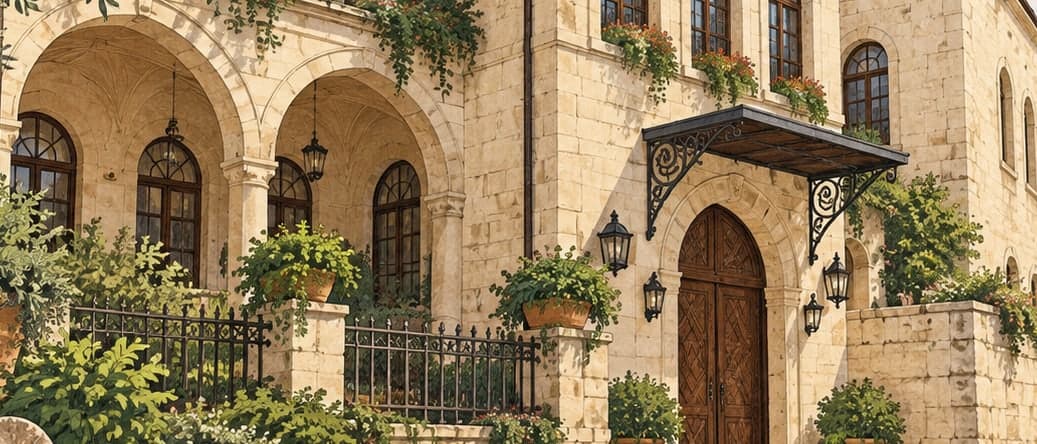
The Millet Han in Gaziantep belongs to the group of two-storey, single-courtyard hans of Ottoman commercial architecture, but it did not start as a han. It was built in 1575, when Lala Mustafa Pasha, the conqueror of Cyprus, governed the Antep beylik, as the Kececiler bedesten — also called the Bedesten-i Atik or the dark bedesten — and with later additions it took on the character of a caravanserai, bounded by the Pazar bath on the east, the Bıçakçı market on the west, the Salaba mouth and the Kazaz market on the south, and the castle on the north. The upper floor was added in 1890, giving the building its present form.
Before the republic its name was recorded as the Aziziye. The story of how it came to be called the Millet Han is told here: during Atatürk's visit to Gaziantep there was a wish to rename it the Atatürk Han, and the name became Millet Han — the nation's han — after he said that it should be the nation's han rather than his. Today it holds shops selling handicrafts and a rest area, and it is one of the important stops on the Kültür Yolu route, within walking distance of the city centre.