Guide
When Danişmend Gazi died in 1105 his eldest son, Emir Gazi, took his place and ruled for about thirty years. A struggle over the throne broke out among the members of the dynasty after that death, and Kılıç Arslan I took Malatya while it lasted. Emir Gazi submitted to the Anatolian Seljuks at first; he then brought Sultan Mesud under his influence, acted toward him as an atabey, and together with him followed a common policy against the Crusaders, the Byzantines and the Armenians.
His campaigns and victories brought him control of Anatolia from the Sakarya to Malatya, Konya excepted, and the order he established made him the most powerful ruler in Anatolia — which reached the ears of the Abbasid caliph and the Great Seljuk sultan. In 1134 the caliph and Sultan Sancar sent envoys to give him the signs of sovereignty, a diploma, a banner, a drum, a golden staff and a crown, and to proclaim him ruler of northern Anatolia with the title Melik. He died before they arrived, and those emblems were given instead to his son Muhammed, who was proclaimed Melik in his place.
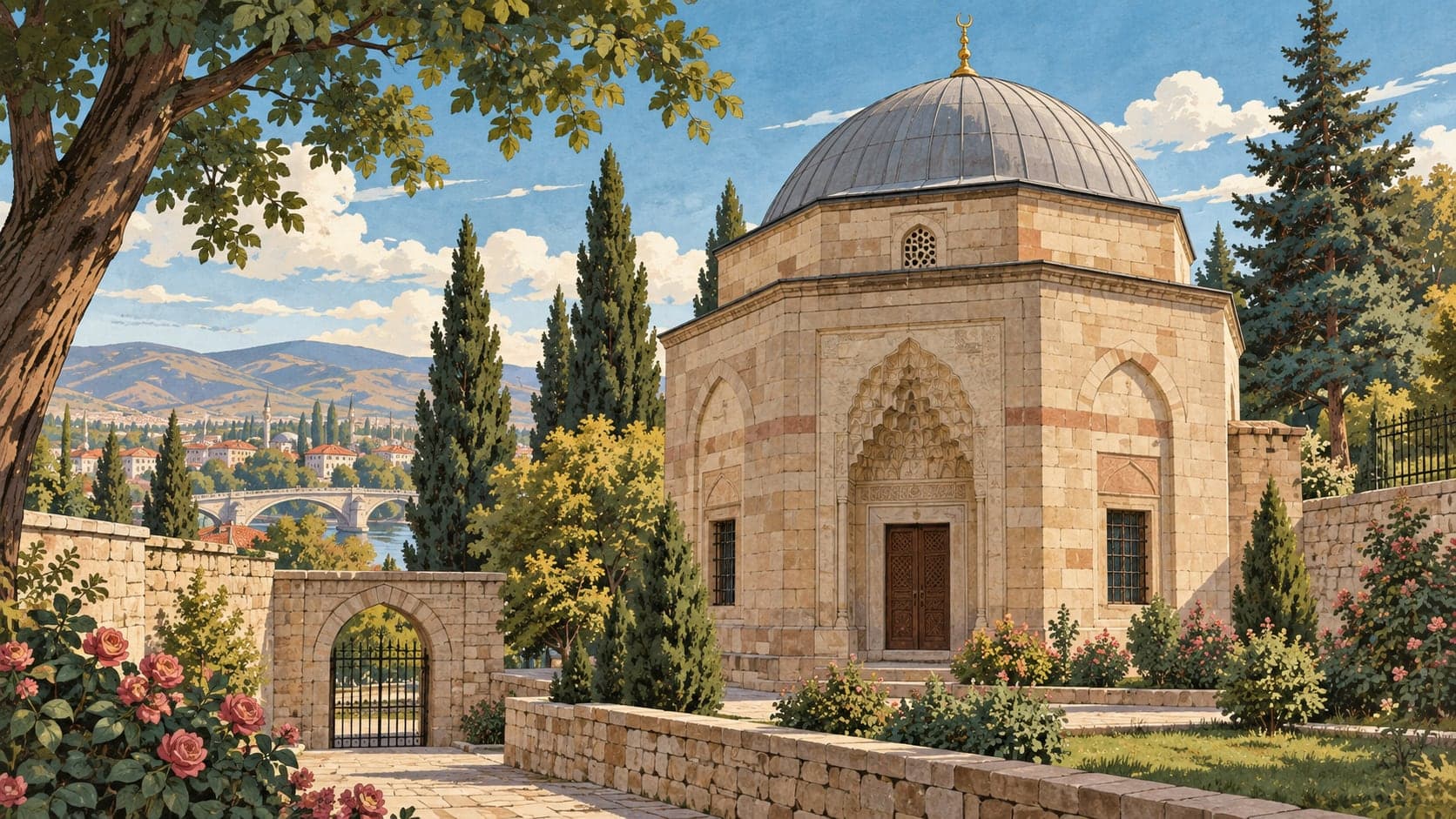
Where he is buried is not settled, and the portal records both accounts. In the first, he died at Malatya in 1134, his body was brought to Kayseri and he was buried in the tomb he had built in his lifetime in the village of Melik Gazi in the Pazarören area of Pınarbaşı. In the second, kept by local sources and stories in Eskişehir, he died in 529 of the Hijra — 1134 — near an earth castle between the settlements of Arabviran and Çukur Ağıl in Seyitgazi, and was buried there.
A further line, tied to the Malatya connection, makes him a descendant of Seyyid Battal Gazi: a child of Nâzırü'ş-Şerifetü'l-Aleviyye — Battal Gazi's sister, Nâzırü'l-Cemal Hatun — by her marriage to Ömer b. Nu'man, emir of Malatya. Other lodges named for Melik Gazi stand at Sarımsaklık near Kale Dağ and at Niksar, and most probably these too belong to the same Danişmendid name.