Guide
Philadelphia lies under the modern town of Alaşehir, on the northern skirts of the Bozdağlar, 110 kilometres from Manisa. It became a place of consequence under the Pergamene king Attalos II Philadelphos and took its name from him. In the Roman period it had so many temples and held so many festivals that it was called the little Athens. It kept its importance through the Byzantine centuries, and after the Turkish incursions began the town was walled in the eleventh century. The centre of the ancient city is the rise locally called Toptepe, and near the acropolis, particularly in the area known as Gevurtepe, protohistoric traces can be seen.
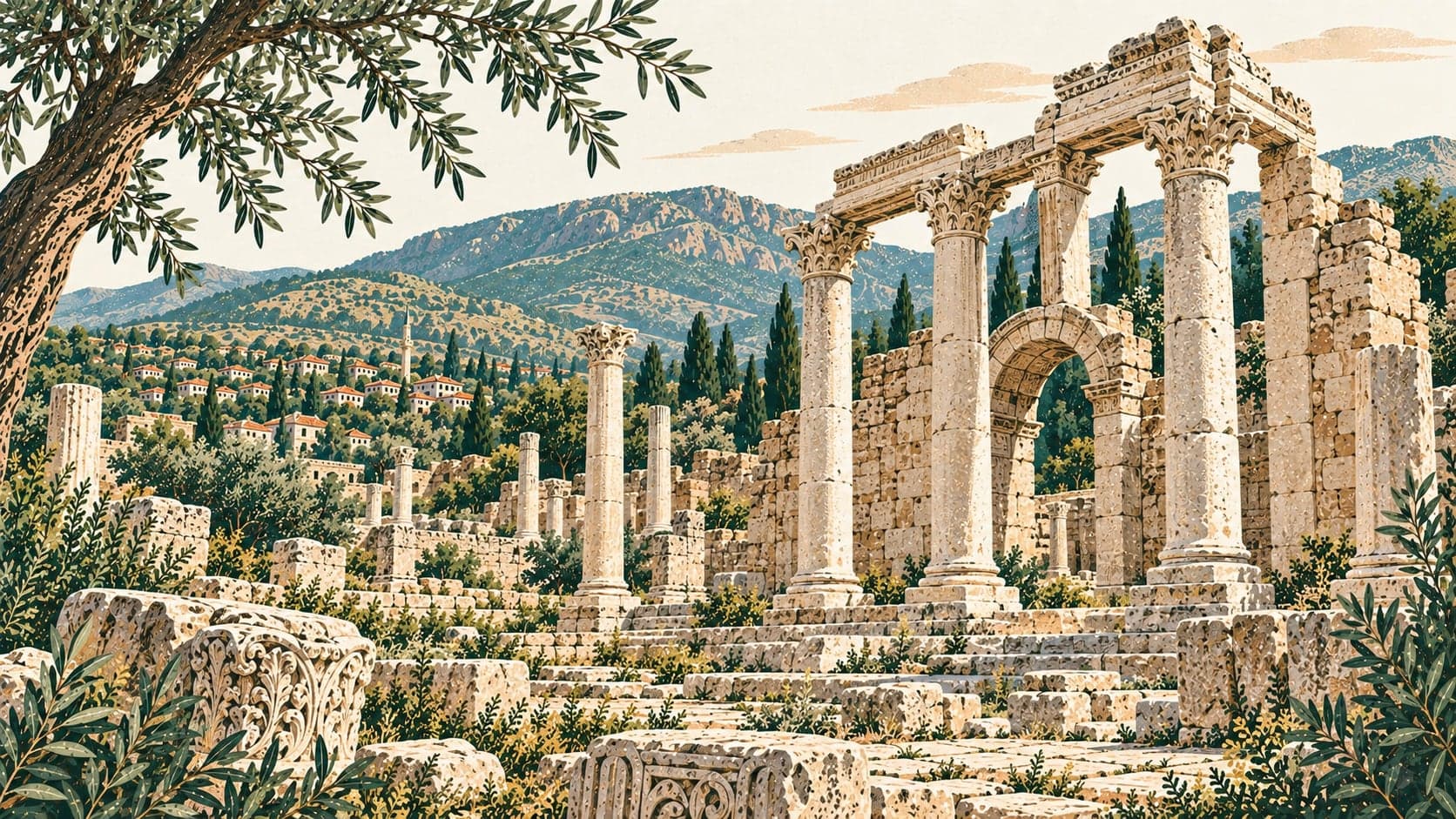
Be realistic about what is visible. Excavations around Toptepe in the early 1980s partly uncovered a theatre, a temple and a stadium, but the work was not continued and these remains are now hard to make out on the ground. The same excavations brought to light the East Gate of the Byzantine walls, a main entrance flanked by two towers, one semicircular and one rectangular; it was walled up during the Turkish incursions and never used again. Philadelphia is also one of the seven churches of Revelation, and the church of St John, of the early Byzantine sixth century, stands within the town. Three monumental piers of it survive, and the builders used a good deal of worked stone taken from earlier buildings, column drums among them.